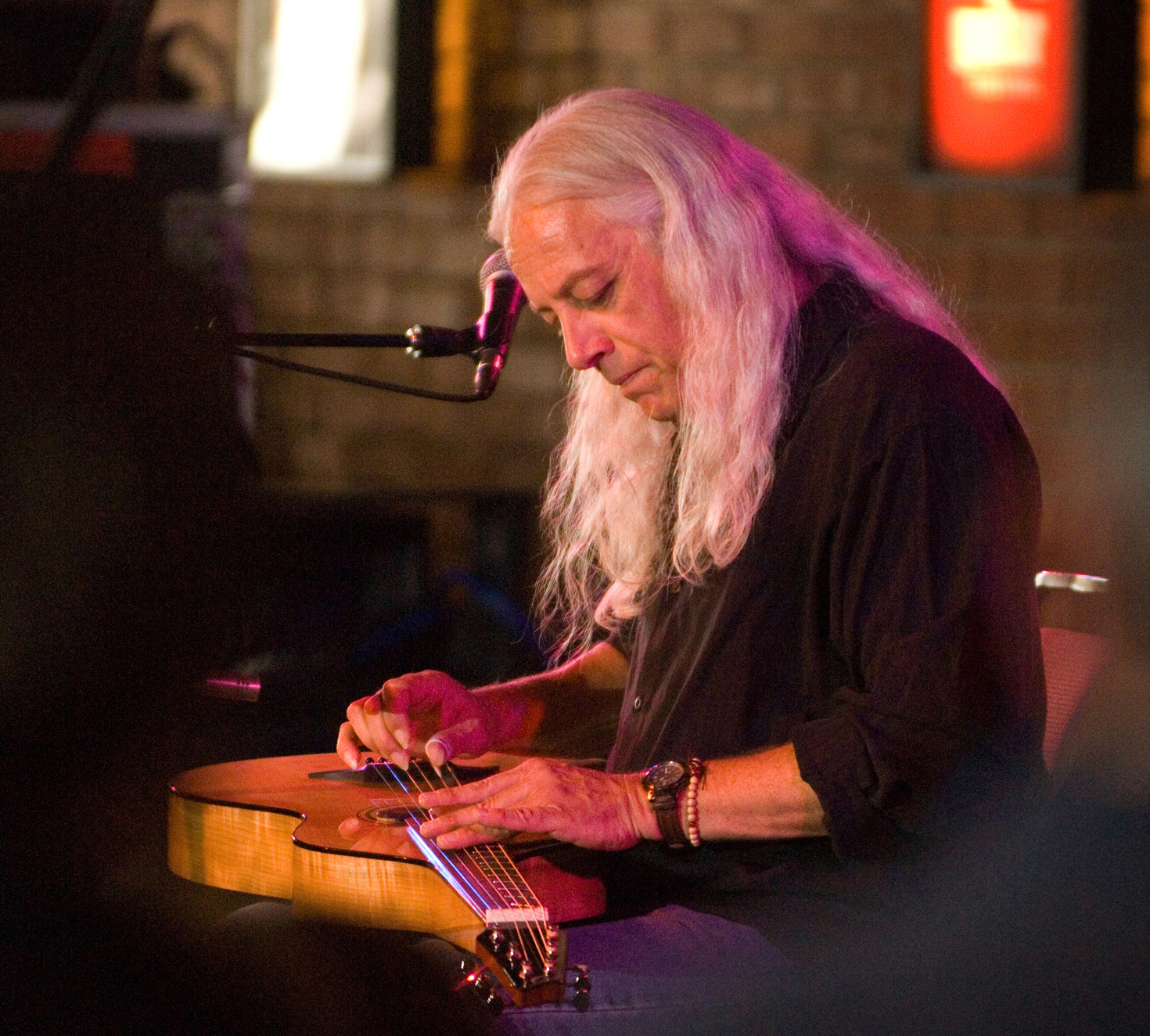
Breaking Bad (habits) – a conversation with Jimmy Heffernan


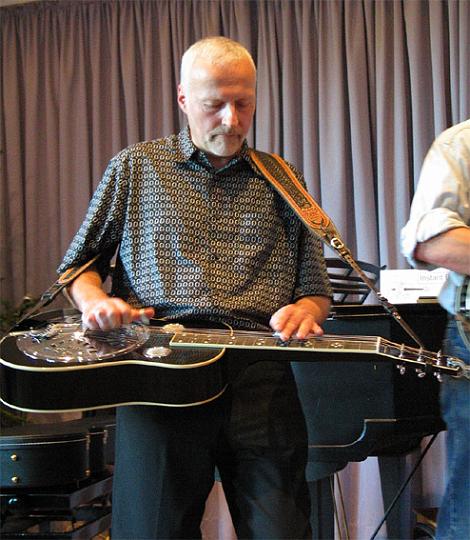
JimmyHeffernan

Jimmy Heffernan


SJ: I recently read a book called the Power of Habit which claims that 40% of what we do on a daily basis are the results of habits. What’s your perspective on the role of habits as it applies to playing the dobro? Can you share any specific examples?

JH: Habits are everything! What we endeavor to do when learning is to create habits through repetition and by building muscle memory. From there our hands and thoughts come together and create the music. Virtually nothing you’ve ever heard has been the result of a lightning bolt or a result of “on the spot” brilliance. So we need habits or muscle memory to channel our creativity in music. The problem arises from bad habits. The dobro is unique among bluegrass instruments in that you can pick it up and with virtually no technique at all you can make pretty pleasing sounds by just moving the bar along with the chords. Now you can do this with your pick on backwards on your pinky or your thumbpick on your pinky and your metal pick on your thumb. The point is you can do everything wrong on the dobro and still make it work to a certain level. To my knowledge you can’t play a fiddle, banjo, guitar or mandolin unless you tackle the rudimentary techniques. To my experience with many many students this is the main “bad Habit”. Players pick up the Dobro and with no one to guide them or emulate locally and begin to play. They then “Burn In” habits that create a ceiling which is virtually impossible to break through once they try to start emulating what they hear a records.

There are always several ways around the barn and one player to the next will have slight variations on how they accomplish what they set out to play. What is common to all good players is economy of motion and excellent left hand technique. Those would be the habits to “burn in”. I’m constantly looking for new pathways for my hands to travel, create a new “habits”. For me the “habits” that I carry with me as I explore are economy of motion and left hand technique. Anything explorable on the Dobro will flow from that.

SJ: Are there certain habits which are more important than others for someone who is just getting started on the instrument – perhaps right hand position, balancing out the use of the thumb and fingers, damping behind the bar, etc?

JH: They are all important for somebody that’s just getting started. For example, it’s pretty easy to learn to reposition your right hand away from the bridge. That’s not a very difficult change to make but it pays big dividends. For example, you could have the best technique and red hot licks but if you’re picking to close the bridge it’s all for nothing. Next would be learning to base your right hand picking around the thumb. I have seen hundreds and hundreds of students who have taught themselves and not learned to balance out their right hand by basing it around the thumb. The thumb is the strongest finger and if used in conjunction with the index and middle balances for a nice even distribution of the workload. If you think about it like a flatpicker uses a pick on the guitar most of the time the pick is going down and up. There are exceptions to this where after a long note flatpicker will use two down strokes. Well it’s the same on the dobro. The thumb would equate to a downstroke and either the index or the middle would equate to an upstroke. Dividing the workload of the right-hand in this way has a certain balance to it, just like the flow of the right-hand of Tony Rice, Sam Bush etc.. You could even see it in the bowing of a good fiddle player or the driver a locomotive wheel.

If you’re starting out or even been at it a while and can get a grip on those two things you will find yourself way ahead. Everything else of course going to need attention eventually and with practice most will get there. Welding these two techniques into your playing will go a long way, helping to smooth out your playing.

SJ: How do you help someone “unlearn” a bad habit?

JH: Basic answer is just to stop doing it. But I think the real answer is a little deeper. First thing in my mind is to demonstrate and have student totally understand how detrimental somebody’s habits can be to their playing. To undo anything as ingrained as a bad habit or any habit for that matter requires a lot of discipline. You need to totally remove it from your muscle memory and default way of going about things. That takes a lot of practice undoing. When we play music or improvise you’re traveling down well-worn pathways with our hands and heads. It took a lot of work to get those habits into our playing. Rooting out bad habits may be even more work so I am a big believer in dramatically demonstrating the upside to correcting a bad habit.

A bad habit will definitely show up in your playing and usually can be heard very easily. I’m very big on recommending my students record themselves and critically listen back. Hard to do but necessary, you want to be able to hear what other people are listening to when they hear you. I prefer to correct that before I leave the house. That being said mistakes happen everytime you play and the sooner you get used to that the happier you will be.

SJ: What about the habit of relying on tablature vs. training yourself to play something by ear? It seems to me that requesting tabs for different songs has become the default on the Reso Forums. And while I understand the attraction to tabs there’s a tendency for those who rely on them to neglect ear training which is one of the basic building blocks in becoming a good musician.

JH: As you know Rob I learned to play when there really wasn’t any tab out there. I had to use my ears, picking up the the needle on the record over and over. Slaving over a hot turntable.:)
So my answer about tab maybe a little bit skewed. I learned by critical listening and looking back I believe is the best way to learn. Having said that I am in the tab business. I do realize that most folks will not have the amount of time to invest as I did and do. Learning music has consumed my whole life and I wouldn’t change it for anything. For those out there that don’t have your whole life to invest there is tab and video’s. I do believe that with all the modern learning aids today a good percentage of one’s time should be invested in developing the ear. I have told many many many students that the ear is a muscle. The more you use it the stronger it gets and that is really is true in my experience. Even after 40 years of using my ears I hear and more layers to music and Dobro every day. It’s a very beautiful thing and I wouldn’t want anybody to miss out on the experience. I imagine everybody reading this is going to be a Dobro player, so folks do yourself a favor and pick something simple out and really listen to it. Do it a hundred times and email me in the morning.:)

SJ: What causes players to have difficulty improvising, even over the simplest chord changes? How does one break out of the “I can’t improvise” habit?

JH: From what I have experienced the difficulties arise from players not really knowing the scales or trying to play them in a difficult position. That brings up Catch-22 situation, if a player is not successful trying to use scales they tend not to practice them in yet tons of practice is the only way they can use them. Improvisation and creativity are acquired skills. You have to crash and burn 100 times for every successful attempt. Again in my experience for some reason players are afraid to make mistakes in music. If you think about anything you know how to do well you made a ton of mistakes learning it. Why would music or dobro playing be any different?
So I think the problem is twofold. You would need to know where the notes are on the fretboard without question, second nature. Then attempt to use them without fear, make mistakes and learn from them being prepared to accept new mistakes as you venture forward. In my workshops I always feature A lot of time on scales. I then grab a guitar and play rhythm while they play around in the scales. It never fails, they light up with a big grin as if to say ‘ I didn’t know I could do that”. And there you have it, learn the scales and put yourself out there. It only works if you do it, no shortcuts.

SJ: What causes players to get stuck in ruts when it comes to playing solos and how do you help someone break out of their comfort zone?

JH: For me breaking out of a rut involves learning small new bits. I find if I learned a very small lick or technique I’ll work it into something I already know it makes everything I know sound different. I love that . I get for tired of sounding like myself I think everybody does. A new lick, Position, rhythmic phrase or grouping of notes does the trick for me. And believe me it can be very small. I have a very small pocket of notes that I learned last night listening to Rob Ickes, I’m doing a concert tonight and I will be using it on every song. Goodbye rut!!!!!

SJ: It seems to me that a good portion on the instructional materials available approach the learning process from a “monkey see monkey do” teaching method. Yet, I know from experience that each student may learn in their own way and at their own pace. Can you share any observations from your teaching experiences about what constitutes effective learning and practice habits on the part of the student? Is there a difference between working hard and working smart when learning to play the dobro?

JH: There’s a huge difference between working hard and working smart. Just because you’re working hard on something doesn’t necessarily mean you’re working hard on the right things. I always encourage students to pick out things they know they’re going to need when they play in the immediate future. That’s one example of working smart. It’s hard work and very time-consuming to learn any instrument your resolve and patience will be tested. We all have that in limited quantities of each so for me it was always a matter of achieving real progress before my resolve gives out. I think it’s very smart to reach for things to learn that you will need to know the next couple times you play with the people you play with. If you have to take a solo on “Love Please Come Home” for example look for ways to creatively state the melody and make it sound good for the Dobro.It doesn’t have to be hot or hard. Check out options for soloing over the 7 flat chord which is common to many songs and occurs in “Love Come Home”. Look for ways to play over the 5 to 1 chord change which is also in that song and every song you’ll ever play. Check out rolls again which you can use to solo on this song and….almost every song you’ll ever play at a jam. To me that’s way smarter than learning some little known instrumental that is sure to be a jam buster.

As for effective learning and practice habits, I find from my experience that critical listening again comes up. When a student plays me something I know that they are not hearing it the way I hear it. So why not? The answer is I have had years and years of developing my ear to where I can hear things on a very very deep level. One easy way to start that journey for students is to learn to listen to yourself as you are practicing. Too many players practice licks over and over again and are not listening intensely as they practice. The more you tune out the world and zone in on your playing, the more you will hear every day.
When I am practicing I will jump out of my skin if somebody walks in the room and says hi. I am not aware that anybody entered the room. I wasn’t born like that I developed the focus I need a little bit at a time by really listening.
That focus will help you hear things on records and in other dobro players playing that you never dreamed where there. You’ll find that you can learn faster and sound better at the same time. At least that’s the way it’s worked for me and I’m still working on it.

Practice slowly and make sure each note has a place not just something you lump together to get to the next lick. Practice below your top range so you can put things in your muscle memory relaxed. The way you put it in your muscle memory is the way it will come out. Put it in tense and jerky it will always come out tense and jerky. Guaranteed. Listen to your tone. Record yourself OFTEN and listen to it OFTEN. Your favorite players have done exactly that.

Jimmy Heffernan is a highly respected Nashville session player, sideman, and producer. He’s also a versatile multi-instrumentalist and a truly gifted dobro teacher. Visit Jimmy on the web at JimmyHeffernan.com 


A conversation with GRAMMY Award winning guitarist Ed Gerhard


10511224_796405083702924_52876774085257874_n

SJ: Thanks for taking the time to talk with us. Who or what inspired you to start playing in the first place?

EG: I always had a musical ear as a kid. When I was about ten years old I saw Segovia on television. That was the first time I’d ever heard the guitar played as a solo instrument and it floored me. It wasn’t until four years later I convinced my Dad to get me a guitar. I started with an interest toward classical music but I couldn’t find any good classical guitar instructors near me so I did what everyone does, went down to the local music store and sat with a nerdy guy and played those horrible things, the songs you never hear outside of the backroom of a music store (laughs). I took about three lessons there. Quit those lessons, got a couple of books. I never did learn too much from those books, just a few chords. A college kid had moved across the street from me in Pennsylvania where I grew up. He was a guitar player, so whenever he was home from college I’d take a lesson or two with him. So I made it a point to digest as much as I could in one sitting. I would learn pretty much an entire tune in one lesson. Not all the details, but I could get from the beginning to the end and figure out the rest by myself later on.

SJ: Sounds like you are largely self-taught then?

EG: Pretty much. This college friend of mine was a guy named Bill Morrissey, if that rings a bell with anyone. I would take a few lessons from him when he was home, but in the meantime I had to figure out some way to learn tunes so I applied myself. I always had a pretty good ear so that always served me well. It allowed me to not only figure out what was going on in a piece of music, but to memorize it. That’s one of the big things that I see now in a lot of players that are learning how to play – they don’t memorize stuff. It only exists on a page for them. They don’t have it in their head. But that was a natural thing for me. I ate it all up.

SJ: I see that you offer occasional workshops and I’m curious if you have any general thoughts about the learning process? It seems to me when you watch a great musician play you see the results, but you don’t see all that went into producing those results, which might be years or decades of dedication and practice, overcoming obstacles, paying your dues, etc. What are your thoughts about teaching yourself to play?


EdGerhardlap14


EG: I think that some people are more philosophically or motivationally inclined toward one way of learning as opposed to another. For me it was a natural thing to never say die or take no for an answer. I just kept working until I figured it out. But that takes a lot of time. People don’t seem to have a lot of time or be willing to make a lot of time, so they will often use aids like tablature or instructional videos which are great way to learn, but in order to really play the music has got to be inside you. You’re not trying to claw your way in from the outside. So my workshops are a little different than what folks might expect. I’m not sitting in a room telling everyone to play the same thing. What I like to do is to work with each player, listen to what they are already playing and use that as a starting point. What I try to do is to help them listen more deeply to the effects that they are having on the instrument. People will often ask me how to learn to play with more emotion or more dynamics. Unless you can really hear how your own technique is creating those effects on the guitar you’re going to miss those things. So you have to think, feel and do. That’s what I try to help folks do in my workshops.

SJ: When I listen to your music I find myself taken with the beauty of your arrangements. You play with great finesse and communicate with your audience at a deep level, all without words. What is your perspective on instrumental vs. vocal music and how does that influence how you arrange your repertoire for live shows?

EG: I never think about it in terms of instrumental vs vocal music. When I’m arranging something I am aware of what the song is about and I try to become intensely familiar with that – on my terms – not necessarily what the author intended and try to figure out what that means for me. For example I have an arrangement of Strawberry Fields Forever that I’ve been playing lately and it’s not one of those arrangements where I’m trying to duplicate everything that was done on the original recording. Sometimes those types of arrangements have almost a novelty effect. What I try to do is figure out what the song is actually about. Now this is not a tune that I play on Weissenborn, but the tune is not just a psychedelic romp with strange noises, that’s what the record is, but what the song is is not always represented on the recording in a way that everyone can understand. When you look at the lyrics – “no one I think is in my tree” – what does Lennon mean by that? If you know about John Lennon, you know that he was abandoned by his Dad, his Dad left his family. When he was four years old he went to live with his grandmother and his aunt. He saw his mother regularly but he didn’t live with her. He always thought he was a little genius and he felt that he saw and thought and felt things in ways that everyone else seemed to miss and that confused him. But he would go to this park and play and climb trees – he loved to climb trees. There was an orphanage nearby and the orphan kids would come out to play and they would come out to the park and he would play with them and he felt that he fit in with them. That’s what the song is about. So when I play that song that’s what I’m trying to get across, not the backward drums and noises. I mean I love that stuff, but I’m trying to take something and figure out what’s personal to me about it. That’s where that connection comes from. A lot of times people will hear things in a way they haven’t heard before. Other times they’ll hear something that should be intensely familiar and they’ll ask what is name of that (laughs)!

SJ: So it’s a search for trying to understand and play out of your own experience vs. duplicating what someone else is doing?

EG: Well, we all start out imitating and trying to make the sounds that we hear that we think are so cool. And that’s a really empowering thing. For some it leads to discovering our own selves as musicians. Other players just want to be amused and just duplicate music and that’s fine. I think that’s where most people are. But you hear people in the world who are taking their influences, internalizing them and what comes out sounds like a whole new thing and that’s kind of the hope for most of us – to be ourselves. Your interests lead you in a certain direction and you follow it.

SJ: Did you start on guitar?

EG: Yes

SJ: What was the transition like moving from guitar to Weissenborn? What inspired you to start playing Weissenborn in the first place?

EG: I always played bottleneck style slide. I’d mess around playing lap slide every now and then. I’d see a Weissenborn here and there and I’d played them, but the bug never bit me until sometime in the 90’s when I was recording a record called Counting the Ways. I wanted some Hawaiian guitar on the record, I loved the sound. I wound up getting a little electric lap steel to experiment with. I thought to myself this is a new thing. It’s still a guitar but totally different. So I recorded a tune with Bob Brozman playing on it. He played some Weissenborn on it. I was recording inSanta Cruz, California and Martin Simpson was out there at the time so I had him play on a track and Bob Brozman play on a track. Martin was opening a show for David Lindley at the Great American Music Hall and he invited me to come to the show. So I met Lindley and hung out. At that time he was traveling with his vintage Weissenborns and they just sounded magnificent and I said to myself “it’s time.” To hear the Weissenborn is one thing. It’s a beautiful compelling sound. But when you sit down and make that sound yourself, I mean, once you’re hooked, you’re hooked for life.

SJ: That’s so great! I think it’s difficult for someone to completely appreciate the difference between listening to someone else play a Weissenborn guitar and getting those sounds out of the instrument yourself. It’s one thing to play a Weissenborn acoustically, they sound great, but you put a good pickup in one and play in a great sounding room in front of an appreciative audience the amount of sound and the depth of the sound is nothing short of amazing!

EG: Yeah, generally I don’t like magnetic pickups in six string guitars, but in a Weissenborn it’s like they’re made for each other. You’ve got the acoustic Weissenborn guitar on one side, the electric lap steel on the other side and squarely in the middle sits the plugged in Weissenborn and it’s totally its own thing. One of the great experiences I had was playing a trade show in Germany. It was in this big industrial park in an arena sized room with an arena sized P.A. system with really great sound. I plugged in the Weissenborn in this gigantic rock and roll system and whenever I would play it was like sitting on a volcano. There was really high volume with enormous clear bass and you could see in the very back of the room there was a little hallway where people were passing from one hall to another. Whenever I would play the Weissenborn everyone would stop to listen.

SJ: So when you are doing a live show you play regular guitar and Weissenborn guitar. I’m curious to know what kind of response you get from the Weissenborn. What kind of comments do you get? Do they even know what the instrument is?

EG: Every now and then I’ll explain what it is but people are generally either informed or disinterested. Occasionally someone will approach me after a show a say what’s that laptop guitar you were playing? It sounds quite of twangy! But people seem to really like the sound of the Weissenborn. In some ways the Weissenborn has made my life miserable. The Weissenborn is so lush and full sounding and then I’d go to pick up the six string again, and plug it in and it sounded like two armadillos getting it on in a dumpster (laughs)! It’s made me work a lot harder on my six string rig and getting the best sound I can get out of it. So now I feel that I can go back and forth without completely losing that roundness and depth.

SJ: How did you develop the repertoire of tunes you play on the Weissenborn?

EG: The only tune that I play that I’ve heard other people play is “How Can a Poor Man Stand Such Times and Live.” I remember hearing that on an old Ry Cooder record and really liked the melody so I worked up a version in just about every tuning I was using – open G, open D, dropped D. I worked up different versions of the tune just because I liked playing it. So when I got the Weissenborn I decided to work it up and then found out that David Lindley had already beat me to it. But he’s accompanying himself singing where my version is a solo version with chords, melody and bass. As far as how I get ideas, I don’t know. Usually something just bubbles up. I don’t noodle around on the Weissenborn as much as I should. A lot of times you discover things – a lick, a chord progression or a rhythm which can lead to writing new tunes.

SJ: What tunings do you use?

EG: Open D is the one I use all the time. I tune it down a whole step so it’s actually open C. I used to tune down to B but sometimes P.A. systems can’t handle that low note, you know.

SJ: Do you play without picks?

EG: I use a thumbpick. Sometimes you want that extra bite on a downstroke.

SJ: How do go about getting the best sound out your Weissenborn for live performances? What kind of pickup, preamps do you use? Do you use any spatial effects?

EG: I use a Fishman Neo-D Humbucker, it’s a passive magnetic pickup which I run either through a Fishman Pro Platinum EQ D.I. which I’ve had for a million years or sometimes I’ll use an Aguilar Tube Direct Box which are no longer made, but mainly its right here (points to his hands), that’s where I get the sound. You have to hear what the instrument is capable of, learn what it’s capable of to connect what you’re feeling or thinking with the actual sound that’s being made. Only then can you really modify that sound and find an emotionally complete way to play; that all becomes part of your sound.

SJ: I’ve found that playing squareneck dobro vs Weissenborn guitar requires a different approach. It’s not just a matter of D vs G tuning (DADF#AD vs GBDGBD) but the differences in string tensions and the way that the guitars respond to your touch. Getting good tone out a Weissenborn guitar seems to be more about finesse than anything else.

EG: When I was tuning with the open D tuning way down to B I was using a standard set of medium gauge strings. The strings felt very mushy. Playing with the right amount of string tension and finesse the tone that you got from it was like nothing else. It wasn’t like a big fat heavy string at high tension tuned to the same pitch. Because that string was looser it tends to swing more and I think it excites the magnet better. But when it’s tuned that low you have to back off with your touch. That really taught me about a lot about how important the right hand is. That’s your voice right there (points to his right hand)

SJ: I took a lesson with dobro player Randy Kohrs one time and he told me that 80% of tone is in the right hand.

EG: I believe that. Obviously you want an instrument to be capable of it, but if the sound system is bad, or your guitar is not sounding good you work harder to produce what you want and that’s what the right hand is for. But the right hand is only in service of what’s in here (points to his heart), you know what I mean? The hand is not going to do it by itself!

SJ: That’s such a great insight. I love that! Can you give us an overview of your different Weissenborn guitars?

EG: I’ve got a pretty good stash of different Weissenborns. I’ve got 3 of the original style 1’s. The best one is a monster, as light as a feather, you’ve played a bunch of Weissenborn’s so you know what I’m talking about. I have a style 2 that’s really nice, then I have some modern reproductions of Weissenborns. Jayson Bowerman, when he was working at Breedlove made me a really great guitar which I like which is made out of myrtlewood. I also have a Weissenborn made by Bill Hardin at Bear Creek which is an amazing guitar. It’s a strange combination of woods for a Weissenborn, its German spruce and Honduran rosewood. It’s a fairly heavy guitar. It’s a style 4. Bill Hardin makes a hell of a nice Weissenborn guitar. And it’s a monster. It’s got this low end on it that – you almost think that the strings are very dull and the notes are going to die away but they hang in there with all this presence. The treble is really fat on that guitar. Bear Creek is a really fantastic guitar. Jayson Bowerman, when he was working at Breedlove developed this Weissenborn with me which was based on my vintage style 2. Now he’s on his own building guitars. I haven’t played any of his Weissenborns but I’m sure they’re really good. Jayson has the magic touch.

IM001478

with Jason Bowerman

LapSteeleCC

Breedlove Weissenborn

SJ: What’s with the frets below the 6th string on the Breedlove Weissenborn?

EG: I’ll do stuff like play at the 7th fret and use my little finger to press down the string at the 4th fret, for example.

SJ: So you’re pressing down behind the bar?

EG: Yes. So you can get a bit more of a moving bass line. I discovered this when I got a really bad reproduction of a Weissenborn guitar from a guy in California. It was badly warped and set up way too low at the nut. So one day I was messing around, trying to see if I could get any notes out of that guitar and I made that discovery. So when Breedlove asked me to design a Weissenborn guitar with them I decided that I wanted that to be a feature of that guitar. It drove Jayson completely nuts. I think he hated me for a long time. It was really difficult to do that. At one point we had a slanted saddle and we angled the frets. The way its done now – and we have this patented – each fret is inlaid in a small piece of ebony and glued on to the fret board. So as the guitar changes, if the intonation starts going bad you can pop of the fret and relocate it. It’s a pretty cool system.

SJ: When you play live do you use any kind of spatial effects?

EG: I’ll try to figure out what kind of reverb the sound person has. I often travel with my own reverb which is a Lexicon LXP-1. I don’t know what I’m going to do when that thing dies, it’s just a great sounding ‘verb. Once in awhile if I’m using my own sound system I’ll bring the LXP-1 or a Lexicon PCM 90 which I will pull out of my studio.

SJ: I used to own one and remember it well.

EG: They’re great sounding reverbs.

SJ: What has being a musician and playing professionally taught you about connecting with an audience through instrumental music? There are very few musicians who play at your level but there are a lot of us who love instrumental music that the Weissenborn is capable of and aspire to connect with our audience – no matter how small – through instrumental music.

EG: It took me years and years to get completely comfortable playing in front of an audience. I always loved playing guitar in front of an audience, but it took a long time to get to that place where there was a sense of community. What I came to realize is that it’s already there before you even arrive, and an audience is never more curious, never more into what you are doing, than the moment you walk out on stage. Before you ever play a note that’s when the audience is most vulnerable and all you can do is screw it up from that point on. But I try to recognize that. My thought is that when the audience is at their most vulnerable, most curious, give them something right up front: give them the impression you want them to leave with. If you want to play something that shows that you are a good player with excellent tone than play something that demonstrates that. That connection is pretty much already there so I’m never uncomfortable on stage or I should say I never get nervous. Sometimes there are external situations – sound or lights – that are beyond my control which can impact a live performance. One of the things about playing Weissenborn is that you need to be able to see the guitar to play it. Making that connection, it’s a hard thing to describe without sounding like Deepak Chopra. It’s a very evasive thing. A lot of times you may be thinking you are making a really strong connection with a tune and you get a lukewarm reception. Sometimes that lukewarm reception can be misread as well. Sometimes you think it’s lukewarm and actually the audience is so blown away they can’t even clap.

SJ: As a fellow musician I love vocal music and have hundreds of CD’s by my favorite vocal artists. At the same time my favorite musicians tend to be instrumentalists. I’m still trying to get my head around how and why instrumental music can be so powerful, so evocative without the listener not necessarily understanding what the music is about. It’s something that I feel at a much deeper level than I can articulate through the written or spoken word.

EG: Absolutely! When I’m playing a tune, like I referenced earlier, Strawberry Fields, all that stuff I was talking about – there’s a lot of information that goes into this arrangement. A lot of choices and a lot of work go into presenting things in the light of how I think and feel about them. An audience is not going to get all that information, but they will get a sense that it’s there. You can tell when you hear two different people playing the same tune; you can tell who has the information and who doesn’t have the information. There’s a sense of ownership and authority. That’s one of the things that an audience will understand and notice. Are you confident or are you wasting their time; you know what I mean? You do hear a lot of that stuff. Sometimes it’s fun to hear; sometimes the stuff that tries so hard to get your attention winds up driving you away. It’s nice to be drawn into music sometimes. So I try to leave room for that. Everybody’s got their own way of connecting with an audience, instrumental or otherwise. I don’t ever think “there’s no vocals here so I’ve got to do something to get their attention.” It’s not always necessary to pander to your audience – it’s not always necessary to give them something snappy up front. Instead, give them something interesting and an audience will sit and listen to it, unless they’re a bunch of dilettantes and we’ve all played in those types of situations.

SJ: The perils of playing on the road. Any closing comments or words of wisdom for aspiring musicians and/or Weissenborn players?

EG: Geez, I’m kind of a hack at the Weissenborn, it’s not my main instrument. I do love playing them though. I would say with anything that you love, spend as much time as possible with it. You will find things about music and about life, about any kind of art that you would have never understood if you hadn’t put in that extra time. And I’m not talking about discipline, per se, as meaning doing something you don’t want to do or forcing yourself to practice. For me playing music has always been more of a devotion. I have no problems sitting here for 9-10 hours playing guitar, all day or all night. Sometimes I don’t want to play at all. Sometimes I might go a couple of days without playing. I have to touch the guitar everyday but I don’t have to play it. That’s really where it comes from. We’re often taught to develop our weaknesses, and sure you want to be able to get around a do a certain number of things. But, figure out what your strength is and develop that. That’s how you develop your own style.

http://www.virtuerecords.com/index.html

http://www.virtuerecords.com/virtue/edgerhardcatalog.html

FILMS THAT FEATURE ED’S MUSIC:

Mark Twain; Ken Burns
Le Vie Di Sempre (Ivano Ponzini; Italy)
The National Parks: America’s Best Idea; Ken Burns

COMPILATIONS:

Windham Hill Guitar Sampler (over 300,000 copies sold) Donna Lombarda

(Featured in Acoustic Guitar Magazine’s Essential CDs of 2010)

Henry Mancini; Pink Guitar (GRAMMY® Winner) Guitar Fingerstyle, Narada Records
Masters of Acoustic Guitar, Narada Records
DVDS:

Fingerstyle Guitar Summit
(Ed Gerhard, Martin Simpson & Adrian Legg)

All Star Guitar Night; Nashville (multi artist)
Solo Guitar Performance (Japan Only)
My Love My Guitar; The Best of Acoustic Guitar (Korea Only)

BOOKS:

Songs & Pieces for Guitar
Ed Gerhard; The Guitar Songbook Warner Bros/Alfred Fingerstyle Guitar Masterpieces Stringletter Press Portraits of Christmas Mel Bay
Guitar Music Virtue Records Publishing/Mel Bay
Windham Hill Guitar Sampler Songbook Lap Steel Guitar Centerstream Publishing
Hal Leonard
Virtue Records Publishing
“Gerhard’s two instrumental sets provided ample demonstration of why critics have been so unstinting in their praise. An original musical voice, he has some- thing to say; and he says it with a rarely-heard clarity.”

Freddy Holm

originally published at www.robanderlik.com in 2010

m

SJ: Even though we’ve never met in person I feel as though I know you through your music. Tell me a little bit about your background, musical or otherwise: where did you grow up, what is your musical chronology, how/when did the dobro enter the scene?

Fredriksten_fortress_Norway_seen_from_Halden_harbor
FH: I grew up in a small town in Norway called Halden. I live there still:-) A beautiful place on the border to Sweden, way down south. Population is approx 30000 and there’s a big fortress on top of a hill, looking over the town. I started to play a little bit organ when I was 6 years old, but I didn’t start playing for real until I picked up the guitar at the age of 16. I started playing professionally when I was 18 and it’s been my occupation ever since. I’m mainly selftaught, but I went to Musicians Institute of Technology in Los Angeles for 12 months, to learn theory. I sang and played guitars in various bands up to 2006 when I picked up the dobro. I also started playing banjo, mandolin at that time, but my heart was with the dobro.

SJ: What led to your interest in the dobro in the first place? It’s still a relatively obscure instrument here in the states and I am willing to bet it’s even rarer to find someone playing the dobro in Norway. Listening to your music and your videos I get the impression that you came to the instrument with a highly develop ear and learned to play by expressing what you hear inside your head vs. copping licks off of records or watching others.

l_ba956480c51cb9558bbc46fc80a14b83

FH: It’s the most expressive instrument I know of. ( after the human voice, of course )
I’m selftaught on the dobro too, but I went to Resosummit in ’08 to learn a few tricks from the masters. I never played or almost even heard bluegrass until ’06. Bluegrass isn’t that well known in Norway. So my approach to the dobro is to play music I’ve listened to and grew up to, and that’s pop/rock. For an example, I have arranged several Beatles tunes on the dobro.

08-LHIMG_6173-Omni

SJ: Watching the video clip above just reinforces for me the value of being able to play what’s in your head and the discipline and patience required to translate that onto your instrument. It seems as though non-musicians sometimes assume great musicians are born with this innate talent and don’t have to do much work to get their chops together.

FH: Being a singer also, helps you to play any instrument I think. You have to learn melodies in your head, not just your fingers.

SJ: Where do you draw your inspiration from when writing new tunes or arranging other’s music? Who or what is your muse?

FH: My inspiration is just playing and getting better. I believe in hard work and practice. I’m not that kinda guy who sits around and waits for inspiration. I think writing music is like a muscle. You need to do it all the time to keep it in shape. Of course, some days are thougher than others, but I do get a kick of playing everyday. And I get really cranky if I don’t play.. Maybe it’s an addiction! I just recently picked up the fiddle, which is a really tough instrument to master. I’m fully aware that I will not ever master it, or any instrument, but it’s a good thing to learn different instruments. Because you can incorporate different techniques into your own style at a given instrument.

SJ: The quality of your recordings is awesome! Please tell us about your recording gear but also about the process that you’ve gone through in learning how to get good results in the studio.

FH: Thanks! My interest for recording began when I started playing and I believe it’s been a really important part of my musical development. I bought my first Fostex 4 track cassette-recorder when I was 17 and went on from there. I’m now using Cubase 6 recording software and have collected microphones for a while. On the dobro I love to use the Neumann KM 184, AKG 414 and Audio Technica 4033. I’ve also discovered that good preamps are a must. I have a Vintage Design DMP ( Neve clone ) and a Chandler Germanium that I like to use on the dobro. But the two most important things you need is a good musician and a good instrument.

SJ: Perfect segway! Please tell us about your instruments: what process did you go through in choosing your instruments and what advice do you have for someone who is either just getting started with the dobro or ready to upgrade from a starter instrument to a pro-quality instrument.
What does your live rig consist of? Can you share any advice for getting good sound for live performances?

guitar

FH: I have one Beard Maple E, and one Beard Vintage R model. My first dobro was a crappy Bean Blossom, and I tried the Beard Vintage R model in a shop, and was sold on it right away. Then when I visited Nashville first time in ’07, I tried the E model at Gruhns. Of course I had to have that one too. hehe I feel that I have two very good dobros that represent two different sounds. E Model is more “modern”, and the Vintage R sounds more old school. I found out fast that a good instrument makes you want to play and practice more..

SJ: Speaking of live performances, I heard that you joined Tim O’Brien on some gigs last year: how did that come about? I’d also be interested to hear more about the music scene in your area and what kind of gigs you do on a regular basis.

FH: Yeah I played with Tim for three gigs here in Norway.He’s such a great songwriter and musician. I first met Tim at a recording session in Nashville. And he told me that he always wanted to come to Norway and play. So when I got home I picked up the phone and called a couple of places. And we had fun for a week. I played the dobro, guitar and mandolin on those gigs.

SJ: Thanks so much for taking the time to visit with us! What kind of advice do you have for someone who is just getting started on the dobro and/or the music business? Any words of wisdom?

FH: Give it your very best and don’t quit! Be curious on different styles of music and willing to learn. Although the dobro is known as a bluegrass instrument, it doesn’t have to be limited to just that. Thanks so much for having me!


Rob Ickes

Originally published at www.robanderlik.com in 2008

test_clip_image002

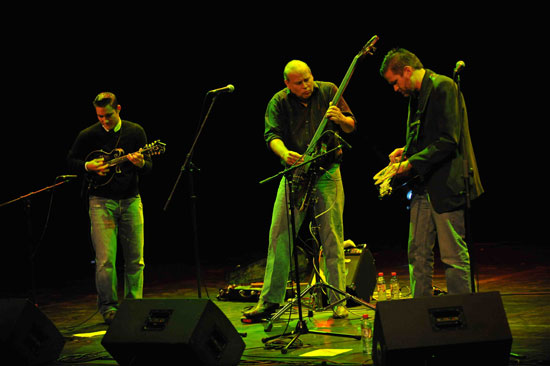
SJ: Your latest project – Three Ring Circle – is fantastic on so many levels. First of all, it’s great music; highly enjoyable to listen to and incredibly innovative. Unless I am mistaken this is the first mando-dobro-bass trio project ever, correct? How did this project come about? How did you go about writing and arranging the tunes?

RI: It came about pretty organically. Dave (Pomeroy) and I have been working in town together a lot; playing on other people’s records and we just hit it off. We started playing some music together, playing around town. Sometimes Dave would have his own gig; we started writing some tunes. We started looking for somebody else to pick with and I had met Andy (Leftwich) awhile back. I always thought he was a great player and I didn’t even know he played mandolin! I had only heard him play the fiddle. I heard him do some work with Ricky Skaggs and I don’t know, we just hit it off we’d wind up playing music together. So I told Dave “this guy’s great” we should get together. Then the three of us got together informally one night at a bluegrass festival in Nashville and it seemed like sparks were flying. Andy had this song that he’d written and started playing it and I started playing with him, Dave jumped in; we had these neat arrangement ideas that came together pretty quickly. So that’s how it got started…everything just fell into place.

SJ: Did the unique instrumentation force you to change your approach/technique to providing rhythmic support during mandolin solos?


test_clip_image003

RI: It’s actually been easier. Sometimes it can be a little bit challenging to play in a trio; there are only three of you and you have to keep it going; you can’t hide behind anything, so you really have to be up on your game. But in some ways it’s a lot easier because there are only three of us. I can hear the dobro better; I can hear everything a lot better. For me I feel as though I can get even more expressive. As far as rhythmically there is not much difference. I’m still doing a chop like I would in a bluegrass band. I don’t feel like I’ve changed rhythmic approach that much; it’s similar to playing in a bluegrass situation.

SJ: When did you realize that playing the dobro was going to be your day gig? Were there any special experiences or circumstances that led to that decision? Was it hard to break into the music scene when you first moved to Nashville?

RI: The first time I head Mike Auldridge first album it was a “lightening bolt” experience. I knew I had to learn to play the dobro. I just knew that I loved it…a lot! And I always knew that was that I wanted to do. When I got a little older living in California felt like an island, musically; at least for acoustic music. I would read about these great players – Tony Rice, J.D. Crowe, but they really didn’t come out there that much. Bluegrass artists at that point didn’t go out to California very often; it wasn’t expected. Now that I’ve played for living I know why the bands don’t get out there as much. So I thought really seriously about it but I didn’t know how to get from point A to point B, you know. So I just kept playing and working with as many people as I could. Then in 1990 Alison Krauss hired me to play on the Cox Family’s 3rd record for Rounder Records. I was friends with Ron Block who was in her band; he was also from California. So they flew me out here and we worked on the record all week and it was so much fun and the music was so great. That kind of did it for me. I was already playing full time at that point but I was not doing much because there was not much to do in California for bluegrass music. So that really tipped my decision to move to Nashville and got the ball rolling which led to me joining Blue Highway. We all met a couple of years after that.

SJ: You have played with such an impressive roster of artists over the years. What have been some of the highlights of those experiences for you? What effect have other musicians had on your own musical development?

test_clip_image009

RI: The first record I did with the Cox Family was an incredible experience. It was one of the first times where everyone, all the musicians were just great. You know when you’re out there farming around and you think your good, you think you know what you’re doing, but if you don’t get in the right environment you don’t know what you’re capable of. So I felt like that was the first time I’d been with musicians who could make me sound good. It’s a team effort. That was the first time I’d really played with all these great musicians – Ron Block, Barry Bales, and of course Alison Krauss. So it was like “hey this is fun, this is nice.” So that was a great experience. I’ve had some great stuff happen…in the last few years I’ve been playing the Earl Skruggs band. It just been incredible to get to know Earl and to work with him, he’s such a legend. And to find out what a great guy he is. Not only is he a really important musician but just to get to know him personally has meant a lot to me. I’ve also had the opportunity to work with Tony Rice in the last few years. I’m kind of a part-time member of the Tony Rice Unit. And same thing…I put Tony and Earl on the same level: they’re important to me; in a lot of ways more important than the dobro players I listen to. Not only is Tony a great singer and guitar player but as a producer he’s put out records that haven’t been beat in my opinion.

SJ: Like his record Manzanita for example? That record seems to have been a benchmark or standard for a lot of aspiring bluegrass musicians.

RI: Yes, Manzanita or Cold on the Shoulder and the Bluegrass Album Band records. He was a catalyst and also has a way of making people play better. He picks great material but he’s such an incredible supportive rhythm player that he brings the level up for everybody that plays with. And of course to work with Blue Highway has also been amazing. We’ve been together for over 12 years now; it’s been one of the best things that’s ever happened to me. For me coming from California, where I loved bluegrass but didn’t get to see it all the time…to get to work with these guys, who are from eastern Tennessee and western North Carolina where this music is from. And, these guys just do it better than anyone else. So to be able to hook up with the musicians of their caliber and have that be my main gig has been a great experience for me.

SJ: I am pretty confident everyone is familiar with the amazing range of work on your solo recordings, your work with Blue Highway and a long list of high profile recording artists such as Alison Krauss, Dolly Parton, Ricky Skaggs and so on…With that said, some folks may not be aware of the more obscure work you have done. For instance, your work with (Czech guitarist and former Chicagoan) Slavek Hanzlik on Summer Solstice and Fall of My Dreams– fantastic stuff with a stellar cast of musicians – Bela Fleck, Tim O’Brien, Stuart Duncan and Mark Schatz. Are there any more “obscure” projects that you are especially proud of that your fans may not be aware of?

test_clip_image013 test_clip_image011

RI: It’s funny you should mention Slavek’s records because I just heard then again. I was playing somewhere and they played Summer Solstice before the show. I had forgotten about that record. It’s a really nice record. Slavek writes great melodies and is a great player. That was probably one of the first things I did when I got to Nashville. It was great to work with people like Mark Schatz, Tim O’Brien and Stuart Duncan in the studio. I also did this record with Raul Malo (lead singer with The Mavericks) a couple of years ago called Nashville Acoustic Sessions. It was me and Dave Pomeroy and Pat Flynn and Raul. It was neat, just a three piece band backing up his vocals. When we were cutting the record it seemed loose and sort of out of control, nobody knew what was going on (laughs)! But when I got the record back I really like it. I thought everything sounded really good. Some really nice moments on that record… I really love the Cox Family records as well – (Everyone is Reaching Out for Someone, I Know Who Holds Tomorrow)

SJ: The first time I heard you was back around 1992/93 on the Tony Furtado record – Within Reach – playing the Beatles tune “I will” with Alison Krauss on vocals. Truth be known, I just assumed it was Jerry Douglas! That tone – big, round, full, and so-oooo in-tune! I seemed to me then that you were the first “new” guy to come along after Jerry had done so much to revolutionize the instrument. How do you trace your musical heritage as a dobro player and musician? Do you feel your style has evolved or changed since the time you first came on the music scene?

RI: I hope my style is always evolving and changing. That’s one of the things that I’ve always admired about Jerry Douglas playing. He has a style but he would always play differently depending on the situation he was in. I always thought he was an interesting musician because of that. He sounded different on each of his records but on other people’s records too. He never had this “here my three licks that I do” “this is my sound” approach. He was a great improviser and would play whatever fit the moment. So that is something that I have always strived for too. I’m always learning and trying to change. With the Three Ring Circle record I feel like I’m playing stuff that I’ve never played before, you know I’m getting sounds out my guitar that I haven’t got before. As far as the evolution of it when I started my goal was to sound like Mike Auldridge; that was all I wanted to do. And then I got into Jerry Douglas, Josh Graves and Brother Oswald, those are my four main influences. As I got older I listed to those guys so much, absorbed a lot of it and started to wonder, “what do I sound like?” It felt funny to play a Jerry Douglas lick. I felt like I was stealing every time I played an Auldridge lick or Josh Graves and I really got curious about “what do I sound like” or “how would I play this.” And it helped me to make that switch. A lot of people don’t do it. They might get to where they can play like Jerry and they stop right there. That’s o.k. but I was always curious about what I sounded like and it’s been a continual search.

SJ: As a Christian and as a musician I am especially grateful to you for your arrangements of traditional hymns on the dobro. Your contributions of tunes like “How Great Thou Art” and “Be Thou My Vision” have inspired me not only to learn those tunes that you have arranged but also to try my own hand at arranging hymns. Can you share any insight as to how you pick tunes or how you go about adapting them to the dobro? Does the tuning make a big difference in the arrangement?

test_clip_image025

RI: I do 99% of my stuff is in G tuning. I think I heard How Great Thou Art when I was sitting in church one time. It’s a standard tune but I didn’t grow up in church so a lot of this music was new to me. So as I recall I heard it in church and thought to myself this would sound really good on the dobro.” It was the same with Be Thou My Vision. I think that’s where I got that from.

SJ: So you took your cue from the vocal melody and made up your own arrangement?

RI: Yes. I listen to singers a lot and think of the dobro as a really vocal instrument. The key of G is nice because you have all those open string possibilities which help direct the song. When you play dobro its like playing guitar with one finger; it’s hard to get those big chord changes and bass notes, so the key of G works really well. Be Thou My Vision is in C. I’m not really sure why I played it there. It starts out over this C add 9 chord which has this ethereal, rippling water sound you know? I’m a big fan of the melody. I went through big Chet Atkins phase, listened to a lot of his records. He can just play the melody and sound great with hardly embellishing at all. It’s fun to take a great melody and work up an arrangement; it’s a fun thing to do and the dobro is good for that.

SJ: Let’s talk about gear for a moment. Tell us about your resonator guitars.

test_clip_image031

RI: I started playing Scheerhorns in 1990; I’ve got # 8. Sally Van Meter is a good friend of mine and we were both living in California at that time. She got a guitar from Tim. I played her guitar and went “wow, I’ve got to get one of these.” It was like night and day compared to my guitar which at that time was the first dobro I ever bought – a 1979 OMI Model 60D Dobro. I called Tim the next day and placed my order for one of his guitars. I just loved it – it sounded great and was so beautiful. I probably played that guitar for 5-6 guitars and I dropped it during a photo shoot or something happened where it wasn’t giving me what I wanted. Tim had a rosewood guitar that really liked so I played that for a couple of years and then he made me a large body (L Body) version of that guitar which I play to this day. So, when I find a better guitar I’ll play it, but I haven’t yet. There’s something about that guitar that gives me a sound that I like. I think the Rosewood gives it a nice warm tone. Tim had 2 or 3 guitars when he brought those to me in 1998. I played all three of them but the one I picked was the one that he had made specifically for me. It just had everything that I wanted.

SJ: What does your “live” rig consist of? What kind of microphone and/or pickup and preamp do you use? Do you like to use any spatial effects such as reverb or delay when you play live?

RI: 99% of the time I use my own microphone which is an AKG C1000. No big deal. It’s not expensive. It just seems to fit my guitar and gets a really warm tone. It seems like I’m always leaning toward a warm sound. I don’t like a really high end-y guitar. I prefer something big and fat sounding. I think this microphone really matches my guitar well. I like it because it’s a condenser microphone but it doesn’t feedback easily. When you’re playing festivals and have a 3 minute set-up you want something you throw up there and go to work without it ringing. You can’t use a really nice studio microphone because it would feed back too much. So the C1000 is the right balance of good tone with being prone to feedback. I also have a Schertler Basik pickup in my guitar which I use if it’s a loud live situation where there’s drums, electric bass or electric guitar, but I try to use a microphone whenever I can because I get the best tone that way.

SJ: Tell us about the new Wechter/Scheerhorn Rob Ickes model? How did this guitar come about; how is it different than the other Wechter/Scheerhorn models?

RI: Tim Scheerhorn designed it. Tim and Abe Wechter have gone into business together and are making plywood dobros. So the Rob Ickes model is exactly like my guitar but made out of plywood and they are really sounding great. We sold out of the first run of 48 guitars in the first two months.

SJ: You’ve won IBMA Dobro Player of the Year 7 times now. You are the only person other than Jerry Douglas to win the award. As such, you are in a unique position to comment – what does the future of the dobro look like? Is the “dobro songbook” expanding to include new standards? How is the range of the instrument being expanded by today’s up and coming players?

RI: It’s tough to say… There are some really good young players coming down the pike right now. It seems like every time I turn around there’s another good dobro player coming up. I think that’s good. I think that is good for the future. I think there will be a really good generation of players coming up. As far as where it’s going – I just hope it gets more and more popular. It’s a great instrument. I guess I’m a little surprised that there aren’t even more people playing right now because people who are new to the instrument always freak out over it. But maybe that’s changing with the new generation of players coming up. You know, that’s what I love about the instrument I’ve made some solo records and I tried to take the instrument into new territory and see what it can do and I’m always impressed at how the tone of the instrument can work in a lot of different band contexts. So that’s something that interests me. What can this thing do? How far can I push it and still sound great? It’s interesting to me to work with jazz musicians or classical musicians or whatever.

SJ: Taking the instrument out of its native context of country or bluegrass music, for example?

RI: Exactly! There’s something that’s kind of freeing when you’re creating something new, like this trio with dobro, mandolin and bass. I don’t know if that’s ever been done before. It’s a very creative situation where it all sounds new so you feel really creative and productive in those situations. I think that’s why musicians do that – push the envelope, etc. I know some fans want you to stay and just do what you’ve always done, but if I did that I think I would get stale, you know?

SJ: I guess that tension will always be there – between tradition and adding to the songbook.

RI: Exactly! I’m not the first person to experience that or try that; I guess everyone goes through that. So I guess I’m impressed with what the instrument can get away with that and that’s an interesting part for me. As far as what I’m going to do on the instrument is keeping pushing the envelope and trying it in different music and different styles.

SJ: Sally Van Meter once told me that you had put in a lot of hours transcribing Robben Ford solos for the dobro. What’s the story behind your jazz projects – Slide City & What It Is? How/when did you decide to record those records? How did you go about arranging the tunes and instrumentation? Did those records present any special challenges compared to recording with traditional acoustic instruments?

RI: When I went to college I got introduced to a lot of jazz music, rock and blues. Players like Robben Ford, B.B. King, Larry Carlton and John Scofield made a big impression on me. I got really excited about it. It was like hearing Tony Rice for the first time, that level of intensity. I started wondering if some of this music would work on the dobro and found that some of it laid out very well. I don’t know why I did those jazz records. I think just listening to that music made a big influence on me and I thought it would be fun to put the dobro with drums, bass, piano and saxophone, you know? And I got these great players and we made records which I am really proud of. I feel like we got into some really good stuff. I didn’t want to sound like a bluegrass guy playing jazz songs. Sometimes bluegrass players will do that – take a jazz song but they’ll do it with a bluegrass band. I always wanted to take the dobro and put it in a jazz band. I thought it would sound a little smoother, a little more natural. That’s what I like about those records – you go “that’s a great jazz record” and then “oh, that’s a dobro” You think about that later. That’s what I like about those records. But I think just from listening to a lot of jazz and blues and rock colored my vision of what the dobro could do.

SJ: In addition to being a recording artist, you are also very well known as an instructor. I have a copy of your Homespun instructional DVD’s which are extremely well-produced and truly a great asset to any/all aspiring players. Do you have any comments or closing words of wisdom for aspiring players?

RI: When I teach I talk about a lot technical things which are of course important, but to me the most important thing is getting together with other musicians and playing. So I guess that’s one thing that I would recommend. You have to practice on your own but you make much bigger leaps when you’re making music with other people. I was fortunate that my family played music, so I was thrown into the fire at an early age. I was playing my brother, my mom and my grandparents a month after I started playing. For me the biggest leaps always came from playing with other musicians. So that’s what I would say. These days there’s so many computer based learning tools – metronomes, drum machines, ProTools, computer programs, etc. but go out and play some real music.

SJ: So nothing can replace the experience of playing music with other musicians. I have always maintained that while a metronome is a valuable learning tool it doesn’t respond to you. Different musicians “feel” timing in different ways. So, playing music with others involves you are a responding to each other; seems to be part of the process of learning.

RI: It’s also part of the process of creativity. A lot of times, if I’m on a really good session, working with good musicians, I play stuff that I had no idea I could play. People can bring it out of you: it’s this exchange that happens between musicians. Those are the peak moments, you know, the reason why we are all playing music in the first place. Don’t miss out on that stuff. Sometimes it can be elusive but that’s what brought us here in the first place.

Wolfgang Reimer

Originally posted at www.robanderlik.com in 2011 

Wolfgang reimer

SJ: Thanks for allowing me to feature you on my website. Please tell us about yourself: where did you grow up, when did you start playing music, what instruments do you play?

Little Martha on Scheerhorn rosewood/spruce resonator guitar


WR: First of all I was born 1950 in Hamburg where I grew up and lived for about 20 years. When I was 14 years old I started to learn and play electric guitar. At that time the Beatles, Rolling Stones, The Who, Yardbirds and many other bands were just coming up and getting famous. And of course like so many others I tried to copy as much song material as I could get at that time. In Hamburg there was the world-famous live music STAR CLUB – and at least three times a week I went there to see countless famous bands like the Searchers, Small Faces, Kinks, Spencer Davis, Pretty Things, Taste with Rory Gallagher, Free, Procol Harum and many more. Furthermore there were two concerts halls in Hamburg where I saw The Beatles, The Rolling Stones, The Beach Boys, Jimmy Hendrix, Led Zeppelin, The Bee Gees, Jethro Tull, Roxy Music, Chicago, Queen, ABBA and many more……. So all these bands and many others had a big influence on me but it was mainly the Rock and Blues music in which I was interested most. At 15 I had my first band and the next few years I played in several different bands, playing different kinds of music – from Rock music to Dance music wearing even a tuxedo sometimes. In 1979 I got an offer to join a so called “TOP 40” cover band which was the No. 1 band at that time in northern Germany. The next 9 years I played about 100-120 gigs per year with this band – besides my 5 day full time office job! This was a very hard time – often enough I played 3 gigs on a weekend and returned on Sunday night at 3 or 4 o’clock a.m. and had to get up at 7 o’clock next morning to go to work. And such gigs were not a one or two hour show – we normally had to play from 8:00 p.m. to 2:00 – 3.00 a.m. ! After 10 years I was really burnt out and quit the band. But after a half year break I started again to form a new cover band covering mainly “oldie music” from the 60’s, 70’s and 80’s. I played with this band nearly 18 years – but we did’nt do more than 20 gigs per year. So, this is my experience and my musical roots ! Regarding my instruments: all the years I played mainly electric guitar and in the mid 80’s a little bit Pedal Steel guitar.

Unterricht

SJ: I have to admit that I am more or less completely ignorant about contemporary German culture and especially the music scene. So…tell us: what’s the local music scene like? Do Germans listen to/prefer local/regional musicians & singers? What kind of American musicians are popular in Germany?

Pickett’s charge mp3

WR: I think the music scene in Germany is similar to so many other European countries. I’m still living near Hamburg which is definitely a cosmopolitan city where you can find all kinds of music. Many top acts have always come to Hamburg and since we have had a new and very big concert hall, even more famous international acts stop by in Hamburg. And of course we have local/regional musicians and bands which are famous over here and are filling big concert halls. American Rock, Pop, Hip Hop etc. musicians who are famous in the US are famous in Germany and other European countries as well. But unfortunately Country and especially Bluegrass music is not so popular and widespread over here – that’s why many famous US Country or Bluegrass musicians are largely unknown in Germany. And although there is a Bluegrass scene (which is unfortunately very very small) most people have never heard about it and do not know what Bluegrass is at all.

SJ: What is the “live” music scene like where you live? What kinds of bands/music can you see at a club or concert hall? What kind of gigs are available to a performing musician?

WR: There is definitely a lot of live music in Hamburg with lots of different kinds of music but Country or Bluegrass music unfortunately plays only a small or hardly any part here. There is a small “Live Club” where a so called “Blugrass Session” (open stage) is held once a month. But you’ll mainly find musicians coming to this session and only very few interested visitors. And for Bluegrass music you can rarely find gigs and opportunities to perform. This is also the reason why there are hardly any Bluegrass bands over here.

SJ: What was your first exposure to the dobro? Where/when did you first hear the dobro; what made you decide to take it up? What’s it like to be a “dobro guy” in Germany and/or Europe? What kind of gigs do you get and what kinds of instruments/musicians do you play with?

wolfgang reimer

WR: I was a fan of Country music for many many years and in the 90’s I heard and saw Alison Krauss on German TV – but at that time not yet having a Dobro in the band. But I liked her music very much and bought some of her records. Then later on there was this double AKUS live CD. Suddenly I came to appreciate this fantastic sounding instrument called Dobro especially on the solo pieces “Tribute to Peador O’Donnell/Monkey let the hogs go out”. This definitely bowled me over – I listened to it over and over and couldn’t believe the sound and really wondered how it was possible to play an instrument in that way. This was definitely the starting point for me to delve into this instrument. As I said, gigs in general are rare over here. I’m playing with a guitar player, banjo/mando player, fiddle and bass player. It is really hard to find musicians over here, at least for Bluegrass music who are on the same or similar playing level and at the same time interested in playing in an “organized” band, willing to practice regularly, experienced enough to perform on stage, etc. etc.. You can really count yourself lucky if you can find any musicians over here who are interested in Bluegrass at all and at the same time play an acoustic instrument. That’s the position over here. Fortunately I’ve found such musicians in my area and we are actually practicing hard and already did some nice gigs here and there.

SJ: I have had many non-musician friends comment to me that it is necessary to have a “talent” (as in “innate” talent or aptitude) in order to become a good musician. Do you agree with this kind of thinking? How did you get so good, so fast? Do you have “talent” or was it dedication to a practice routine, hard work, long hours, etc?

WR: In general I think nearly everybody is able to play an instrument – with or without talent. But of course it is easier for people to learn an instrument more quickly and better if they have an innate musical talent or aptitude. I think it’s like in school, in your job or anywhere else. For some people a certain lesson, exercise or job comes easy – other people have to work long and hard on the same thing. I think I’m somewhere in the middle – I’m not sure how much natural talent I have but I’m a real hard and very ambitious worker – at least in terms of playing and learning an instrument ;-). And I think my advantage is my years of experience in music. I’ve played in cover bands for more than 40 years and always had to copy the electric guitar parts of countless songs. And especially the first 20-30 years there was no supporting material like tabs (I’ve never learnt to read music) so I had to learn all those songs and guitar parts just by listening. This of course trained my ear over the years and now I’m even able to figure out and learn the Dobro parts of a song just by listening and without writing down notes or tabs.

Shebeg and Sheemore mp3 on Deneve 8 string resonator guitar

You asked “How did you get so good, so fast ?” I think one reason is that about 25 years ago I played Pedal Steel guitar for a few years. I didn’t play this instrument very well and gave it up later on. But some of the technique I could definitely adapt when I took up the Dobro 3 years ago. Especially the left hand technique of how to hold the steel bar plus string damping I was able to adapt very quickly. Meanwhile I have started teaching some students who are learning to play the Dobro from scratch. They’ve never held a steel bar in their hands before and do not know anything about string damping. Consequently they first have to learn all these techniques, which takes weeks, months or even longer. So I think this was a big advantage I had when starting up with the Dobro. Another reason of course is regular and concentrated practising ! Although I have a 5 day week office job, I’m spending a lot of time practising and playing the Dobro. There hasn’t been a single day in nearly 3 years now that I haven’t played at least one or two hours per day – on weekends sometimes 6 – 8 hours. Fortunately I have a very understanding and tolerant wife – it seems I made the right choice 35 years ago ;-).

SJ: I am assuming you are self-taught, correct? What learning tools or practice techniques gave you the best results when you were getting started? Did you learn from DVD/Videos, cop licks off of c.d.’s, etc?

I must tell Jesus on Meredith mahogany/cedar resonator guitar

WR: Yes, I’m mainly self-taught. And at this point let me stress that I’m not a professional player – I think “semi-professional musician” might be more appropriate. When I started with the Dobro I first bought the Video “Learning Bluegrass Dobro” by Cindy Cashdollar. This helped a lot to get me into this instrument. Other material followed later on, like D. Hamburger’s “Dobro Workbook”, Stacy Phillips “Complete Dobro Player”, Rob Ickes double DVD “Essential Techniques for Dobro” and lot of other material. Not to forget that right from the beginning I started to buy and collect a lot of Bluegrass or Dobro Audio CDs. This kind of music was really new for me – let me remind you at this point that for me Bluegrass didn’t exist for more than 50 years of my life ! Listening permanently to all those CDs was and is still very important and helpful for me to get a feeling for this music and of course to learn and listen to the many different roles a Dobro plays in a song. And each time I find an interesting song, solo or back up I try to copy it as best as I can. The first two years I mainly played just for myself and learnt to play solo songs from Jerry Douglas, Rob Ickes, Ivan Rosenberg, Junior Barber etc.. I practised them to death until I could play them. But for some time now I have been playing in a band and therefore have to focus on different things like back up, speed licks/solos etc.. This is a new challenge of course and broadens my horizon. Anyhow I always tried to be as versatile as possible avoiding getting wound up in a certain thing for too long. Each time I come to a certain point when practising a song, solo or lick I immeditely stop for that day and continue next day or later. One good example: 6 months after starting to play the Dobro, I tried to play JD’s “New Day Medley”. I worked hard on it for several weeks but finally gave up and had to admit that is was to soon and my skills at that time where definitely too inadequate for such a complex song. Two years later my ambitionsness got the better of me and I took up this song again. Believe it or not – within two weeks I figured out how this song worked. What a sense of achievement ! Of course the reader of this interview might get the impression that I’m a pure “copy-machine”. And in a certain sense they are right. And I defintely have to admit that my own creativity on the Dobro still leaves much to be desired. But to be creative on an instrument in my opinion you first have to learn all the muscial and technical basics ! And I think it is quite understandable and useful and defintely not reprehensible to copy as much as possible – above all if you are a beginner. How do you learn a song, a lick, a solo without copying it from a CD or tab book ? I think there are only very few if any musicians out there who never copied ! But I know a few musicians in my area who never cared much for learning basics. And I know that those guys are not happy about it because it definitely limits their real and innate abilities and talents. It took me years to be creative and to find my own style on the electric guitar – but at a certain point after learning all the basics this creativity came to me and my own style automatically. And on the Dobro I still feel like a kind of beginner and I know for sure that there are so many things I still have to learn. But with continued learning I’m convinced that my creativity will improve.


SJ: Tell us about your right hand technique: what kind of thumbpicks and fingerpicks do you use? How do you position your right hand…do you curl your right hand fingers up (the Jerry Douglas “ping-pong ball technique”), extend your pinky, etc? Any comments about your right hand technique in general?

WR: After using and checking out different picks I finally found out that Zookies L- 20 thumbpicks and metal ProPick fingerpicks work best for me. Yes, my right hand position is similar to Jerry D’s – but this time I didn’t copy him 😉 – it came automatically. Some additional comments: what I definitely adapted especially from Jerry is my thumb technique. I’m now doing a lot with my thumb on all strings. So my thumb is not limited only to strings 4-6 – I’m also using it for the first two strings. Of course what my thumb does depends on a lick or roll but I found out that for many rolls or arpeggios my thumb makes a lot of movement especially on strings 4-6. So, instead of using thumb, index and middle finger for certain rolls I often use only my thumb ! This was definitely hard work to cultivating this playing style but I’m glad that I practised this over and over because I now have much better control and power in my overall playing style.

SJ: What kind of techniques do you commonly use to play back up for other musicians? Do you use/prefer chops, chucks, rolls, etc?

WR: Depends on the song – may be chops, chucks or rolls – and of course a fill lick here and there. For me backing up is still a challenging matter. I didn’t find much material out there teaching back up so far. So I’m listening to many different songs trying to figure out all the different back up styles and try to copy them or even create my own style. As I mentioned – it depends on the song.

SJ: How would you describe your approach to improvisation? Do you think in terms of key sigs, scales, modes, rhythmic variations, etc?

WR: It’s a mixture of all the things you’ve mentioned. But rhythmic variations are always very important for me. Playing “static” scales I do not find so interesting and often a little bit boring. My playing style on the electric guitar is also very rhythmic and I applied this automatically to the Dobro. Rhythm is the salt in the soup.

SJ: Tell us about your gear: what resonator, lap steel and Weissenborn guitars do you own?

WR: At the moment I own 5 resonator guitars (I’m meanwhile a real Reso-geek), Beard Mike Aldridge Signature, Meredith maple, Meredith mahagony/cedar, Scheerhorn maple R-body and a Moon custom maple from Scotland. There is a very nice Wallace Weissenborn made of walnut and a very old Oahu Diana lap-steel guitar. There is also a very old Stromberg Voisinet and an old Stella – both lap steel acoustic guitars. And last but not least later this year I will get my new Scheerhorn Rosewood/Spruce top after waiting about 3 years. I’m not sure if I will want to or be able to keep all these wonderful but at the same time very expensive guitars later on. We will see. But it would definitely be hard to part with any of them.

SJ: I am convinced that many people, especially beginners, place too much emphasis on the instrument; as if all you need to become a good player is the right brand of guitar. What is your view on this sort of thing? How important is a certain instrument to getting “your” sound?

WR: That’s a very good and much discussed question. I have played and owned so many different instruments in my life that I think I can really give some informed answers to this question. On the one hand I’m not a professional musician but even for a semi-pro musician like me who did nearly 2.000 gigs so far and earned quite good money in the past, a good-sounding and working tool is a must. I always liked to play a good instrument and good instruments cost good money. I’m talking about electric guitars, guitar amps, effect devices etc.. Regarding the Dobro of course I started as a newbie from point zero. My first Reso was a cheap Regal roundneck, followed by a Epiphone Squareneck, a Gibson Dobro from the early 80’s, a Lebeda Break and a Gibson JD model. For me each of these guitars of course were a step up in terms of sound and playabilty but after a while I always got a little bit dissatisfied because my idea of a Reso sound was different, especially when comparing the sound of my guitars with all the well known sounds produced by all those famous Dobro players. Meanwhile of course I know that even a cheap Dobro can sound quite good on a recording – it depends mainly on the player and recording procedure and quality. Anyway, at that time I was still searching for a better and stronger sound. My next Reso was the Beard MAS – what a step up !! Suddenly all the song material I had been playing and practising immediately sounded much better ! Later on in February last year I took my Beard with me on my US trip where I had the opportunity to compare it with many other guitars like Scheerhorns, Clinesmith, Wechter, Rayco etc. As a result I decided later on to buy a maple Meredith. This guitar is now my first choice especially when playing with my band. This guitar really has the punch, loudness, clear and differentiated sound which comes very close to the ideal Reso sound I’ve had in mind. Of course I still like the Beard very much but in a band the Meredith is stronger and makes itself heard better.

Coming back to your question. I think the brand of a Reso is not essential to becoming a good player – it needs much more than that. From my point of view you need a little bit of talent, a lot of ambition, perseverance and above all the strong will to learn this fascinating instrument. And I’m convinced you can become a good player even playing the cheapest available Reso guitar on the market. Imagine Jerry D. or another famous player played a song on a 200 $ Reso guitar – I’m 100% sure that everybody would be amazed about his playing and the sound ! But on the other hand a good instrument defintely helps, and for me a good sounding instrument is a source of satisfaction in itself. And I’m really thankful that I can actually afford such nice albeit expensive instruments – but believe me I have worked really hard for it the last 30 years.

SJ: Please detail your “live” rig? Pickups, microphones, electronic gear, etc? Can you give an advice to our readers on getting a good tone through a P.A. system?

http://www.youtube.com/watch?v=nQeL6q4FuZY

WR: My Meredith is equipped with a Schertler BASIK pickup system. For me this is the best sounding system I have heard so far. I have tried Fishman, McIntyre and some other Pickups, but the Schertler produces the best sound for me. In some cases I use an Audio Technica Pro 35X clip mic on my coverplate or a simple Sure SM57 on a mic stand in addition. As a monitor I’m using a Roland AC-60 amp. This amp is able to handle both signals from the Schertler and mic at the same time. There might be better amps on the market but I’m quite satisfied with this versatile Roland amp. Good value for money.

SJ: Your recordings have great sound quality: please detail your recording gear. Can you give our readers any advice on how to get good sound quality on home recordings? Is there anything you have learned along the way that you want to pass along to someone who is new to home recording?

WR: Frankly speaking I’ve tinkered a lot with recording over the last few years. And believe me, often enough I was dissatisfied and frustrated with the result – especially when comparing it with the punchy and powerful sounds on many recordings. Music is only a hobby. I’m not a skilled sound engineer – so my method was always based on trial and error. And recording acoustic instruments was also a new experience and challenge for me.

In short – I’m now using the following equipment/signal chain:
Neumann TLM103 mic, SPL Channel One Mic-preamp, ROLAND VS- 2400CD Harddisc-Recorder. Mastering at the very end on PC with STEINBERG WAVE LAB software using only Peak Master and for convertion from Wav-file to mp3.
In my experience the following tools and factors are important for a good recording:

  • –  good mic with large diaphragm (must not necessarily be a Neumann)
  • –  good Mic preamp (preferably with tube for a warm sound)
  • –  good signal processing tools or plug-ins

First of all it is important to get a good and clean signal onto your recording device such as a HD-Recorder or PC. In the past I often tried to compensate or push up a weak basic signal with various dynamic and effect processors afterwards. This is definitely the wrong way and will rarely lead to a good result. I’m using the built-in effects of the Roland HD-recorder – they are quite sufficient for home recording. So I’m using a compressor and equalizer plus Reverb. That’s all ! But the combination of a good compressor and EQ brings a lot of punch and power to the overall sound. Not forgetting to bring the final signal to 0 DB – I do that with the Peak Master of my WAVE LAB software.

I nearly forgot: of course it is also very very important to use a good monitoring. For a certain time I only used headphones for the mixing – because it sounds so nice ;-). This is definitely the wrong way and also rarely leads to a good result over a speaker system later on. But I don’t think you need a very expensive monitor system – two small active monitor speakers for a few 100 bucks will do the job. The market is full of such monitor speaker systems.

So I’m still experimenting with recording and I’m sure there is still enough room for improving the sound and my skills. But I think I’m on the right pass.

SJ : I’d like to close by asking for your comments on musicianship and creativity: What inspires your creativity as a musician? What are your plans for the future, what are your long-term goals as a musician?

WR: Listening to all kinds of music inspires me at all times. It can be a simple groove or melody line on the radio or TV or anywhere else. Immediately I develop my own idea in my head – but unfortunately often I forget my idea afterwards and cannot recall it later on. But even this process going on in my head is fun and is a kind of creativity and at the same time mental recreation for me. There is always music in my head even when I’m not translating each and every idea into real sound on my instruments.

My plan for the future is definitely to continue working on my playing skills as much as I can – I’m sure and hope that there is still enough room for further improvement. I hope that my band will stay together and that we will get the chance to present our music to the public more than we are doing at present. But we are on the right track – there are several gigs coming up the next months. By the way, this band had quite a new idea of combining quite well known Bluegrass songs with our own written lyrics in a quaint old regional German dialect called “Low German” which is still common in certain parts of the area where I live. Hopefully we can establish the Bluegrass music over here with this unique idea. Besides this Bluegrass project I recently joined a cover band playing all that rock stuff I’ve played so many years. So I took my electric guitar out of the closet, wiped off the dust and plugged it into my Marshall amp. It’s really great to have the opportunity to play in two completely different bands. The contrast between sweet acoustic and loud rock music is fascinating. And above all my playing style and skills defintely benefit from both kinds of music. I don’t know if the term “ cross influence” is the right word for it but defintely I feel some influence from the Dobro when I play electric guitar and vice versa. Furthermore I will now have the chance to bring in my OAHU DIANA lap steel. This guitar in combination with a 100W Marshall produces an absolute killer sound. Here we go – back to the roots !

It was an honor for me to be interviewed on your website, Rob. Thanks a lot.

Explore Drop E Tuning with Greg Booth


gregbooth1


I’ve been playing with the drop E tuning for about 8 years now.
For me it started as a way to play a simple phrase for a recording but has
become my favorite tuning for a wide range of music. Before I started
playing dobro I played pedal steel in bands for 30+ yrs and I think
this may be why I’m inclined to alter the tuning if I need to. It’s
interesting how retuning just one string makes a whole new palette of
sounds possible! It all started in 2006 when I was invited to play
dobro on an album named Alaska Mando by my Alaskan friend Joe Page.
One of the songs was a bluegrassy version of the theme from the movie
Hang’em High. It opens with a call and response between the mandolin and
dobro where I needed the low E note like on an acoustic guitar. I just
tuned my low G string down to E so I could play the part. In playing around
with it I became really intrigued and wound up playing about half the
songs on the album in this tuning. Tuning the low G down to E gave me
access to full minor chords, jazzy minor 7th chords, dominant 7ths
and other cool sounds in the lower register. It was later that I
learned that Mike Auldridge had used the same tuning on his recordings
of Killing Me Softly and This Ain’t Grass in 1972 on his Blues and
Bluegrass album.

http://www.resohangout.com/myhangout/media-player/audio_player2.asp?musicid=11321&archived=

In the years since Alaska Mando I have arranged and recorded quite a
few songs using the drop E tuning: Folsom Prison Blues, Orange Blossom
Special, Wichita Lineman, Somewhere Over The Rainbow, The Christmas
Song and many more. I am often asked to explain how I think about the
tuning. Some call it G6 because of the E note being the 6th tone in a
G chord and technically that’s true, but with the E on the bottom it
doesn’t yield the sweet 6th chord sounds of Hawaiian or western swing
music. I think of it in two ways. Firstly, as G tuning with the upper
5 strings intact for most G tuning repertoire but with a low note to
use in runs and riffs where it fits; and secondly, as Em7 when using
the bottom E string as the root tone. Most of the time I’m looking at
the position markers as if I were in G tuning, but knowing I have the
root of the relative minor chord on the bottom string when I want it.

Let’s look at the notes and the chord tones they give us if you
designate the bottom string as the root. Open there’s the root E, then
B which is the 5th, D which is the 7th, G which is the minor 3rd, then
another B and D on top. Strummed altogether you will hear an Em chord
with the D notes adding the jazzier sound of Em7. If you leave out the
1st and 4th strings and play any combination of strings 2,3, and 5
with string 6 you have a complete minor triad of the root, minor 3rd
and 5th chord tones. The really cool thing about it is that it’s right
there at the same fret as the relative major chord, in this open case,
G. If you know those relative major/minor chord pairs then you will
know where to find the minor chord you are looking for. For example,
the relative minor of C is Am and both are found at the 5th fret. Now
is when some of your eyes may start to glaze over…hang in there! Or
go get out your guitar and check it out. Another easy way to locate a
minor chord in drop E tuning is to start with your major chord fret in
regular tuning, then move the bar up 3 frets and use the bottom string
as the root. For example, if you need an Am chord, start at the 2nd
fret A position, move up 3 frets and use the bottom string as the
root. Those are two ways of arriving at the same 5th fret Am. 

Drop E tuning is great for music that has minor chords, two examples I play
are The Christmas Song and Greensleeves.

Drop E is also great for playing music that doesn’t have any minor
chords. Orange Blossom Special and Folsom Prison Blues are good
examples.

Maiden’s Prayer lays out great in the key of A with no capo. When you
go to the 5 chord the low E note makes it really fat. Fretting just
the 3rd string with the tip of your bar at the first fret gives you a
full E7 chord to strum before going back to A.

One last thing about having the 6th string tuned to E is that you
haven’t really lost the low G note, it’s just moved three frets up the
neck. You can play a fine G chord at the 3rd fret by barring the
bottom two strings with the rest open. That changes the E to G and the
B to D, root and fifth. Cover the bottom three strings with the rest
open and you get a nice sounding G7 chord. In this tuning it’s good to
know that regardless of whether you are in a major or minor context,
you can move up three frets and have the root, fifth and 7th tones on
the bottom 3 strings.

These are the main things I have found to help navigate the drop E
tuning. Try it out sometime and I bet you’ll love the rich sounds your
dobro can make with it.

Greg Booth lives in Anchorage, where, for many years, he’s played pedal steel guitar in country groups as well as banjo (which he first learned from Bill Emerson) and, more recently, dobro. Winner of the RockyGrass dobro competition in 2006 (after playing that instrument for only one year), regular faculty and participant in ResoSummit, and star of YouTube, Greg’s 30 some dobro videos average 1800 plays daily and are approaching 2 million views lifetime. “Greg’s innovative, expressive dobro playing is even more remarkable” says guitarist Joe Karson, “when you consider that he employs no ‘licks.’” Greg plays dobro and banjo with the Kathy Kallick Band, appears on four of Kathy’s albums and is soon to finish another KKB album this year.
http://www.kathykallick.com/index.html

Chasing After Our Heroes by Rob Anderlik

IMG_2394

“And so Galahad decided that it would be a disgrace to set off on a quest with the other knights. Alone he would enter the dark forest where there was no path. This is the myth of the Hero’s Journey” – Joseph Campbell

Every musician has a story to tell which usually starts by being inspired by one of their musical heroes. Heroes play an incredibly important role in our own development as musicians – they inspire us to begin our journey and provide us with a treasure trove of musical DNA which leads us on our way. When we’re inspired by our heroes something gets stirred deep within our souls. We stand in awe of what we’ve experienced in their music and we see – perhaps for the first time – a glimmer of those possibilities within ourselves. Part of what inspires us about our heroes is their uniqueness. The greatest musicians are completely authentic in every detail, with their own catalog of tunes, unique tone and signature licks. And while we may appreciate the skills of musicians who can imitate others  – even with virtuosity – we are rarely inspired by them.

“The privilege of a lifetime is to become who you really are” – C.J. Jung

Dobro superstar Rob Ickes – “As far as the evolution of it when I started my goal was to sound like Mike Auldridge; that was all I wanted to do. And then I got into Jerry Douglas, Josh Graves and Brother Oswald, those are my four main influences. As I got older I listed to those guys so much, absorbed a lot of it and started to wonder, “what do I sound like?” It felt funny to play a Jerry Douglas lick. I felt like I was stealing every time I played an Auldridge lick or Josh Graves and I really got curious about “what do I sound like” or “how would I play this.” And it helped me to make that switch. A lot of people don’t do it. They might get to where they can play like Jerry and they stop right there. That’s o.k. but I was always curious about what I sounded like and it’s been a continual search.”

Imagine all of the incredible music the dobro world would be missing if Rob Ickes had played if safe. After all, he was one of the best and brightest dobro players to come along in a long time. More importantly, what happens if we decide to play it safe and never begin the search for things of our own? Dobro/guitarist David Hamburger put it this way

“I once asked Gatemouth Brown when you should start working on having your own style, and without batting an eye he said, “as soon as you’ve got the basics down.” Now, what it means to have “the basics down” is kind of open ended, and of course one really good way to learn is to figure out how the musicians you love are making the sounds you want to be able to make on the instrument. But how is only half of the equation; the other half is why. You can never own someone else’s why, you have to come up with your own. If you just learn to play like other people, you’ll always only have half the picture. What do you want to play? What do you think it should sound like? What’s your personality, and how is it going to come out on the instrument? Once you start to get a handle on that, you’ll have something all your own, and that’s the bedrock every musician ultimately needs to find.”

“Every generation stands on the shoulders of the previous one” – Tim O’Brien 

Developing basic skills, learning your musical ABC’s is an important first step in our development as musicians, but hopefully there comes a time where we step out of the well worn paths provided by our hero’s and begin to search for things of our own. You may just discover pure gold in the form of your own music and musical expression.

Rob Anderlik is a professional musician specializing in dobro and Weissenborn guitar. He is an active member of the music scene in Chicago and a frequent collaborator with players in a variety of musical genres and maintains an active schedule of gigs and studio projects. He can be found on the web at http://www.robanderlik.com

The Courage to Create by Rob Anderlik

IMG_2394

“It is not the critic who counts; not the man who points out how the strong man stumbles, or where the doer of deeds could have done them better. The credit belongs to the man who is actually in the arena, whose face is marred by dust and sweat and blood; who strives valiantly; who errs, and comes short again and again, because there is no effort without error and shortcoming; but who does actually strive to do the deeds; who knows the great enthusiasms, the great devotions; who spends himself in a worthy cause; who at the best knows in the end the triumph of high achievement, and who at the worst, if he fails, at least fails while daring greatly, so that his place shall never be with those cold and timid souls who know neither victory nor defeat.” – Teddy Roosevelt 

One of the most incredible features of music is how it can break down walls and bring people together. Everyone loves music. We’re wired for it. Music is true soul food and as musicians we experience this in some truly profound ways. Yet in order to develop to our full potential as musicians, eventually we need to get in the arena, put our music out there and allow ourselves to be seen and heard. For some folks getting in the arena may mean playing an original song in front of family and friends, for others it may mean learning a tune and posting it on YouTube for the first time. Maybe for you it means going to your first jam session or trying out for a band. Taking those first steps can seem a little daunting, but you have nothing to lose and everything to gain.

The world needs to hear your music and you need the feedback in order to develop to your full potential. Deep in our hearts we know that even our best performance has at least some imperfections. But the goal of creating music and sharing music with others isn’t about perfection. At it’s best it’s about connecting with others and expressing yourself through an incredibly powerful art form. Remember that beautiful music isn’t necessarily difficult to play.  Whether you are just getting started or have been playing for many years I encourage you to get out of your comfort zone and get into the arena.

Rob Anderlik is a professional musician specializing in dobro and Weissenborn guitar. He is an active member of the music scene in Chicago and a frequent collaborator with players in a variety of musical genres and maintains an active schedule of gigs and studio projects.  He can be found on the web at http://www.robanderlik.com

Lessons from other instruments by Andy Volk

Andy Volk

We lap Steelers are an insular bunch. We tend to listen to and refer to other lap steel players. Sometimes we forget that the lap steel is a musical instrument! By that, I mean you can play anything you want on steel and there is a lot of cool stuff to be learned from master players on OTHER instruments.

Here are two terrific free downloadable resources …
The late jazz guitarist and teacher Ted Greene’s legacy site has a lifetime worth of free study material plus these audio recordings of performances and recorded lessons with his students. You have to do some work to write down concepts from these free-ranging taped discussions but there are real gems to be had.

http://www.tedgreene.com/audio/audio.asp

Mandolin virtuoso Kenneth “Jethro” Burns passed away in 1989, but we can still learn from him through these recordings from his students, Jim Nikora and Mike O’Connell. Rob Coleman graciously shares their audio lesson recordings here:

http://www.robcoleman.com/jethro/index.html
_________________

Andy Volk is an award-winning Boston-based television producer/director, writer, designer and musician. He’s the author of the books Guitar Dreams, Lap Steel Guitar (Centerstream/Hal Leonard), and Slide Rules and co-author (with John McGann) of Joaquin Murphey: Classic Western Swing Steel Guitar Solos. Volk is a also contributing writer to The Fretboard Journal and Acoustic Guitar as well as various online venues.

Mike Auldridge – Learning and Teaching by Howard Parker

HLPPromo

Howard Parker

Rob has invited me to think out loud a bit about Mike Auldridge. That’s not difficult for me as my love affair with Mike goes back to the mid 70’s, even before the fateful decision to take dobro lessons.

JLS_7811

I came to know Mike as a legend, a teacher, a businessman and later a friend. To this day I can’t pick up a reso or sit behind a steel without thinking about him. What I do today is clearly his “fault”. I had no choice.

A lot is known about Mike. His playing career was spectacular even though he made a lot of music that isn’t widely known today. That’s a subject for another time. I think today I’d like to touch on several aspects of Mike that while acknowledged may not be widely discussed, his openness to new ideas and his willingness to pass it along to the next generation.

I call it “Learning and Teaching”:

Learning – For many Mike’s name evokes images and sounds of the original Seldom Scene or those classic solo albums of the 1970’s. For those willing to dig a littler deeper there awaits the discovery of Mike’s earliest recordings with Cliff Waldron and The New Shades of Grass and the later works with Chesapeake, Auldridge, Bennet and Gaudreau, The Legends of The Potomac and dozens of solo artists, known and obscure.

05-12-2006 12;01;55AM

Listening to the Emerson and Waldron (Fox On The Run )(later Cliff Waldron and The New Shades of Grass) recordings can be a huge surprise. On my first listen I had to double check the liner notes. That couldn’t have been Mike. It must have been Josh Graves. Nope, it was Mike.

Emerson and Waldron 1

https://www.youtube.com/watch?v=TIf6_WSSzfU&feature=youtu.be

How did Mike “become Mike” of the Scene years? He and I had several conversations and he shared where he tried to be like Josh but it was forced and uncomfortable. It wasn’t until he allowed himself to be influenced by his environment and other players with similar interests that he began to bring the dobro “uptown”. “Wait A Minute” Seldom Scene live TV

Awards Mike and Buck Graves 1969 @ 300 dpi

Mike’s melodic lines began to sound less banjo like and more steel guitar and horn influenced. His phrasing got longer and more melodic over the decades. He was playing fewer notes and leaving longer spaces. His love of country and big band music found its way into his style. I’d like to think that folks like Buddy Charleton (Mike’s steel teacher) and Duke Ellington had a huge impact on what eventually became the classic Auldridge sound.

auldridge

Mike continued to be open to new sounds, music and influences over the decades. A move to larger bodied guitars gave him a larger voice. He took full advantage of the technology of the day and his reso began to “rock out” in the later Scene work.

Awards Mike 300promo shot

I’m personally a huge fan of Mike’s post Scene output. You could get a sense of what was to come if you owned a copy of the little known “Auldridge, Reid and Coleman”. None the less, it was a shock when Chesapeake emerged and unleashed their sound on an unsuspecting cadre of fans. Chesapeake Always On A Mountain Mike and the band had turned a corner and there was no returning. On those recordings you might hear typical rock guitar technique and phrasing.


Mike returned to the acoustic ensemble with Auldridge, Bennett and Gaudreau Auldridge, Bennett and Gaudreau (w/ guest Tony Rice) and although bluegrass Mike’s style continued to evolve with fewer notes and more “breathing space”. He could be out front and center without spraying notes like a machine gunner.

Mike retired from public performance during his tenure with “The Legends of The Potomac” Stompin at The Savoy Legends of The Potomac a contemporary band in full bluegrass mode. His style was fluid and melodic with a bit of “bite” when it suited him. He was at the top of his game.

Dobro Trio 2 DSC_9342

Two short anecdotes:

  1. A short road trip listening to satellite radio and Mike hears a dobro solo. He immediately pulls over, listens and says “I gotta call Randy Kohrs and ask him how he did that.”
  2. After a rehearsal for a “Three Bells” track Mike tells me how much better Rob Ickes knows the neck then him and hopes that he can get a few tips about how Rob approaches the neck.

The man was always listening, absorbing, asking questions and learning.

Hallie 2

Teaching – In my mind the thing that made Mike absolutely legendary and what set him apart from other top players was his willingness to pass along everything that he knew to whoever expressed an interest and an aptitude for work.

Mike might have been the first player to offer a series of written and video instruction material. He was an astute businessman and understood the need.

Mike went one step further by offering personal instruction at his home. Legions of the known and unknown made the pilgrimage to Mike’s basement. You’d be sitting knee to knee with the man as he’d demonstrate the lesson of the moment and gently prod you with “ok, now you try”.

His ability to explain. His gentle approach. His empathy. All of these things made him an extraordinary teacher.

Mike knew beginners. He loved to teach the correct basics so he wouldn’t have to undo a bad habit. He wanted students who couldn’t tune a reso. He’d teach them the correct way.

I tell players that learning reso from Mike was like learning rock from Elvis. Hundreds of players from all over the globe seem to agree.

Heck, Mike had a published phone number. Before my first lesson I stared at the number for weeks before calling. Once I did the phone rang and a voice said “Hi, this is Mike”.

He was seemingly happy that I called. I was stammering but managed to schedule a lesson.

Weeks later at our first meeting he asked me to play something. His reaction was (yes, I still have the cassette) “Hey man, I don’t want to discourage you but you’re doing it all wrong.”

It was all uphill from there.
Mike at his best, chatting, demonstrating and having a good time.


https://www.facebook.com/pages/Howard-Parkers-Steel-Dobro-and-Music-Page/217550135054

http://www.resoguit.com

Howard Parker plays music professionally in the mid-Atlantic region. He credits a late 70’s radio broadcast of the Mike Auldridge solo in “Keep Me From Blowing Away” for his decades long obsession with the resonator guitar. In 1997 Howard formed resoguit-L, the email discussion group for lap style resonators and the resoguit.com website. Howard joined Beard Guitars in 2004 as the “beardbizguy”, the company’s business administrator. He retired from the day to day operations in 2012 to pursue performance opportunities. He maintains his relationship with Paul Beard and company as a “special projects” guy.