I recently had the opportunity to discuss the development of the Fishman Nashville Series pickup for resophonic guitar and the Jerry Douglas Aura Pedal with David Fournier, Director of Product Management at Fishman Transducers
SJ: On behalf of Squareneck resonator guitarists everywhere, thank you for developing the Nashville Series pickup/Aura rig! Over the past 20 years we’ve seen a variety of different approaches to amplifying a resonator guitar but none of them have worked as well as this one. How did the NSP/Aura combination come about and what were some of the technical hurdles you had to overcome to make it sound as good as it does?
DF: We have also been aware of the lack of a single effective solution to amplifying a complex instrument like the Resonator guitar. We had previous pickup offerings for both Spider and Biscuit style instruments but have always continued to work behind the scenes to create something more effective. A pickup that is located in the saddle or bridge will give you a string oriented response but miss a lot of what is going on with the cone, which of course is the heart and soul of the instrument. Alternately, a cone mounted transducer can be a bit vague and lack the detail of the string response. This has been a tough issue to solve with multiple pickups or microphones for obvious reasons. We feel with the Aura Imaging technology and our new spider pickup designed to work with Aura, we have hit on an effective solution which is working well and has been met with great acceptance.
SJ: How much experimentation went into the type of material you use for the saddle? How do the different materials affect the pickup signal and/or the acoustic sound of a resonator guitar?
DF: Our goal was to use materials true to the architecture and original design of the instrument. Rather than fabricate using man-made materials we chose to continue with a standard maple bridge with an ebony top, but ran into some road blocks. The one obvious change we did make was to replace the ebony top of the saddle with a phenolic material. While Ebony is a great tone wood, it is very brittle and we experienced failures due to cracking and chipping during manufacturing. The phenolic gives us a more stable assembly with no noticeable change in the acoustic properties of the instrument. We have also had great reviews from installers who find the new material easier to work with during installations. Working closely with Paul Beard was a huge benefit in developing this pickup.
SJ: What is imaging? How does it work? How do the recordings of Jerry Douglas playing his guitar through a variety of different studio microphones wind up blending with the signal of me playing my guitar and making my guitar sound more acoustic?
DF: Aura uses digital algorithms developed in Fishman’s audio laboratories to create an Image of the natural sound that your acoustic instrument emits when mic’d in a professional studio. This Image, when played through an amp, mixer or PA, blends with your instrument’s pickup to produce an immediate and dramatic improvement in your amplified sound. Basically, we empower you to have an array of studio mic sounds you can blend in with your pickup for live playing without the issues that accompany using mics live, such as feedback. This give the basic pickup signal an additional spatial and dynamic element which replicates a great studio recorded sound.
The Images made with Jerry Douglas and his Beard Resonator were accomplished using recordings done at Bil Vorndik’s legendary studio Mountainside Audio Labs just outside Nashville. Jerry, Bil and Larry Fishman spent many hours sifting through Bil’s amazing collection of classic studio mics to capture the true essence of Jerry’s instrument. Some of the best of these Images are now featured in the Jerry Douglas Aura Imaging Pedal and can be used by any resonator player out there to enhance a pickup signal.
SJ: Would there be any advantage to an individual having Fishman create images from recordings of them playing their own instrument? Has anyone ever done this?
DF: There is an advantage to having Images created for your specific instrument, but not simply by recording your own instrument in front of a studio mic. The recordings must be done at the Fishman studio. There is a very specific protocol for how the recordings need to be done for use with the Aura algorithm. We have had folks send us their instruments for this purpose and the completed Images are then uploaded to our Aura Gallery library so the consumer can download and install them into an Aura pedal for their use. The main benefit of this is that the Images match the instrument exactly to give you the best possible result when blending the Image with the pickup signal.
SJ: Are there specific recommended settings for getting the best sound out of the Aura pedal? It seems as though the trim pot settings don’t change the sound coming out of my guitar no matter where they are set.
DF: The trim pots are there for you to be able to set the input gain of the signal from your instrument into the preamp. This allows you to get the hottest signal into the preamp without overdriving the input. Instructions on how to properly set the input trim are included with the Aura pedals.
As far as getting the best tone from the Spectrum, begin by treating it as you would any other Preamp/DI. Start with the EQ set flat, get your best signal before feedback and then adjust EQ to taste. When blending in an Image with your pickup, start at full pickup and then slowly add in the Image until you achieve a level of microphone characteristic that works for you. A general rule of thumb is that a lower Image blend, say 30% to 50% is a comfortable place to end up for live performance. You may want to go to a richer Image blend for recording, but it’s all very subjective and personal based on what you want to hear.
SJ: When the pickup first came out there were a few reports from players who experienced balance issues – with one string ringing out louder than the others. What caused those early issues? I never hear about them anymore so I’m assuming they have been resolved?
DF: See below
SJ: I believe the design of the pickup changed slightly in 2013, by removing the metal piece that was part of the saddle? What was the reason for the change? What are the differences between those 2 generations of pickups?
This will actually answer both this and the previous question:
DF: We originally experimented with a few different ways to integrate our pickup into the saddle. Our original design incorporated a metal channel which housed the piezo material between the maple base and Ebony top. This was mostly successful but as you mentioned, the occasional unbalanced response was reported. Through experimentation and hours of work in the lab, we made the change from ebony to phenolic for the top piece and also devised a way to seamlessly install the pickup into the saddle without adding any additional material. The result is a better sounding acoustic tone and an even, balanced pickup response.
SJ: Is Fishman currently exploring new technologies for amplifying resophonic guitars? Do you anticipate any changes to the design of the current pickup in the future?
DF: We have just recently released a Biscuit-style pickup which is also a new design and optimized for use with Aura. This is a complete replacement biscuit sold with the saddle and mounting screw and it incorporates a Fishman pickup built right in. It simply gets fitted as any standard biscuit and saddle and you’re ready to plug in. This gives us current offerings that we feel are the leading pickups for both the spider and biscuit style instruments.
While no plans are in place to replace either of these soon, we are always looking to improve and continue to look for ways to make our pickups the best they can be.
SJ: My first introduction to you was through your stellar video – The Soap Bubble Tune – which features you playing a restored 1929 National hollowneck Tricone resonator guitar. I’m curious to learn more about how you acquired the guitar, what condition it was in when you purchased it and the details of the restoration process. Did you do the restoration work yourself, and was it difficult to find parts for the restoration of your guitar?
JK: I acquired the guitar back in 2013, but it wasn’t a hasty purchase by any means. I had actually started looking for a proper one couple of years earlier. I wanted a project Tricone – a guitar with original, prewar look, integrated all-metal square neck, but still with a lot of things to be done to make it working. I figured since I had the skills to the restoration myself that seemed to be the best move, as most of the reasonably priced prewar Nationals available on the market require major service anyway. So, when I came across that #1626 for under $1000, I knew that one was meant for me. And oh man, how massacred it was… The solderings were splitting all around the body, sides were off at the neck joint area… fretboard in halves, trims off, loose handrest, ripped coverplate nets, twisted cones platform, cones damaged… But there was one major thing positive about that guitar. No one ever tried to repair it before!
The #1626 tricone disassembled and cleaned after years of heavy abuse.
After inspecting the guitar for the first time I decided to convert it into a real hollowneck guitar, as most of the solderings around the neck had to be repaired anyway. For readers who may be not familiar with prewar Nationals I must explain that an original squareneck tricone’s neck is not like a Weissenborn one. It’s fake, looks cool but there is no sound chamber in it. There are wooden blocks wedged inside to support the fretboard, also adding general stability. The funny thing was how sometimes coincidence and good luck supports you, when you put heart into what you do: I knew that repairing the body would take a lot of work and sending it to National, to Mike Levis or even to Amistar for soldering would be really expensive and would put the restoration project into question. This was after two extensive restorations of vintage Volkswagen cars so I said to myself “hell, there must be somebody around who will undertake such a tiny job!”. But jewelers said it’s “too big”, copper pipe joiners said it is “too precise”, and I was close to getting a torch and learning to do it on my own when I came across Adam Maziar, who lives 10 minutes walk from my home (!) [laughs], and who is a master builder of ancient armory and weapons replicas. He just had a quick look at the tricone bodyshell and said “sure, no problem”, so I had the bodywork finished within a month. Apart from restoring the original joints, Adam soldered an extra sheet of steel over the neck. A piece that allowed to resign from the inner woodblocks without losing the neck’s stability.
Neck after repairs with extra piece of metal on top, instead of wooden blocks inside.
In the meantime I undertook the fretboard restoration – not difficult but still time consuming. I must say it’s easy to talk about it after it’s all over and the guitar sings like a bird… But these were not easy decisions… how to reinforce the original body joints, how to convert it to hollowneck without losing originality. I wouldn’t have run through that all so easily if it hadn’t been for the priceless help of some of the world’s biggest authorities: Michael Messer, Mike Lewis (of Fine Resophonic) and Jason Workman (of National Reso-Phonic). They provided me with tips about original National soldering methods and details of modern hollow neck replicas. To be honest I’m still curious how this particular guitar would sound if I’d left the neck filled with wood, as original. But anyway, I love it as it is now, with all of that “air” coming out with even gentlest touch.
Finding parts was not difficult, but I can’t imagine processing it all on my own here, in Poland for ex 20 years ago. Without the internet I’d spend months calling and writing in search of proper cones, bridge casting etc. But anyway, I must say I spent long hours searching for optimal, best sounding T-bridge. I experimented with scalloped bridges, bridge taken out of another prewar tricone etc… Finally, after Mike Lewis’s suggestions, Czech-made Amistar bridge did the job. Sounds and looks closest to the original one.
SJ: Are vintage national squareneck Tricone guitars rare? Can you give us an overview of the market for those instruments and whether there are certain models which are more valuable and collectible than others etc.?
JK: The squareneck tricone was a sale hit among hawaiian steel players back in 1927, and its popularity lasted until mid 30’s, when electric lap-steels entered the market. The world’s authorities, basing on serial numbers, concluded that several thousand of squareneck tricones had been made up to WW2 outbreak in the USA in 1941. But as squarenecks are not as desirable as roundnecks, you don’t have to wait long until something interesting appears online. You can get a reasonable Style1 (no engraving, plain) prewar tricone for less than $2000 if you are patient. The amazingly engraved styles 3 and 4 are not so common, and, logically, much more expensive. They also usually appear in much better condition. Maybe, somehow, their beauty stopped their former owners from beating them up? [laughs]. There are also the style 35 and style 97 instruments. Not engraved but only artistically sunblasted, which made them cheaper when they were new. Some of them have various enamel colors added over the blastings, and they are very rare. They look absolutely beautiful!
SJ: How important is the final set up to the sound and playability to a square neck steel body guitar?
The set-up, I may say, is almost the heart of an instrument. A good setup will explore the guitar’s weakness (and will let you know that there is sadly nothing more you can do about it) and, opposite, will also reveal it’s beauty, will let it sing with it’s full voice. Let me say that there is a very important issue about the set-up in resonator guitars. Something that all reso-players, (especially those who don’t service instruments on their own) should be aware of: the better, more perfect setup is, the more susceptible it is for spoiling. Let’s take, for instance, the bridge slots. Properly cut slot is really shallow (only half of the string’s profile sits in it) but it is also prone to wear. I know reso-players who, having their instrument set-up properly first time ever, had to adjust the right-hand technique again to avoid plucking strings out of the slots! Another example, the cone system: Properly installed, it makes no buzz and projects with full tone and harmonics even with fair strings angle. We all know the tricone is a “bad boy” here, and sometimes it takes several attempts to assemble it successfully. And after that, even a slight impact, or a casual unfamiliar player who “just wanted to touch” or even a sudden temperature change may ruin it all. So in practise, you can keep the “fair enough” set-up for years, having fun with your guitar without really caring too much. But beholding the set-up “absolute perfect” will require your exceptional attention, care, and periodic inspections of the instrument. You were asking about the set-up’s impact on playability of a squareneck guitar. Certainly, as all the strings action and fretting is no such issue here, the setup nuances won’t have as big influence on manual playability as it would have on the sound of the instrument.
But there is one squareneck guitar set-up issue that is very often ignored, and frankly, I’m surprised how little attention it’s paid to it. This is the strings compensation problem, especially the scale revision between the two neighboring wound and unwound strings (usually G and B). The fact that there are no frets under the strings doesn’t mean that the strings are not being shortened (by placing the bar across them) and bent (by pulling the bar down). We cannot change the basics of physics… The compensation must be there, same as in a standard guitar. Sure, we may influence the intonation problem a bit with proper bar positioning. But for multiple notes (especially in higher positions) – scale compensation between unwound/wound strings really helps to obtain good intonation.
SJ: The video/audio quality on the Soap Bubble Tune is superb! Can you share a little bit about your background as a player? How did you get interested in playing square neck resonator guitar in the first place? Who are your influences and what is the music scene like where you live in Poland?
JK: Thank you for positive words about the video, my pleasure to share it with you. Here in Poland American folk influenced music is still, I may say, unpopular. Poland may be proud of it’s classical music icons like Chopin, Paderewski, or jazz heroes like Komeda. But we never had famous bluegrass, Americana or Hawaiian musicians, there are almost no festivals where American folk could be heard. So I’ll tell you a funny story: In late 1990’s, as a teenager, I was fascinated with the blues. Free, Eric Clapton, Canned Heat etc. Slightly later I discovered slide guitar heroes like Robert Johnson, Bukka White, and a modern one, Catfish Keith… And, one mighty day I was given a copy of Jerry Douglas’s “Under The Wire” LP. That sound and music was absolutely new for me, and I simply mastered Jerry’s “Time Gone By” using open D tuning on upright slide metalbody guitar! Being fully convinced that I had done it properly, I went to meet a man who I had only heard of before, Jacek Wąsowski, respected dobro, banjo and mandolin player. Ooh, how amazed I was when he showed me that the tune was recorded in open G with guitar held on the lap! And that was a breakthrough moment for me. Immediately I wanted to be a REAL dobro player. Shortly after I introduced lap-style guitar to the Polish blues acoustic scene, winning most of native festivals. For the audience, in many cases it was the first time they had seen a lap-style guitar played live. The same year 2000 I was invited to perform at Trnava DobroFest in Slovakia. That was where I met Mike Auldridge, Bob Brozman, Steve Dawson and all the Czech and Slovak dobro masters. For you, who live in the bitrthplace of that culture it’s nothing special. But for me, down there in those days, it was traveling to another universe! From that time onwards, I knew there was no way back for me, and playing music was destined to be a major part of my life.
SJ: Any closing comments for our readers?
JK: Hmm. Let me think…. Maybe about that first Dobrofest, back in 2000, again. That festival convinced me that the real music ends nowhere and it has no limits. I believe if you feel the music and it lives within you – in fact you don’t play your instrument, you just play your brain. The guitar becomes just a tool to help the music to go out. I think the single word: “imagination” is more important here than all of the “key, tempo, genre, tuning” music terms etc. taken altogether. We may have dozens of Scheerhorns, Loars and Mastertones… But without your imagination – it’s just all a pile of wood and metal.
SJ: I recently read a book called the Power of Habit which claims that 40% of what we do on a daily basis are the results of habits. What’s your perspective on the role of habits as it applies to playing the dobro? Can you share any specific examples?
JH: Habits are everything! What we endeavor to do when learning is to create habits through repetition and by building muscle memory. From there our hands and thoughts come together and create the music. Virtually nothing you’ve ever heard has been the result of a lightning bolt or a result of “on the spot” brilliance. So we need habits or muscle memory to channel our creativity in music. The problem arises from bad habits. The dobro is unique among bluegrass instruments in that you can pick it up and with virtually no technique at all you can make pretty pleasing sounds by just moving the bar along with the chords. Now you can do this with your pick on backwards on your pinky or your thumbpick on your pinky and your metal pick on your thumb. The point is you can do everything wrong on the dobro and still make it work to a certain level. To my knowledge you can’t play a fiddle, banjo, guitar or mandolin unless you tackle the rudimentary techniques. To my experience with many many students this is the main “bad Habit”. Players pick up the Dobro and with no one to guide them or emulate locally and begin to play. They then “Burn In” habits that create a ceiling which is virtually impossible to break through once they try to start emulating what they hear a records.
There are always several ways around the barn and one player to the next will have slight variations on how they accomplish what they set out to play. What is common to all good players is economy of motion and excellent left hand technique. Those would be the habits to “burn in”. I’m constantly looking for new pathways for my hands to travel, create a new “habits”. For me the “habits” that I carry with me as I explore are economy of motion and left hand technique. Anything explorable on the Dobro will flow from that.
SJ: Are there certain habits which are more important than others for someone who is just getting started on the instrument – perhaps right hand position, balancing out the use of the thumb and fingers, damping behind the bar, etc?
JH: They are all important for somebody that’s just getting started. For example, it’s pretty easy to learn to reposition your right hand away from the bridge. That’s not a very difficult change to make but it pays big dividends. For example, you could have the best technique and red hot licks but if you’re picking to close the bridge it’s all for nothing. Next would be learning to base your right hand picking around the thumb. I have seen hundreds and hundreds of students who have taught themselves and not learned to balance out their right hand by basing it around the thumb. The thumb is the strongest finger and if used in conjunction with the index and middle balances for a nice even distribution of the workload. If you think about it like a flatpicker uses a pick on the guitar most of the time the pick is going down and up. There are exceptions to this where after a long note flatpicker will use two down strokes. Well it’s the same on the dobro. The thumb would equate to a downstroke and either the index or the middle would equate to an upstroke. Dividing the workload of the right-hand in this way has a certain balance to it, just like the flow of the right-hand of Tony Rice, Sam Bush etc.. You could even see it in the bowing of a good fiddle player or the driver a locomotive wheel.
If you’re starting out or even been at it a while and can get a grip on those two things you will find yourself way ahead. Everything else of course going to need attention eventually and with practice most will get there. Welding these two techniques into your playing will go a long way, helping to smooth out your playing.
SJ: How do you help someone “unlearn” a bad habit?
JH: Basic answer is just to stop doing it. But I think the real answer is a little deeper. First thing in my mind is to demonstrate and have student totally understand how detrimental somebody’s habits can be to their playing. To undo anything as ingrained as a bad habit or any habit for that matter requires a lot of discipline. You need to totally remove it from your muscle memory and default way of going about things. That takes a lot of practice undoing. When we play music or improvise you’re traveling down well-worn pathways with our hands and heads. It took a lot of work to get those habits into our playing. Rooting out bad habits may be even more work so I am a big believer in dramatically demonstrating the upside to correcting a bad habit.
A bad habit will definitely show up in your playing and usually can be heard very easily. I’m very big on recommending my students record themselves and critically listen back. Hard to do but necessary, you want to be able to hear what other people are listening to when they hear you. I prefer to correct that before I leave the house. That being said mistakes happen everytime you play and the sooner you get used to that the happier you will be.
SJ: What about the habit of relying on tablature vs. training yourself to play something by ear? It seems to me that requesting tabs for different songs has become the default on the Reso Forums. And while I understand the attraction to tabs there’s a tendency for those who rely on them to neglect ear training which is one of the basic building blocks in becoming a good musician.
JH: As you know Rob I learned to play when there really wasn’t any tab out there. I had to use my ears, picking up the the needle on the record over and over. Slaving over a hot turntable.:)
So my answer about tab maybe a little bit skewed. I learned by critical listening and looking back I believe is the best way to learn. Having said that I am in the tab business. I do realize that most folks will not have the amount of time to invest as I did and do. Learning music has consumed my whole life and I wouldn’t change it for anything. For those out there that don’t have your whole life to invest there is tab and video’s. I do believe that with all the modern learning aids today a good percentage of one’s time should be invested in developing the ear. I have told many many many students that the ear is a muscle. The more you use it the stronger it gets and that is really is true in my experience. Even after 40 years of using my ears I hear and more layers to music and Dobro every day. It’s a very beautiful thing and I wouldn’t want anybody to miss out on the experience. I imagine everybody reading this is going to be a Dobro player, so folks do yourself a favor and pick something simple out and really listen to it. Do it a hundred times and email me in the morning.:)
SJ: What causes players to have difficulty improvising, even over the simplest chord changes? How does one break out of the “I can’t improvise” habit?
JH: From what I have experienced the difficulties arise from players not really knowing the scales or trying to play them in a difficult position. That brings up Catch-22 situation, if a player is not successful trying to use scales they tend not to practice them in yet tons of practice is the only way they can use them. Improvisation and creativity are acquired skills. You have to crash and burn 100 times for every successful attempt. Again in my experience for some reason players are afraid to make mistakes in music. If you think about anything you know how to do well you made a ton of mistakes learning it. Why would music or dobro playing be any different?
So I think the problem is twofold. You would need to know where the notes are on the fretboard without question, second nature. Then attempt to use them without fear, make mistakes and learn from them being prepared to accept new mistakes as you venture forward. In my workshops I always feature A lot of time on scales. I then grab a guitar and play rhythm while they play around in the scales. It never fails, they light up with a big grin as if to say ‘ I didn’t know I could do that”. And there you have it, learn the scales and put yourself out there. It only works if you do it, no shortcuts.
SJ: What causes players to get stuck in ruts when it comes to playing solos and how do you help someone break out of their comfort zone?
JH: For me breaking out of a rut involves learning small new bits. I find if I learned a very small lick or technique I’ll work it into something I already know it makes everything I know sound different. I love that . I get for tired of sounding like myself I think everybody does. A new lick, Position, rhythmic phrase or grouping of notes does the trick for me. And believe me it can be very small. I have a very small pocket of notes that I learned last night listening to Rob Ickes, I’m doing a concert tonight and I will be using it on every song. Goodbye rut!!!!!
SJ: It seems to me that a good portion on the instructional materials available approach the learning process from a “monkey see monkey do” teaching method. Yet, I know from experience that each student may learn in their own way and at their own pace. Can you share any observations from your teaching experiences about what constitutes effective learning and practice habits on the part of the student? Is there a difference between working hard and working smart when learning to play the dobro?
JH: There’s a huge difference between working hard and working smart. Just because you’re working hard on something doesn’t necessarily mean you’re working hard on the right things. I always encourage students to pick out things they know they’re going to need when they play in the immediate future. That’s one example of working smart. It’s hard work and very time-consuming to learn any instrument your resolve and patience will be tested. We all have that in limited quantities of each so for me it was always a matter of achieving real progress before my resolve gives out. I think it’s very smart to reach for things to learn that you will need to know the next couple times you play with the people you play with. If you have to take a solo on “Love Please Come Home” for example look for ways to creatively state the melody and make it sound good for the Dobro.It doesn’t have to be hot or hard. Check out options for soloing over the 7 flat chord which is common to many songs and occurs in “Love Come Home”. Look for ways to play over the 5 to 1 chord change which is also in that song and every song you’ll ever play. Check out rolls again which you can use to solo on this song and….almost every song you’ll ever play at a jam. To me that’s way smarter than learning some little known instrumental that is sure to be a jam buster.
As for effective learning and practice habits, I find from my experience that critical listening again comes up. When a student plays me something I know that they are not hearing it the way I hear it. So why not? The answer is I have had years and years of developing my ear to where I can hear things on a very very deep level. One easy way to start that journey for students is to learn to listen to yourself as you are practicing. Too many players practice licks over and over again and are not listening intensely as they practice. The more you tune out the world and zone in on your playing, the more you will hear every day.
When I am practicing I will jump out of my skin if somebody walks in the room and says hi. I am not aware that anybody entered the room. I wasn’t born like that I developed the focus I need a little bit at a time by really listening.
That focus will help you hear things on records and in other dobro players playing that you never dreamed where there. You’ll find that you can learn faster and sound better at the same time. At least that’s the way it’s worked for me and I’m still working on it.
Practice slowly and make sure each note has a place not just something you lump together to get to the next lick. Practice below your top range so you can put things in your muscle memory relaxed. The way you put it in your muscle memory is the way it will come out. Put it in tense and jerky it will always come out tense and jerky. Guaranteed. Listen to your tone. Record yourself OFTEN and listen to it OFTEN. Your favorite players have done exactly that.
Jimmy Heffernan is a highly respected Nashville session player, sideman, and producer. He’s also a versatile multi-instrumentalist and a truly gifted dobro teacher. Visit Jimmy on the web at JimmyHeffernan.com
SJ: Thanks for taking the time to talk with us. Who or what inspired you to start playing in the first place?
EG: I always had a musical ear as a kid. When I was about ten years old I saw Segovia on television. That was the first time I’d ever heard the guitar played as a solo instrument and it floored me. It wasn’t until four years later I convinced my Dad to get me a guitar. I started with an interest toward classical music but I couldn’t find any good classical guitar instructors near me so I did what everyone does, went down to the local music store and sat with a nerdy guy and played those horrible things, the songs you never hear outside of the backroom of a music store (laughs). I took about three lessons there. Quit those lessons, got a couple of books. I never did learn too much from those books, just a few chords. A college kid had moved across the street from me in Pennsylvania where I grew up. He was a guitar player, so whenever he was home from college I’d take a lesson or two with him. So I made it a point to digest as much as I could in one sitting. I would learn pretty much an entire tune in one lesson. Not all the details, but I could get from the beginning to the end and figure out the rest by myself later on.
SJ: Sounds like you are largely self-taught then?
EG: Pretty much. This college friend of mine was a guy named Bill Morrissey, if that rings a bell with anyone. I would take a few lessons from him when he was home, but in the meantime I had to figure out some way to learn tunes so I applied myself. I always had a pretty good ear so that always served me well. It allowed me to not only figure out what was going on in a piece of music, but to memorize it. That’s one of the big things that I see now in a lot of players that are learning how to play – they don’t memorize stuff. It only exists on a page for them. They don’t have it in their head. But that was a natural thing for me. I ate it all up.
SJ: I see that you offer occasional workshops and I’m curious if you have any general thoughts about the learning process? It seems to me when you watch a great musician play you see the results, but you don’t see all that went into producing those results, which might be years or decades of dedication and practice, overcoming obstacles, paying your dues, etc. What are your thoughts about teaching yourself to play?
EG: I think that some people are more philosophically or motivationally inclined toward one way of learning as opposed to another. For me it was a natural thing to never say die or take no for an answer. I just kept working until I figured it out. But that takes a lot of time. People don’t seem to have a lot of time or be willing to make a lot of time, so they will often use aids like tablature or instructional videos which are great way to learn, but in order to really play the music has got to be inside you. You’re not trying to claw your way in from the outside. So my workshops are a little different than what folks might expect. I’m not sitting in a room telling everyone to play the same thing. What I like to do is to work with each player, listen to what they are already playing and use that as a starting point. What I try to do is to help them listen more deeply to the effects that they are having on the instrument. People will often ask me how to learn to play with more emotion or more dynamics. Unless you can really hear how your own technique is creating those effects on the guitar you’re going to miss those things. So you have to think, feel and do. That’s what I try to help folks do in my workshops.
SJ: When I listen to your music I find myself taken with the beauty of your arrangements. You play with great finesse and communicate with your audience at a deep level, all without words. What is your perspective on instrumental vs. vocal music and how does that influence how you arrange your repertoire for live shows?
EG: I never think about it in terms of instrumental vs vocal music. When I’m arranging something I am aware of what the song is about and I try to become intensely familiar with that – on my terms – not necessarily what the author intended and try to figure out what that means for me. For example I have an arrangement of Strawberry Fields Forever that I’ve been playing lately and it’s not one of those arrangements where I’m trying to duplicate everything that was done on the original recording. Sometimes those types of arrangements have almost a novelty effect. What I try to do is figure out what the song is actually about. Now this is not a tune that I play on Weissenborn, but the tune is not just a psychedelic romp with strange noises, that’s what the record is, but what the song is is not always represented on the recording in a way that everyone can understand. When you look at the lyrics – “no one I think is in my tree” – what does Lennon mean by that? If you know about John Lennon, you know that he was abandoned by his Dad, his Dad left his family. When he was four years old he went to live with his grandmother and his aunt. He saw his mother regularly but he didn’t live with her. He always thought he was a little genius and he felt that he saw and thought and felt things in ways that everyone else seemed to miss and that confused him. But he would go to this park and play and climb trees – he loved to climb trees. There was an orphanage nearby and the orphan kids would come out to play and they would come out to the park and he would play with them and he felt that he fit in with them. That’s what the song is about. So when I play that song that’s what I’m trying to get across, not the backward drums and noises. I mean I love that stuff, but I’m trying to take something and figure out what’s personal to me about it. That’s where that connection comes from. A lot of times people will hear things in a way they haven’t heard before. Other times they’ll hear something that should be intensely familiar and they’ll ask what is name of that (laughs)!
SJ: So it’s a search for trying to understand and play out of your own experience vs. duplicating what someone else is doing?
EG: Well, we all start out imitating and trying to make the sounds that we hear that we think are so cool. And that’s a really empowering thing. For some it leads to discovering our own selves as musicians. Other players just want to be amused and just duplicate music and that’s fine. I think that’s where most people are. But you hear people in the world who are taking their influences, internalizing them and what comes out sounds like a whole new thing and that’s kind of the hope for most of us – to be ourselves. Your interests lead you in a certain direction and you follow it.
SJ: Did you start on guitar?
EG: Yes
SJ: What was the transition like moving from guitar to Weissenborn? What inspired you to start playing Weissenborn in the first place?
EG: I always played bottleneck style slide. I’d mess around playing lap slide every now and then. I’d see a Weissenborn here and there and I’d played them, but the bug never bit me until sometime in the 90’s when I was recording a record called Counting the Ways. I wanted some Hawaiian guitar on the record, I loved the sound. I wound up getting a little electric lap steel to experiment with. I thought to myself this is a new thing. It’s still a guitar but totally different. So I recorded a tune with Bob Brozman playing on it. He played some Weissenborn on it. I was recording inSanta Cruz, California and Martin Simpson was out there at the time so I had him play on a track and Bob Brozman play on a track. Martin was opening a show for David Lindley at the Great American Music Hall and he invited me to come to the show. So I met Lindley and hung out. At that time he was traveling with his vintage Weissenborns and they just sounded magnificent and I said to myself “it’s time.” To hear the Weissenborn is one thing. It’s a beautiful compelling sound. But when you sit down and make that sound yourself, I mean, once you’re hooked, you’re hooked for life.
SJ: That’s so great! I think it’s difficult for someone to completely appreciate the difference between listening to someone else play a Weissenborn guitar and getting those sounds out of the instrument yourself. It’s one thing to play a Weissenborn acoustically, they sound great, but you put a good pickup in one and play in a great sounding room in front of an appreciative audience the amount of sound and the depth of the sound is nothing short of amazing!
EG: Yeah, generally I don’t like magnetic pickups in six string guitars, but in a Weissenborn it’s like they’re made for each other. You’ve got the acoustic Weissenborn guitar on one side, the electric lap steel on the other side and squarely in the middle sits the plugged in Weissenborn and it’s totally its own thing. One of the great experiences I had was playing a trade show in Germany. It was in this big industrial park in an arena sized room with an arena sized P.A. system with really great sound. I plugged in the Weissenborn in this gigantic rock and roll system and whenever I would play it was like sitting on a volcano. There was really high volume with enormous clear bass and you could see in the very back of the room there was a little hallway where people were passing from one hall to another. Whenever I would play the Weissenborn everyone would stop to listen.
SJ: So when you are doing a live show you play regular guitar and Weissenborn guitar. I’m curious to know what kind of response you get from the Weissenborn. What kind of comments do you get? Do they even know what the instrument is?
EG: Every now and then I’ll explain what it is but people are generally either informed or disinterested. Occasionally someone will approach me after a show a say what’s that laptop guitar you were playing? It sounds quite of twangy! But people seem to really like the sound of the Weissenborn. In some ways the Weissenborn has made my life miserable. The Weissenborn is so lush and full sounding and then I’d go to pick up the six string again, and plug it in and it sounded like two armadillos getting it on in a dumpster (laughs)! It’s made me work a lot harder on my six string rig and getting the best sound I can get out of it. So now I feel that I can go back and forth without completely losing that roundness and depth.
SJ: How did you develop the repertoire of tunes you play on the Weissenborn?
EG: The only tune that I play that I’ve heard other people play is “How Can a Poor Man Stand Such Times and Live.” I remember hearing that on an old Ry Cooder record and really liked the melody so I worked up a version in just about every tuning I was using – open G, open D, dropped D. I worked up different versions of the tune just because I liked playing it. So when I got the Weissenborn I decided to work it up and then found out that David Lindley had already beat me to it. But he’s accompanying himself singing where my version is a solo version with chords, melody and bass. As far as how I get ideas, I don’t know. Usually something just bubbles up. I don’t noodle around on the Weissenborn as much as I should. A lot of times you discover things – a lick, a chord progression or a rhythm which can lead to writing new tunes.
SJ: What tunings do you use?
EG: Open D is the one I use all the time. I tune it down a whole step so it’s actually open C. I used to tune down to B but sometimes P.A. systems can’t handle that low note, you know.
SJ: Do you play without picks?
EG: I use a thumbpick. Sometimes you want that extra bite on a downstroke.
SJ: How do go about getting the best sound out your Weissenborn for live performances? What kind of pickup, preamps do you use? Do you use any spatial effects?
EG: I use a Fishman Neo-D Humbucker, it’s a passive magnetic pickup which I run either through a Fishman Pro Platinum EQ D.I. which I’ve had for a million years or sometimes I’ll use an Aguilar Tube Direct Box which are no longer made, but mainly its right here (points to his hands), that’s where I get the sound. You have to hear what the instrument is capable of, learn what it’s capable of to connect what you’re feeling or thinking with the actual sound that’s being made. Only then can you really modify that sound and find an emotionally complete way to play; that all becomes part of your sound.
SJ: I’ve found that playing squareneck dobro vs Weissenborn guitar requires a different approach. It’s not just a matter of D vs G tuning (DADF#AD vs GBDGBD) but the differences in string tensions and the way that the guitars respond to your touch. Getting good tone out a Weissenborn guitar seems to be more about finesse than anything else.
EG: When I was tuning with the open D tuning way down to B I was using a standard set of medium gauge strings. The strings felt very mushy. Playing with the right amount of string tension and finesse the tone that you got from it was like nothing else. It wasn’t like a big fat heavy string at high tension tuned to the same pitch. Because that string was looser it tends to swing more and I think it excites the magnet better. But when it’s tuned that low you have to back off with your touch. That really taught me about a lot about how important the right hand is. That’s your voice right there (points to his right hand)
SJ: I took a lesson with dobro player Randy Kohrs one time and he told me that 80% of tone is in the right hand.
EG: I believe that. Obviously you want an instrument to be capable of it, but if the sound system is bad, or your guitar is not sounding good you work harder to produce what you want and that’s what the right hand is for. But the right hand is only in service of what’s in here (points to his heart), you know what I mean? The hand is not going to do it by itself!
SJ: That’s such a great insight. I love that! Can you give us an overview of your different Weissenborn guitars?
EG: I’ve got a pretty good stash of different Weissenborns. I’ve got 3 of the original style 1’s. The best one is a monster, as light as a feather, you’ve played a bunch of Weissenborn’s so you know what I’m talking about. I have a style 2 that’s really nice, then I have some modern reproductions of Weissenborns. Jayson Bowerman, when he was working at Breedlove made me a really great guitar which I like which is made out of myrtlewood. I also have a Weissenborn made by Bill Hardin at Bear Creek which is an amazing guitar. It’s a strange combination of woods for a Weissenborn, its German spruce and Honduran rosewood. It’s a fairly heavy guitar. It’s a style 4. Bill Hardin makes a hell of a nice Weissenborn guitar. And it’s a monster. It’s got this low end on it that – you almost think that the strings are very dull and the notes are going to die away but they hang in there with all this presence. The treble is really fat on that guitar. Bear Creek is a really fantastic guitar. Jayson Bowerman, when he was working at Breedlove developed this Weissenborn with me which was based on my vintage style 2. Now he’s on his own building guitars. I haven’t played any of his Weissenborns but I’m sure they’re really good. Jayson has the magic touch.
with Jason Bowerman
Breedlove Weissenborn
SJ: What’s with the frets below the 6th string on the Breedlove Weissenborn?
EG: I’ll do stuff like play at the 7th fret and use my little finger to press down the string at the 4th fret, for example.
SJ: So you’re pressing down behind the bar?
EG: Yes. So you can get a bit more of a moving bass line. I discovered this when I got a really bad reproduction of a Weissenborn guitar from a guy in California. It was badly warped and set up way too low at the nut. So one day I was messing around, trying to see if I could get any notes out of that guitar and I made that discovery. So when Breedlove asked me to design a Weissenborn guitar with them I decided that I wanted that to be a feature of that guitar. It drove Jayson completely nuts. I think he hated me for a long time. It was really difficult to do that. At one point we had a slanted saddle and we angled the frets. The way its done now – and we have this patented – each fret is inlaid in a small piece of ebony and glued on to the fret board. So as the guitar changes, if the intonation starts going bad you can pop of the fret and relocate it. It’s a pretty cool system.
SJ: When you play live do you use any kind of spatial effects?
EG: I’ll try to figure out what kind of reverb the sound person has. I often travel with my own reverb which is a Lexicon LXP-1. I don’t know what I’m going to do when that thing dies, it’s just a great sounding ‘verb. Once in awhile if I’m using my own sound system I’ll bring the LXP-1 or a Lexicon PCM 90 which I will pull out of my studio.
SJ: I used to own one and remember it well.
EG: They’re great sounding reverbs.
SJ: What has being a musician and playing professionally taught you about connecting with an audience through instrumental music? There are very few musicians who play at your level but there are a lot of us who love instrumental music that the Weissenborn is capable of and aspire to connect with our audience – no matter how small – through instrumental music.
EG: It took me years and years to get completely comfortable playing in front of an audience. I always loved playing guitar in front of an audience, but it took a long time to get to that place where there was a sense of community. What I came to realize is that it’s already there before you even arrive, and an audience is never more curious, never more into what you are doing, than the moment you walk out on stage. Before you ever play a note that’s when the audience is most vulnerable and all you can do is screw it up from that point on. But I try to recognize that. My thought is that when the audience is at their most vulnerable, most curious, give them something right up front: give them the impression you want them to leave with. If you want to play something that shows that you are a good player with excellent tone than play something that demonstrates that. That connection is pretty much already there so I’m never uncomfortable on stage or I should say I never get nervous. Sometimes there are external situations – sound or lights – that are beyond my control which can impact a live performance. One of the things about playing Weissenborn is that you need to be able to see the guitar to play it. Making that connection, it’s a hard thing to describe without sounding like Deepak Chopra. It’s a very evasive thing. A lot of times you may be thinking you are making a really strong connection with a tune and you get a lukewarm reception. Sometimes that lukewarm reception can be misread as well. Sometimes you think it’s lukewarm and actually the audience is so blown away they can’t even clap.
SJ: As a fellow musician I love vocal music and have hundreds of CD’s by my favorite vocal artists. At the same time my favorite musicians tend to be instrumentalists. I’m still trying to get my head around how and why instrumental music can be so powerful, so evocative without the listener not necessarily understanding what the music is about. It’s something that I feel at a much deeper level than I can articulate through the written or spoken word.
EG: Absolutely! When I’m playing a tune, like I referenced earlier, Strawberry Fields, all that stuff I was talking about – there’s a lot of information that goes into this arrangement. A lot of choices and a lot of work go into presenting things in the light of how I think and feel about them. An audience is not going to get all that information, but they will get a sense that it’s there. You can tell when you hear two different people playing the same tune; you can tell who has the information and who doesn’t have the information. There’s a sense of ownership and authority. That’s one of the things that an audience will understand and notice. Are you confident or are you wasting their time; you know what I mean? You do hear a lot of that stuff. Sometimes it’s fun to hear; sometimes the stuff that tries so hard to get your attention winds up driving you away. It’s nice to be drawn into music sometimes. So I try to leave room for that. Everybody’s got their own way of connecting with an audience, instrumental or otherwise. I don’t ever think “there’s no vocals here so I’ve got to do something to get their attention.” It’s not always necessary to pander to your audience – it’s not always necessary to give them something snappy up front. Instead, give them something interesting and an audience will sit and listen to it, unless they’re a bunch of dilettantes and we’ve all played in those types of situations.
SJ: The perils of playing on the road. Any closing comments or words of wisdom for aspiring musicians and/or Weissenborn players?
EG: Geez, I’m kind of a hack at the Weissenborn, it’s not my main instrument. I do love playing them though. I would say with anything that you love, spend as much time as possible with it. You will find things about music and about life, about any kind of art that you would have never understood if you hadn’t put in that extra time. And I’m not talking about discipline, per se, as meaning doing something you don’t want to do or forcing yourself to practice. For me playing music has always been more of a devotion. I have no problems sitting here for 9-10 hours playing guitar, all day or all night. Sometimes I don’t want to play at all. Sometimes I might go a couple of days without playing. I have to touch the guitar everyday but I don’t have to play it. That’s really where it comes from. We’re often taught to develop our weaknesses, and sure you want to be able to get around a do a certain number of things. But, figure out what your strength is and develop that. That’s how you develop your own style.
Mark Twain; Ken Burns
Le Vie Di Sempre (Ivano Ponzini; Italy)
The National Parks: America’s Best Idea; Ken Burns
COMPILATIONS:
Windham Hill Guitar Sampler (over 300,000 copies sold) Donna Lombarda
(Featured in Acoustic Guitar Magazine’s Essential CDs of 2010)
Henry Mancini; Pink Guitar (GRAMMY® Winner) Guitar Fingerstyle, Narada Records
Masters of Acoustic Guitar, Narada Records
DVDS:
Fingerstyle Guitar Summit
(Ed Gerhard, Martin Simpson & Adrian Legg)
All Star Guitar Night; Nashville (multi artist)
Solo Guitar Performance (Japan Only)
My Love My Guitar; The Best of Acoustic Guitar (Korea Only)
BOOKS:
Songs & Pieces for Guitar
Ed Gerhard; The Guitar Songbook Warner Bros/Alfred Fingerstyle Guitar Masterpieces Stringletter Press Portraits of Christmas Mel Bay
Guitar Music Virtue Records Publishing/Mel Bay
Windham Hill Guitar Sampler Songbook Lap Steel Guitar Centerstream Publishing
Hal Leonard
Virtue Records Publishing
“Gerhard’s two instrumental sets provided ample demonstration of why critics have been so unstinting in their praise. An original musical voice, he has some- thing to say; and he says it with a rarely-heard clarity.”
SJ: How did you get started designing and building squareneck resonator guitars? Was there a master plan or was your path an evolutionary process?
TS: Well to start out, I was a player and I wanted to build a guitar I couldn’t buy. I played really nice old Regal guitars – just like Mike Auldridge’s vintage Regal’s – and they got buried in a jam session. I couldn’t get them to cut through the mix, but they sounded great. I wanted to come up with a design that would project a fuller sound out of the guitar. So I started out with that thought process in mind – as a player – never dreaming that I would build them for a living, but it certainly evolved into that later on. I knew there was a lot more going on the inside of a resonator guitar than most people had an inkling of. Early on there were a few builders – Rudy Jones, Bobby Wolfe, Dick DeNeve – that did some internal things that hinted that there was more going on inside a resonator guitar than the Dopyera’s ever thought. So mechanically I knew there were some things I could do which would improve projection. So that was the first motive. Certainly not wanting to change the way the guitars sounded like. Once I built the first guitar it evolved into the baffle. The baffle design really told me a lot.
Tim playing with his band in the late 1980’s
SJ: In what way?
TS: Well, initially I had nothing but a skirt baffle similar to a RQ Jones resonator guitar. Then I opened it up on the top and the bottom, realizing that the upper bout contributed a tremendous amount, especially in the bass and midrange. And then evolutionary design tipped it forward to the parabolic baffle that I use today. Non baffle guitars have a certain overtone that not everybody hears. But that overtone is annoying to me. It’s like an oscilloscope – (makes whooshing sounds) – that’s out of sync.
SJ: So this was part of the process that went into designing and building your first guitar?
TS: Correct, that’s the guitar (points to wall). My first guitar wound up being the same dimensions as a Regal – same physical size and depth.
the first Scheerhorn resonator guitar
SJ: So, when you finally put that guitar together, did the final set up and played it for the first time – what did you think? What was your reaction?
TS: I thought it kicked ass! (laughs)
I built that first guitar in 1989 and that July I took it with me to Winterhawk (bluegrass festival) where Mike Auldridge and the Seldom Scene were playing. I had taken it to some jam sessions around Michigan and had gotten a lot of good feedback from everyone that had played it. But at that point in time Mike was a God to me and was up on a pedestal so high. There was an intimidation factor which I overcame and I introduced myself as he walked offstage and asked him if he had a few minutes to look at a guitar that I had built. I told him “people back home in Michigan think it sounds pretty good but I sure would like your opinion.” He said “sure, I’ve got a few minutes.” So he sat on the fender of his car for the better part of an hour playing my guitar. We got to know each other; exchanged addresses and phone numbers and I told him I was so appreciative of him test driving my guitar and giving me his honest feedback. Two weeks later I got this letter in the mail (points to framed letter on wall near workbench).
SJ: What role did his feedback and/or the feedback from other players in the evolution of the design of your guitars from the original smaller body guitars to what became the L body guitars?
TS: Cosmetically I did some things differently on my very first guitar. So I wanted to refine a few things. I wanted to come up a little more unique way of putting a signature on the guitar vs. writing it on the headstock. So I got thinking about the end of the fingerboard. I had put the “S” on the peghead of the original guitar and I thought “man that was a pain” (laughs).
SJ: So it was a pain to do the inlay work – the “S” on the peghead?
TS: Correct. It was a pain to do it and then I got to thinking that most people put a strap on it and you can’t see it anyway. And so I got thinking about the Gibson Mastertone banjo which has the logo at the end of the fingerboard and I though that would look kind of cool. So I inlaid the next 4 guitars like that and it’s been that way ever since. When I first met Jerry Douglas he played two of those guitars and wound up ordering what became guitar #6. I met him backstage during the Master of the Steel String Guitars tour. They were playing in Lansing, Michigan. I had no idea how to get ahold of him, but I called information and got him on the phone (laughs). He said, “call me the day before the show and I’ll let you know what time we can meet.” So I drove to Lansing. We met about 3 hours before the show in the green room and he played #3 and #5.
first batch of Scheerhorn guitars
SJ: What was the path from building your own guitars in Michigan to become a well-known builder? Was it a long process?
TS: Well, it happened really fast. But it was directly a result of meeting Jerry and Mike. The reason Jerry was willing to meet with me was because Mike had told him about me. During my meeting with Jerry I mentioned that I thought Sally Van Meter might be interested in a guitar like this and he said “she needs a guitar like this.” And I said “you wouldn’t happen to have her phone number”and he said “yes I do.” Back then no one had cell phones. So he got me her phone number and I didn’t have the guts to call her. It took me a couple of weeks to work up the courage. I mean these players were my idols. These were the people that I wish I could play like. So I called Sally and said “ hi this is Tim Scheerhorn” She said “ I know you. How much?” She got guitar #3. She got it mid-week and went to Strawberry Festival the following weekend. Two people ordered guitars shortly after. One call I got was from a guy named Randy Cole who has since then become a good friend. The other call was from Rob Ickes. Now this was 1990. So technically, those were spec guitars. The first ordered guitar was from Jerry Douglas. The second was Randy Cole. The third was Rob Ickes.
SJ: So if we shift a little bit from the players themselves. What happened between those first days to creating the L body guitar?
“Wavy Gravy” Koa L Body
TS: There was a period of time where every guitar was curly maple. It was kind of like Henry Ford – you could have any color as long as it was black. I always figured if curly maple was good enough for Lloyd Loar it was good enough for me. But Jerry asked me to build a mahogany guitar for him with a spruce top and that’s when I ventured into something different. He ended up playing that guitar on the Great Dobro Sessions record. Through the years that guitar wound up being Sasha Ostrowski’s guitar (with Bering Straits, now plays with Darius Rucker). Anyway, the evolution into different woods, from mahogany to Brazilian rosewood which Rob wound getting. I had taken a trip to Nashviile where Rob played that guitar and he really liked it. Several people had seen that guitar – Brazilian rosewood/spruce top with herringbone trim and mentioned that it needed some tortoise on it. So I came home and designed the tortoise pickguard and then Rob called and wanted that guitar. Awhile later I got a call from Jerry Douglas. We got to talking and he asked me if I would consider experimenting with building a larger guitar to produce a fuller sound which led to a lot of experimenting on my part to develop what later became the L body design.
SJ: Interesting! When I got my first guitar from you in 1994 – a maple guitar – I took it to a jam session and let a couple of other players give it a test drive. The first person that played it made the comment to me “wow, this guitar plays fast.” A couple of years later when I sold that guitar and bought one of your mahogany/spruce guitars I spent a few days going back and forth between those two guitars and thinking I had made a mistake because the mahogany guitar did not project like the maple guitar. A few years later when I got my L body maple guitar I was really astonished by the differences. When I went back and compared all three guitars (I had sold the small body maple guitar to a friend of mine) the maple small body guitar had a very strong projection but didn’t have near the depth and fullness of sound of the L body maple. Whereas the small body mahogany/spruce guitar had an incredibly warm presence to it which I liked much more than the small body maple guitar. In other words, my opinion of each guitar was affected by comparing it to the other.
TS: You’re expressing it exactly how it happens. The voice is in the wood. And truthfully, we’re not talking volume. We’re talking physics and we’re talking voice. The physics of maple – it’s punchy and bright. Then you get into mahogany which is a darker voice. By comparison when you bring the L body design into the picture you have a depth and fullness of tone which wasn’t there with the smaller guitars. It’s a fuller sound, but the voice just carries with the design of the guitar itself. Curly maple is going to be a brighter and punchier sound. Comparing a standard body mahogany and now L Body mahogany – are two different worlds – but the same voice characteristics of the wood in a different way. But the voice is still in the wood.
Sinker Mahogany L Body
SJ: One way I’ve thought about this is that the standard body guitars had a more focused sound.
TS: Let’s back up a little bit. The other reason for wanting to design my own guitar was that I wanted to create an acoustic guitar out of a dobro, whereas the Dopyeras wanted to button it up by gluing the back to the top with a soundwell. No movement at all in the guitar except for the mechanical parts moving in the resonator. I didn’t want any of that. I wanted an acoustic guitar as much as I could. So the voice characteristics of these species of tonewoods really came out.
SJ: What about the contribution of the top of the guitar – the soundboard – in one of your guitars? How much does it contribute to the overall sound or tone of the guitar vs. the back and sides? Having played a bunch of your guitars I find that in certain combinations it can be huge, in other cases not so much.
TS: It can be huge. Now we’re talking a much smaller percentage compared to an acoustic guitar, but yes the top does influences the voice. For example, cedar or spruce – woods with completely different densities – will change the voice, although with a small percentage number of influence, maybe 5%. But again, stop and think about listening. The hard part for most players to understand is that there are two ways of listening: listening as a player and listening to someone else play a guitar. The same guitar is going to respond totally different in those two different environments. The important thing is to satisfy both. Sit and play the guitar and feel it vibrate, feel what it’s doing, understand the complete vocal range and where you can get certain things out of it. But then have someone else play it and stand back 10 or 15 feet and then judge it, because it’s a combination of both of those things. Sitting and playing it is a completely different experience than standing back and listening to someone else play that same guitar.
SJ: That’s a great description. I love that! I find that trying to describe the way a guitar plays or the way it sounds, for that matter, is like trying to describe a glass of wine or the nuance of a one color vs. another. I can’t always articulate why I feel the way I do about a certain guitar, there’s more information there than I can express in just a few words.
TS: Well, you’re right. First of all listening is a huge factor. But secondly, feeling is another one. There are some guitars that feel like rubber and there are some guitars which almost play themselves. I’ve had lots of my customers tell me that about my guitars.
SJ: Back to my earlier comment about the guy who played my original standard body maple guitar – “this plays fast.” I knew what he meant. Speaking from my own experience, all things being equal I find that playability and responsiveness are probably the most important features of a guitar. I’ve never played a guitar that was hard to play that produced a sound I liked. I’ve always gravitated toward instruments which were easy to play.
TS: I think it would be extremely difficult for someone to build an instrument if they don’t play that instrument. You do hear occasionally about people building violins who can’t play a lick on them. I know guys that have tried to build dobro’s who don’t play much. Part of that playability and feel is neck angle, string height, scale length – all these things combined. I can’t put my finger on why guitars play so easily. I know exactly what you are saying but I can’t reduce that to one magic ingredient.
SJ: This is a perfect segue into my next question: what came first for you, learning to do a good set up or designing and building your own resonator guitars?
Jigs for cutting string slots
TS: I played banjo for 13 years before I got interested in resonator guitars. So set up of banjos was in my blood. A friend of mine had a dobro which sounded and played really bad. I asked her if I could take it home and see if I could make it sound better. And that was before I even started playing the dobro. And I did make it sound better.
SJ: What did you do to it?
TS: I didn’t have a Quarterman cone available, but I started by straightening out the cone. I was just looking at the mechanics; how the thing worked. The spider wasn’t level, so I leveled it. I didn’t read any manuals or anything like that; I was just looking at points of contact to make it as best I could. So, to answer your question I did a lot of set up work that carried over into how I designed and built my own guitars.
SJ: In the past you’ve said something which really intrigued me. You said something to the effect that a good set up is not just a matter of quality parts; that it’s “in the hands.” This is something that I experienced when you did the set up on my OMI 60D. I called Elderly Instruments in Lansing, MI to see if they could help me with some suggestions to amplify my dobro and they mentioned that you were building your own resonator guitars and might be able to help. When I called you we discussed the amplification stuff for a little while and you said “I’ll bet I can make your guitar sound 100% better.” Frankly, I didn’t know what to make out of that, but you certainly got my attention! What you didn’t know was that guitar never did play right from the day I bought it – it always played a little out of tune at the 12th fret, with a sort of dead spot. You did your set up – replaced the cheap plastic nut with a genuine bone nut, replaced the maple saddle inserts with ebony capped maple inserts, new #14 spider and Quarterman cone, assembled the guitar with maximum break angles to load the cone and – viola – not only did the dead spot go away, but the guitar projected better and played better than it ever had before. A few weeks later I took a lesson from a great dobro player in Chicago named Tom Boyd. When he heard my guitar – I’ll never forget the look on his face – his immediate reaction was “wow, what did you do to that guitar?” He definitely noticed the difference. Later on a student of mine purchased a OMI 60D – same guitar as mine – which was advertised as having been professionally set up. When he got the guitar it had all the same upgrades in materials but it played and sounded like crap with poorly cut string slots at the nut and the saddle and who knows what else. The difference was like night and day!
That’s a long way of getting to my question: what does it mean that it’s “in the hands?”
TS: I kind of equate it similarly to being a player. I could study Rob Ickes and do my best to play his music note for note. You could play his songs note for note, but you are not going to play it like Rob. You could study Jerry Douglas and play his stuff note for note, but you’re not going to play it like Jerry. All of the top players have signature sounds and signature things they do which distinguish them. Earlier I mentioned listening: I can listen to records and usually I can tell you who is playing. There are clones out there today, so I can get a little confused. Some of the young guns that are out there now may sound similar to Rob, in their approach, tonally, note selection, things like that. But it’s signature stuff that takes place and I equate setting up a guitar to that same dynamic.
SJ: What does that mean in practical terms?
TS: I’ve done set up workshops for a long time. I can show anyone what I do. It’s hard to describe other than to say that I have techniques that I’ve developed, little things that I look for. From that experience I pretty much know what the end result is going to be. I still may have to tweak it after I put strings on it, but usually that’s not the case.
SJ: So, it’s 1000 little details?
TS: Yes
SJ: In the past you’ve mentioned that it’s what’s inside the guitar that counts.
TS: Yes
SJ: I think it’s hard for most people to understand that just because a guitar looks good doesn’t necessarily mean it’s going to sound or play good. You really can’t judge a book by its cover. When you say it’s what’s inside that counts are you referring to the design of the guitar, the skill of the builder in putting the guitar together, the attention to detail, etc.?
TS: It’s all of those things. You have to look at the whole package. As I mentioned earlier, my objective in designing and building a guitar was projection – I wanted the sound to come out of the guitar; acoustics – I wanted to have the instrument contribute to the overall sound acoustically. So it’s a combination of things. During a setup workshop I sometimes describe this as layers of stuff. If one thing is missing it’s not going to be a finished product. Something is going to be missing.
SJ: Has your approach to building and setting up your guitars changed over the years or has it remained pretty consistent?
TS: Once I started making the L body guitars I haven’t changed a thing. I’ve honed in on my techniques a little bit, but as far as the physical construction of the guitars, I really haven’t changed a thing.
SJ: Any changes in how you approach setting up your guitar or set ups in general?
TS: There are a few details in materials, mainly in materials for bridge inserts. And certainly when I made the switch from Quarterman cones to making my own cones my goal was to come up with a cone that was the equivalent to a Quarterman, since it was the benchmark. To my surprise I feel that my cones were an improvement, especially in the bass and midrange clarity and sustain. Those key elements were better. I can tell you a story about that if you’d like.
Lathe set up for spinning cones
SJ: Sure
TS: When I first started making cones I was really excited. I had a conversation with Rob Ickes about them. Even though we lived just 40 miles apart we couldn’t find time to meet up other than at an event in Nashville that happened to be an overnighter for me. So I was staying in a hotel room. We met and I mentioned the cones to Rob and he said “let’s do it.” So I wound up taking his guitar apart 4 times in my hotel room – Quarterman out Scheerhorn in, back and forth. If you’ve ever had to gut a resonator guitar on a hotel bed it’s not a lot of fun (laughs). His initial reaction was “I think I’ve lost high-end.” I said “Rob, no you haven’t – your ear is fooling you.” Now here I am telling Rob Ickes what to listen for. I told him “you’ve gained bass and midrange which has changed your perception about high-end.” He finally agreed with me. At that point I was his ears standing far away from the guitar. But I will say this – after doing this for so long – I hear things that some people might miss, but I know what to listen for. So the move to using my own cones was a huge change for me. Not business wise, for a huge element in the overall result as I far as I was concerned.
SJ: It must have been kind of a wild ride going from building that first guitar to having a 4 year backlog and being in a position of – as I’ve heard it said – chasing the market – where you were taking orders at a certain price, but because the waiting time to get a new guitar was so long used Scheerhorn guitars were selling for more than new guitars.
TS: There was a long period of time when it was going that way.
SJ: In addition, I think there were a few folks that were ordering guitars strictly as investments, correct?
TS: People were ordering multiple guitars and in some cases would order 3 guitars, flip 2 of them and get a guitar for free.
SJ: I imagine that must have been frustrating for you
TS: First of all, to clarify my motive and reasoning behind my policy – I figured a deposit would lock in a price. My intention was to treat people the way I would want to be treated. For example if I ordered a custom guitar and the wait time was 4 years the last thing I would want would be for the builder to call me, tell me my guitar was ready, and “by the way, your price is 40% higher than what we originally discussed.” But the market said I was under priced. So raising my prices was difficult for me. I enjoyed making guitars, I wanted to make a living at it and I didn’t want to price myself out of the market. For years the people in NYC that I knew – some friends at Mandolin Brothers – kept telling me that my prices were too low. It started snowballing and I couldn’t stop it. It was an eye-opening thing when people were getting $2000 more for one of my guitars than I was charging for them. So I had a long heart to heart conversation with my wife and said “who is the dummy here?” The only control I had – and at that time I was swamped with a 4 year backlog and there was no way that was going to change – was to pull the plug and quit taking orders. As soon as that word got out the phone was ringing off the hook. Consequently, that’s how the Wish List got started. So the Wish List is nothing more than a phone number and a name, with no obligation on my part of their part. I was not obliged to build them a guitar. When I made that decision I still had 4 years of guitars to build.
Ebony/Spruce L Body
SJ: That was around?
TR: 2005 or 2006
SJ: It seemed to me that there was a lot of confusion about the dynamics at play in that situation. It certainly was a popular topic on the forums.
TS: First of all, it’s economics 101 – supply and demand – with speculation about the future.
SJ: Sort of the guitar version of Flip this House?
TS: Yes, but unfortunately I was caught in the middle of it. I had no control over those prices. I reacted to it in the only business like way I could
SJ: $500 down to order a custom-made guitar is not out of reach for most people
TS: What that did is it allowed me to buy materials, prepare for those orders. However, I also had an unwritten policy that if you wanted to cancel the order – for whatever reason – I would take $50 and return the rest to the buyer. Most builders would keep the entire $500.
SJ: What have been some of the most satisfying aspects in your career as a builder?
TS: The high point for me has been getting up every day and doing what I love to do. Not having to punch a time clock. Although every customer was a boss I didn’t have to put up with the typical corporate BS. That eliminated a lot of stress for me and enabled me to do what I love to do.
SJ: I imagine it must have been pretty exciting to have some of the greatest players on the music scene playing your guitars as well.
TS: Well, I do remember the first time seeing Jerry Douglas on television, on the American Music Shop. He was playing #6 and the camera went to a close up and on him playing my guitar and I looked at my wife and said “that was pretty cool.”
SJ: That reminds me of that Steven Seagal movie with Rob Ickes playing your guitar in that one scene.
TS: Oh yeah, Fire Down Below.
SJ: I don’t know who directed that movie but they must’ve been big fans of the resonator guitar. I do recall there was one scene with a close up of Rob Ickes playing his Scheerhorn.
TS: There’s actually a story behind that movie. Three days before he was supposed to fly out to L.A. to shoot that scene Rob Ickes was at a photo shoot for his first record and wound up dropping his guitar. Rob called me and said “Jennifer and I are flying up to visit you – I dropped my guitar and I need to have you fix it so I can make it out to L.A. to shoot a scene in a movie.” At that point he only had one guitar so he really needed to get it fixed. So they flew into Detroit late at night and wound up hitting a deer just a few miles away from my house. Couldn’t open the passenger door, it was really a messed up day! When they got to my house they were a little frazzled so we talked for a little while and I told him let’s deal with this in the morning. Now I’m an early riser, so I had the guitar repaired and ready to go by the time he woke up.
SJ: Did you replace the neck or something like that?
TS: No, he had cracked the lower bout, which left a big hole in the guitar. But, all the pieces were there so I put it all back together with epoxy. I think he was a little surprised I was able to fix it so fast. I do recall that he spent most of that morning on the phone with the insurance company from the rental car company discussing the deer accident.
SJ: Your business model defies the logic of everything I’ve been taught about marketing – no marketing materials, no website, no social media, etc. Was that on purpose on your part?
TS: in 1989 I built my first guitar and in 1994 that I made the decision to leave corporate American and starting building guitars full-time. Initially I wasn’t sure how many guitars I could build in a year or how many I would have to build to keep me employed. There were a lot of unknowns, a lot of unanswered questions. Over the years I had built a few acoustic guitars and I thought about someday expanding my offering to include acoustic guitars as well as resonator guitars so I could make a living. Initially I thought if things slow down I would advertise in Bluegrass Unlimited or other magazines. Years ago I did place an ad in Bluegrass Unlimited, I think it was in 1991, but that was the one and only time I ever did that sort of advertising. Back in your business school, I’m sure they mentioned timing and in my situation timing truly was everything. Rudy Jones guitars had run their course. Bob Reed had taken over where Rudy left off, maybe not at the same pace. Dick DeNeve and Bobby Wolfe were both making resonator guitars and Paul Beard was just getting started. I was this close to trying to find an RQ Jones. If I couldn’t find a Jones I was going to look for a Reed. I also looked at Paul Beard’s guitars. But I’m glad I didn’t. I’m glad I wound up building my own. It certainly changed my life.
SJ: How did the agreement with National Guitars to build and offer a Scheerhorn L Body come about?
TS: To answer that I need to go back to my arrangement with Wechter and Sweetwater Sound. Basically, the folks at Sweetwater had a difficult time marketing the instruments. Sweetwater’s business model is kind of unique – they have dozens of sales reps calling customers all day long – so for them to get in the business of making instruments was a step away from their core competency. The Wechter Scheehorn models involved a lot of assembly here in the United States, with the guitars being built in China and the final assembly taking place here. Sweetwater was not used to that kind of overhead and they weren’t used to selling guitars by calling all the smaller music stores all over the country. They wanted to expand the line by offering electric guitars and so on. And while the Wechter brand had some recognition, the Wechter Scheerhorn name had a very good reputation and the resonator guitars were – by far – the best-selling guitars offered by Wechter. So eventually Sweetwater made the decision to pull the plug on the Wechter brand. Fortunately, that meant that I became a free agent. I was in the process of talking with several high-profile companies about either building guitars in China and putting my name on them or something along those lines. The last thing I wanted to do was set up a warehouse somewhere here in the U.S., have containers come in and wind up rejecting guitars for poor quality. I’d known Don Young at National for many years, we were friends. So in our initial conversation I asked if he would be interested in importing guitars from China with my name on them and doing the set up work. It didn’t take him long to answer me. He said “no, but how about having us build the guitars?” Immediately the switch went on and I said “wow, that’s a no-brainer.” It’s a perfect fit for them and for me. What it did for National is give them a full spectrum of instruments – all the way from the pre-war historical National guitars to the contemporary spider style guitars. The motive for me of continuing on with something I didn’t build but designed and had influence on. It’s really about creating a legacy so that when I’m gone my grandchildren can look at say “that’s something my grandfather created.”
SJ: Where are you at this point in your career as a builder and what do you foresee for the future?
TS: I’m building very few guitars. I built 4 guitars last year. I don’t intend to build more than that this year. As far as the future, I’ll continue to do set up and repair work, on a limited basis, but technically you could say that I’m semi-retired. I still get involved with the folks at National Guitars, I still do the Reso-Summit, a few things in Michigan but I’m at a point where most 68-year-old people are – retired, or tired (laughs). I’m at a point that most people look forward to and I’m addressing it the best way I can.
SJ: Even though we’ve never met in person I feel as though I know you through your music. Tell me a little bit about your background, musical or otherwise: where did you grow up, what is your musical chronology, how/when did the dobro enter the scene?
FH: I grew up in a small town in Norway called Halden. I live there still:-) A beautiful place on the border to Sweden, way down south. Population is approx 30000 and there’s a big fortress on top of a hill, looking over the town. I started to play a little bit organ when I was 6 years old, but I didn’t start playing for real until I picked up the guitar at the age of 16. I started playing professionally when I was 18 and it’s been my occupation ever since. I’m mainly selftaught, but I went to Musicians Institute of Technology in Los Angeles for 12 months, to learn theory. I sang and played guitars in various bands up to 2006 when I picked up the dobro. I also started playing banjo, mandolin at that time, but my heart was with the dobro.
SJ: What led to your interest in the dobro in the first place? It’s still a relatively obscure instrument here in the states and I am willing to bet it’s even rarer to find someone playing the dobro in Norway. Listening to your music and your videos I get the impression that you came to the instrument with a highly develop ear and learned to play by expressing what you hear inside your head vs. copping licks off of records or watching others.
FH: It’s the most expressive instrument I know of. ( after the human voice, of course )
I’m selftaught on the dobro too, but I went to Resosummit in ’08 to learn a few tricks from the masters. I never played or almost even heard bluegrass until ’06. Bluegrass isn’t that well known in Norway. So my approach to the dobro is to play music I’ve listened to and grew up to, and that’s pop/rock. For an example, I have arranged several Beatles tunes on the dobro.
SJ: Watching the video clip above just reinforces for me the value of being able to play what’s in your head and the discipline and patience required to translate that onto your instrument. It seems as though non-musicians sometimes assume great musicians are born with this innate talent and don’t have to do much work to get their chops together.
FH: Being a singer also, helps you to play any instrument I think. You have to learn melodies in your head, not just your fingers.
SJ: Where do you draw your inspiration from when writing new tunes or arranging other’s music? Who or what is your muse?
FH: My inspiration is just playing and getting better. I believe in hard work and practice. I’m not that kinda guy who sits around and waits for inspiration. I think writing music is like a muscle. You need to do it all the time to keep it in shape. Of course, some days are thougher than others, but I do get a kick of playing everyday. And I get really cranky if I don’t play.. Maybe it’s an addiction! I just recently picked up the fiddle, which is a really tough instrument to master. I’m fully aware that I will not ever master it, or any instrument, but it’s a good thing to learn different instruments. Because you can incorporate different techniques into your own style at a given instrument.
SJ: The quality of your recordings is awesome! Please tell us about your recording gear but also about the process that you’ve gone through in learning how to get good results in the studio.
FH: Thanks! My interest for recording began when I started playing and I believe it’s been a really important part of my musical development. I bought my first Fostex 4 track cassette-recorder when I was 17 and went on from there. I’m now using Cubase 6 recording software and have collected microphones for a while. On the dobro I love to use the Neumann KM 184, AKG 414 and Audio Technica 4033. I’ve also discovered that good preamps are a must. I have a Vintage Design DMP ( Neve clone ) and a Chandler Germanium that I like to use on the dobro. But the two most important things you need is a good musician and a good instrument.
SJ: Perfect segway! Please tell us about your instruments: what process did you go through in choosing your instruments and what advice do you have for someone who is either just getting started with the dobro or ready to upgrade from a starter instrument to a pro-quality instrument. What does your live rig consist of? Can you share any advice for getting good sound for live performances?
FH: I have one Beard Maple E, and one Beard Vintage R model. My first dobro was a crappy Bean Blossom, and I tried the Beard Vintage R model in a shop, and was sold on it right away. Then when I visited Nashville first time in ’07, I tried the E model at Gruhns. Of course I had to have that one too. hehe I feel that I have two very good dobros that represent two different sounds. E Model is more “modern”, and the Vintage R sounds more old school. I found out fast that a good instrument makes you want to play and practice more..
SJ: Speaking of live performances, I heard that you joined Tim O’Brien on some gigs last year: how did that come about? I’d also be interested to hear more about the music scene in your area and what kind of gigs you do on a regular basis.
FH: Yeah I played with Tim for three gigs here in Norway.He’s such a great songwriter and musician. I first met Tim at a recording session in Nashville. And he told me that he always wanted to come to Norway and play. So when I got home I picked up the phone and called a couple of places. And we had fun for a week. I played the dobro, guitar and mandolin on those gigs.
SJ: Thanks so much for taking the time to visit with us! What kind of advice do you have for someone who is just getting started on the dobro and/or the music business? Any words of wisdom?
FH: Give it your very best and don’t quit! Be curious on different styles of music and willing to learn. Although the dobro is known as a bluegrass instrument, it doesn’t have to be limited to just that. Thanks so much for having me!
SJ: How and when did your musical journey begin? What inspired you to start playing the dobro?
OJ: I was raised in a fundamentalist religion (Pentecostal, Assembly of God) where there was a lot of fervent singing. This was not choir singing, but instead the kind of singing that is full of holy spirit, hallelujahs and thank you Jesus! As a kid, I was somewhat mystified by the behavior of the adults (moaning, talking in tongues at the altar, etc.) but always loved singing. This was my earliest musical experience. I didn’t have a musical family except for one uncle who played guitar in a country band and had a silver metal flake Telecaster.
In middle school I sang with a couple of rock bands. This was during the Beatles era when every kid stood in front of the mirror with a broomstick and bobbed up and down while singing, trying to imitate John Lennon. Two other musically significant events happened during this time period when I was about 13. A schoolmate of mine said one day, “Orville, you’ve got to come over and check out these records I’ve got!” I guess his parents must have been blues fans because these records were all the country blues greats that were being rediscovered and reissued at this time. Robert Johnson, Mississippi John Hurt, Son House and more. I’d never heard anything like that and was very taken with it. At the same time, a couple of my electric guitar playing pals had discovered bluegrass with one taking up banjo and the other mandolin. We were at a party one night, jamming ensued, and when these boys started in singing bluegrass tunes I was able to sing harmony parts not having a clue, of course, about the music theory of it but just being able to hear it. From my church singing I guess. We got excited and decided we had to start a band. Had to be either Mountain Boys or Ramblers. No mountains where I grew up (southern Illinois) but I lived near a creek. So we were the Silver Creek Ramblers.
We needed a guitar player since my pals had abandoned their guitars for the banjo and mando. So my friends talked me into it. One loaned me a guitar, showed me some chords and gave me Doc Watson’s first record, the one with Black Mt. Rag, Deep River Blues, Sittin’ on Top of the World, etc., and said “learn to play like this!” Well, I’m still working on that! But it did get me started on guitar and as soon as I started playing in a flatpick style for bluegrass the memory of those country blues records came back to me and I started figerpicking as well. I did my first guitar picking gig one month after I started playing, a church coffeehouse date with my bluegrass buddies, struggling to play rhythm and sing at the same time. I was thrown into the deep end right away but I think it was good for me, forced me to work hard and fast to be able to keep up and set me on the path of a professional musician which I’ve followed for most of my adult life.
I started on the dobro a couple of years after I started guitar. I had listened to Flatt & Scruggs and heard Josh but I didn’t really get into it until I actually saw somebody play one. A friend of one of my picking pals came by one day and had a dobro. His name was Don Starwalt and he kindly let me mess around with it, showed me how to hold the bar and even let me borrow it for a couple of weeks. That did it! I loved the sound and it was a lot easier for me to pick out melodies than on guitar. I suppose it’s that relation to the voice that the dobro has and I related to it in a much more “singing” way than I did to guitar. It seemed easier for me to use my ear to find my way around as opposed to guitar where I was much more concerned with technique and learning the “right way” to do stuff. This was also around the time that Mike Auldridge’s first solo album came out and that was really my dobro primer. I learned every note on that album by dropping the needle on it about ten thousand times.
You know how it’s a big thing nowadays to do a performance where a group recreates an entire album? I think it would be fun to do Mike’s first album all the way through but I want to play the dobro parts! I’d have to brush up on them but I think it would all come back pretty quick.
SJ: I love your lyrical style! You don’t sound like anybody else and I don’t hear many typical dobro clichés in your playing. How did your style evolve into what it is today?
OJ: I think my playing evolved differently because I’ve never focused on ONLY bluegrass in the types of music I play. Of course, I’ve played tons of bluegrass and my initial study of the instrument was bluegrass intensive with MikeA, Uncle Josh, Norman Blake’s playing on the Circle Be Unbroken album, Brother Oswald and all, and I can be happy playing bluegrass all day long, but I also was interested in the blues, rock, and the popular music of the day. A couple of mental breakthroughs in my dobro playing came from Stacy Phillips and, once again, from MikeA. Hearing Stacy’s unique playing on Tony Trischka’s first album (Bluegrass Light) helped me realize that there was a lot more you could do with the instrument and hearing Mike’s version of Killing Me Softly (Roberta Flack’s hit song from the early 70s) on his second solo album (Blues and Bluegrass) gave me the idea that any melody can work on the dobro because of the vocal quality of the instrument. I realized that if I could learn how to coax that kind of beautiful tone out of the dobro I could play anything.
I find discussions that revolve around “can you play swing/celtic/bulgarian/jazz/whatever music on the dobro” amusing because why would there be any limit on what you can play on an instrument that so closely recalls the human voice? Is there any kind of music that can’t be sung if you take the time to learn the rhythmic and harmonic peculiarities of the form? The key to making the dobro fit is to understand the finer points of the form you’re trying to inhabit. Then you don’t end up sounding like a bluegrass guy trying to play jazz. And you need rhythm players that can create a groove that helps you generate ideas in the particular style you’re working with. For example, on my version of the tune A Lua do Amazonia (on my Freehand CD) I got real Brazilian musicians (some really good ones, too!) for the rhythm section to inspire my improvisations and create an authentic rhythm sound that would help me dig into what I knew about that style of music (Brazilian jazz) and come up with stuff that was musical, in the style, and not some warmed over bluegrass licks applied to a chord progression. Plus, I try to base my improvisation around rhythmic and melodic motifs that I derive from the melody. I read a quote from Hal Rugg, the great steel guitarist, in answer to a query on how he can play so many sessions and not end up using the same licks. He said it was because he gets ideas from the melody of the song as opposed to fishing around a bag of licks.
I actually try consciously to avoid dobro cliches in my playing. I want to play music, not licks. The most insidious lick of the modern dobro era is the fast triplet. JerryD perfected and popularized those licks way back in the 1980’s and, to me, he owns them. When I hear dobro players playing that kind of lick my first thought is always “imitation Jerry”. I try not to play them unless the melody calls for them though, I must admit, they sometimes creep in just because I’ve heard them so much that they exist in my mind’s ear but I really try hard not to resort to them. The way to avoid cliches and seek your own voice in your playing is to play melodies and songs and not think that having a catalogue of licks is the same thing as music. Even when I was first learning those tunes on MikeA’s first album I learned the SONGS and the melodies and didn’t deconstruct them into “licks”.
Probably the second most insidious idea in bluegrass improvisation is that a song like, say, Shuckin’ the Corn, is just a three chord vehicle to cram as many G licks in as possible. To Lester & Earl that piece is a song with a melody and to strip it down to its chord progression and blow all your Gness all over it is OK, I guess, in a jam session, but to do it in front of an audience and think that it’s cool suggests to me that you haven’t really learned yet what making music is all about.
SJ: You seem to really emulate the human voice in your playing, which is very cool! What kind of process do you go through in arranging a tune on the dobro?
OJ: I go back again to the importance of the melody. The very first thing I do in arranging a tune is learn the melody exactly right. If I need to get sheet music or listen to a recording over and over I do whatever is necessary to get it right. Once I have that, I figure it out in at least two places on the guitar, high register and low and, depending on the width of the melody, on one string and also across the strings. Then I start examining the key I’m playing in. Some tunes are always played in a certain key (fiddle tunes) but some melodies lay out better in other keys. If I’m arranging the tune for solo dobro or dobro main feature I’ll go for the key it works best in for the dobro. If it’s ensemble playing and we have to be in the specified key I’ll figure it out in that particular key.
I always do this without the capo. To me, a capo is a) last resort if the melody just can’t be played with good tone other than open key or b) used at a recording session where I’m required to play imitation banjo (rolls,banjo type rhythms) using open G patterns in another key.
After I feel I’ve located the melody, found the key I like, and worked thru the melody in a couple of registers I start getting critical about tone. Tone and sound are actually more important to me than always playing the right notes. If I’m faced with the choice of fudging a note because the right note is just too hard to get in without sacrificing tone, I’ll fudge the note. I try hard to get both right, of course.
I work for smooth movement and really like playing on one string or just on the two unwound strings to keep a consistent sound. When I’m improvising I’ll move around more specifically to take advantage of the contrast in tones between unwound and wound strings but when I’m stating the melody I strive for that consistency of voice.
One last comment on this, coming back to singing. I think it’s good practice to be able to sing the lines you’re trying to play. When I’m learning a tune and come to a difficult passage, I don’t play it over and over on the guitar. I listen and sing at it until I can sing it correctly. Once I can understand the phrase and have internalized it through my voice I can play the phrase easily. 99 percent of playing music is not in your hands, your fingers, your muscles, but in your mind. Your mind is the boss of those other guys and I find that once I truly understand mentally what I’m attempting to do it comes to my fingers pretty easily.
SJ: I would like to hear about your guitars and gear and such, but I would also be curious to know if you have any strong feelings about “guitar talk:” Specifically, it seems that there is so much chatter on the internet about “this guitar vs. that guitar and so on.. How important is a guitar vs. a player’s technique? Can you get “your sound” out of more than one guitar? And, finally..what guitar(s) do you own?
OJ: I love guitars and gear, love talking about them and thinking about them but all the “is this one better than that one” yakking I find pretty boring. After a certain point where quality materials are being put together by experienced luthiers it’s all a matter of personal choice and what you like. And you can’t even begin to make an informed opinion about that stuff if you can’t play well or have unformed technique. And there is NO guitar that is the “ultimate” ax. To me, as a professional musician, they are tools and they need to sound good, play in tune, always work when I need them,and have an appropriate sound for the music I’m trying to play. I have 3 main dobros I use. My 1937 Style 45, a Rayco L-body maple, and a Guernsey. They all sound great and they all sound great in different ways. I like having a choice of sounds.
Player vs. guitar? Well, I’d say it’s 90% player and 5% guitar and 5% magic, humidity, and moodswings. The player and his/her technique and concept are by far more important than any guitar. If you’ve ever heard any good player pick up an inferior guitar and hear how, amazingly, they sound just like themselves, no matter the box, you know the truth of this. A good guitar doesn’t make you sound better if you don’t know how to stroke it. My sound comes out of any guitar I play (barring, of course, broken, unplayable, untunable gits) because my sound is in my mind and I draw that sound out of the guitar. As David Grisman says “It ain’t the car, it’s the driver.”
SJ: Do you use a microphone and/or a pickup in performance? Any insights on performance sound vs. playing in one’s living room?
OJ: I use an AKG c1000 for shows. I have a Fishman Active in my Guernsey but avoid using it whenever possible. I find even with a good preamp the tone leaves me unsatisfied. I played a festival/workshop with JerryD in May in Arkansas and got a chance to hear his band. He was using his Fishman Aura/mic/effects rack/amp monitor/stage monitor combination and had the best pickup sound for a dobro I’ve heard yet. So maybe we’ll see something more user-friendly coming along soon for the dobro. Even though Jerry got a great sound, he also has somebody else to pack it up and carry all that stuff for him. Until I can afford that, I probably won’t have that kind of stage rig! 🙂
I prefer the mic sound on my dobro so the way I deal with sound issues is to evaluate the gig. If the band is not too loud and the venue is more listener-friendly I’ll use the dobro. Loud band, loud venue, I’d rather bring my amp and play lap steel. Since I do play several instruments I have choices in this matter. Not helpful, I realize, for those that play only dobro.
Performance sound: have a rig that is self-contained, that you know how to use and EQ properly, cables and accessories that WORK, and extras of everything. If you’re sending some kind of pickup signal to the board, have your preamp, effects, volume pedal, whatever, connected and gain structure balanced so you can hand one cable to the sound guy, he plugs it into the snake and turns up the volume and your sound is THERE.
In your living room: sit close to the bass player so you can hear the groove. If the bass player’s not so good, sit close to the best rhythm player.
SJ: In addition to dobro you play guitar and perhaps other instruments as well? How do you incorporate dobro into your live performances? Do you play any solo dobro gigs?
OJ: I play several other instruments, mostly strings, some percussion and a little piano. Guitar is the instrument I make most of my living with but dobro is my favorite to play. I mostly get to use it for recording sessions and occasional sideman gigs. I don’t have a band that I exclusively play dobro with. I do teach it a lot at music camps, I have a 2 volume instructional DVD set designed for beginners and a new one coming out soon on Doug Cox’s http://www.learnrootsmusic.com label that is a smorgasbord of techniques for the more intermediate level player. Check http://www.orvillejohnson.com for that stuff.
I do include dobro in my solo performances. A usual 45-50 minute solo set of mine will start with me playing guitar and singing original and some cover tunes. I don’t generally do a lot of guitar instrumental pieces because I like to sing and use the guitar for accompaniment. I’ll do the last 15 minutes or so on the dobro and do some instrumentals and conclude by singing some blues accompanied by slide. I don’t do many purely solo dobro gigs but I have done a couple of nice ones in the past year.
Just a few weeks ago I was on faculty at the Port Townsend Slide & Steel Guitar Workshop and it was a fantastic event. Sally Van Meter and I were the dobro teachers and had great students and classes. At the end of the week there was a concert open to the public in a 1000 seat theater onsite. It was packed full and the show went really well with Sally, the Campbell Bros., Freddie Roulette, Mike Dowling, Bobby Black, Dan Tyack, and myself. I was slotted for a solo set so I decided since it’s a slide event I should just play dobro. I had a couple of guitars with me so I had one in G and one in D and just went out with no setlist and played what came to me. Some instrumentals, one that I improvised on the spot, a couple of vocals and my 30 minutes flew by. It turned out great, audience loved it and it makes me think I should try that more often.
A few months ago I played a little local gig at my friend Brad Inserra’s restaurant (Brad’s Swingside Cafe if you’re ever in Seattle and want killer Italian food!). Usually I play guitar, lots of instrumentals, it being a restaurant music type of gig, but this night I’d been playing my dobro all day and was in a dobrolic kind of mood so I took two dobros, left my guitar at home and did two hours of solo dobro. Once again, people dug it, I liked it and I don’t remember much of what I did because a bunch of it was improvisation as well as tunes I know. So I’m thinking more about solo dobro than I used to but I don’t have a good read on the market for it as yet.
SJ: I assume that you’ve been playing music and the dobro for a good long while, correct? Do you have any closing words of wisdom that you can share with our readers?
OJ: Yes, I’ve been playing music since the late 1960s, dobro since the early 70s and it’s been my profession pretty much exclusively since about 1971. I’ve played lots of bluegrass, country, blues, both electric and acoustic, in top 40 bands, theater music, TV and movie soundtracks and commercials, appear on over 250 CDs, and produced 21 projects for other artists as well as all my own discs. I try to keep busy.
I don’t have any bumper sticker words of wisdom but I have learned a couple of things over the years.
1.) Find something you love to do and do it. For me, it’s music. I love to play it, talk about it, think about it, read about it, listen to it and I never lose interest in it. It’s a prism through which I understand a lot of everyday living type stuff and definitely more of a calling than a career to me. I can’t imagine myself not doing it. I think everybody needs something like that in their life.
2.) Try to improve yourself and learn from every situation. One of the great things about music is that it can serve many functions in people’s lives. Some people are hobbyists, content to learn some pieces by rote and play for their friends or families, some people use it as a meditation, some as relaxation, some as a social lubricant, and some take it to the next level of deep study and strive to discover their own voice. All these ways of experiencing music are wonderful and valid. There’s something to learn from every person and every musical situation you find yourself in. Sometimes you learn things NOT to do as well as things you should do. That’s pretty much how I learned to do recording sessions back in the 1980s, by being tossed into it with no experience, doing my best, being quiet and listening to the people that knew their stuff, observing bad behavior and making sure I remembered not to act like that, and being a person that is tolerant, friendly, easy to work with, not a whiner or complainer, who has fun doing what they do and helps everyone else have fun doing it, too. If you get a reputation for being like that people will call you.
3.) Strive to be a good musician, not just a good guitar player. For me, since I love all aspects of music, I can have as much fun playing a session as I do teaching a good class or playing a nice festival gig in front of several thousand people. The skills I need to be able to thrive in all these situations go beyond just being able to play my guitar well. I need to know how to arrange music, be a frontman or a sideman, understand recording techniques, teaching techniques, how to get along with and communicate with other musicians, audience members, record and show producers, etc. I know some folks just care about playing their chosen instrument but I think you can miss a lot of cool stuff if you’re too single-minded. Music is a vast and engrossing subject and a lot of valuable info is there for the taking, info that can help you in your everyday life as well as on the bandstand. And purely from a career standpoint, the more things you can do well, the more opportunity will present itself. Plus, dang! it’s fun!
4.) Share your knowledge. I’ve really enjoyed teaching over the years and I’m doing more of it now than I ever have. I usually do several week long camps in the summer and I’ve been giving private lessons again for the past year or so, which I hadn’t done for a long time. It’s not only a satisfying feeling to see someone get what you’re showing them but it’s incredibly beneficial to your own playing. You have to really understand what you’re doing on a deep level to be able to explain it to someone else. Getting to that level of understanding will improve your own playing.
SJ: Your latest project – Three Ring Circle – is fantastic on so many levels. First of all, it’s great music; highly enjoyable to listen to and incredibly innovative. Unless I am mistaken this is the first mando-dobro-bass trio project ever, correct? How did this project come about? How did you go about writing and arranging the tunes?
RI: It came about pretty organically. Dave (Pomeroy) and I have been working in town together a lot; playing on other people’s records and we just hit it off. We started playing some music together, playing around town. Sometimes Dave would have his own gig; we started writing some tunes. We started looking for somebody else to pick with and I had met Andy (Leftwich) awhile back. I always thought he was a great player and I didn’t even know he played mandolin! I had only heard him play the fiddle. I heard him do some work with Ricky Skaggs and I don’t know, we just hit it off we’d wind up playing music together. So I told Dave “this guy’s great” we should get together. Then the three of us got together informally one night at a bluegrass festival in Nashville and it seemed like sparks were flying. Andy had this song that he’d written and started playing it and I started playing with him, Dave jumped in; we had these neat arrangement ideas that came together pretty quickly. So that’s how it got started…everything just fell into place.
SJ: Did the unique instrumentation force you to change your approach/technique to providing rhythmic support during mandolin solos?
RI: It’s actually been easier. Sometimes it can be a little bit challenging to play in a trio; there are only three of you and you have to keep it going; you can’t hide behind anything, so you really have to be up on your game. But in some ways it’s a lot easier because there are only three of us. I can hear the dobro better; I can hear everything a lot better. For me I feel as though I can get even more expressive. As far as rhythmically there is not much difference. I’m still doing a chop like I would in a bluegrass band. I don’t feel like I’ve changed rhythmic approach that much; it’s similar to playing in a bluegrass situation.
SJ: When did you realize that playing the dobro was going to be your day gig? Were there any special experiences or circumstances that led to that decision? Was it hard to break into the music scene when you first moved to Nashville?
RI: The first time I head Mike Auldridge first album it was a “lightening bolt” experience. I knew I had to learn to play the dobro. I just knew that I loved it…a lot! And I always knew that was that I wanted to do. When I got a little older living in California felt like an island, musically; at least for acoustic music. I would read about these great players – Tony Rice, J.D. Crowe, but they really didn’t come out there that much. Bluegrass artists at that point didn’t go out to California very often; it wasn’t expected. Now that I’ve played for living I know why the bands don’t get out there as much. So I thought really seriously about it but I didn’t know how to get from point A to point B, you know. So I just kept playing and working with as many people as I could. Then in 1990 Alison Krauss hired me to play on the Cox Family’s 3rd record for Rounder Records. I was friends with Ron Block who was in her band; he was also from California. So they flew me out here and we worked on the record all week and it was so much fun and the music was so great. That kind of did it for me. I was already playing full time at that point but I was not doing much because there was not much to do in California for bluegrass music. So that really tipped my decision to move to Nashville and got the ball rolling which led to me joining Blue Highway. We all met a couple of years after that.
SJ: You have played with such an impressive roster of artists over the years. What have been some of the highlights of those experiences for you? What effect have other musicians had on your own musical development?
RI: The first record I did with the Cox Family was an incredible experience. It was one of the first times where everyone, all the musicians were just great. You know when you’re out there farming around and you think your good, you think you know what you’re doing, but if you don’t get in the right environment you don’t know what you’re capable of. So I felt like that was the first time I’d been with musicians who could make me sound good. It’s a team effort. That was the first time I’d really played with all these great musicians – Ron Block, Barry Bales, and of course Alison Krauss. So it was like “hey this is fun, this is nice.” So that was a great experience. I’ve had some great stuff happen…in the last few years I’ve been playing the Earl Skruggs band. It just been incredible to get to know Earl and to work with him, he’s such a legend. And to find out what a great guy he is. Not only is he a really important musician but just to get to know him personally has meant a lot to me. I’ve also had the opportunity to work with Tony Rice in the last few years. I’m kind of a part-time member of the Tony Rice Unit. And same thing…I put Tony and Earl on the same level: they’re important to me; in a lot of ways more important than the dobro players I listen to. Not only is Tony a great singer and guitar player but as a producer he’s put out records that haven’t been beat in my opinion.
SJ: Like his record Manzanita for example? That record seems to have been a benchmark or standard for a lot of aspiring bluegrass musicians.
RI: Yes, Manzanita or Cold on the Shoulder and the Bluegrass Album Band records. He was a catalyst and also has a way of making people play better. He picks great material but he’s such an incredible supportive rhythm player that he brings the level up for everybody that plays with. And of course to work with Blue Highway has also been amazing. We’ve been together for over 12 years now; it’s been one of the best things that’s ever happened to me. For me coming from California, where I loved bluegrass but didn’t get to see it all the time…to get to work with these guys, who are from eastern Tennessee and western North Carolina where this music is from. And, these guys just do it better than anyone else. So to be able to hook up with the musicians of their caliber and have that be my main gig has been a great experience for me.
SJ: I am pretty confident everyone is familiar with the amazing range of work on your solo recordings, your work with Blue Highway and a long list of high profile recording artists such as Alison Krauss, Dolly Parton, Ricky Skaggs and so on…With that said, some folks may not be aware of the more obscure work you have done. For instance, your work with (Czech guitarist and former Chicagoan) Slavek Hanzlik on Summer Solstice and Fall of My Dreams– fantastic stuff with a stellar cast of musicians – Bela Fleck, Tim O’Brien, Stuart Duncan and Mark Schatz. Are there any more “obscure” projects that you are especially proud of that your fans may not be aware of?
RI: It’s funny you should mention Slavek’s records because I just heard then again. I was playing somewhere and they played Summer Solstice before the show. I had forgotten about that record. It’s a really nice record. Slavek writes great melodies and is a great player. That was probably one of the first things I did when I got to Nashville. It was great to work with people like Mark Schatz, Tim O’Brien and Stuart Duncan in the studio. I also did this record with Raul Malo (lead singer with The Mavericks) a couple of years ago called Nashville Acoustic Sessions. It was me and Dave Pomeroy and Pat Flynn and Raul. It was neat, just a three piece band backing up his vocals. When we were cutting the record it seemed loose and sort of out of control, nobody knew what was going on (laughs)! But when I got the record back I really like it. I thought everything sounded really good. Some really nice moments on that record… I really love the Cox Family records as well – (Everyone is Reaching Out for Someone, I Know Who Holds Tomorrow)
SJ: The first time I heard you was back around 1992/93 on the Tony Furtado record – Within Reach – playing the Beatles tune “I will” with Alison Krauss on vocals. Truth be known, I just assumed it was Jerry Douglas! That tone – big, round, full, and so-oooo in-tune! I seemed to me then that you were the first “new” guy to come along after Jerry had done so much to revolutionize the instrument. How do you trace your musical heritage as a dobro player and musician? Do you feel your style has evolved or changed since the time you first came on the music scene?
RI: I hope my style is always evolving and changing. That’s one of the things that I’ve always admired about Jerry Douglas playing. He has a style but he would always play differently depending on the situation he was in. I always thought he was an interesting musician because of that. He sounded different on each of his records but on other people’s records too. He never had this “here my three licks that I do” “this is my sound” approach. He was a great improviser and would play whatever fit the moment. So that is something that I have always strived for too. I’m always learning and trying to change. With the Three Ring Circle record I feel like I’m playing stuff that I’ve never played before, you know I’m getting sounds out my guitar that I haven’t got before. As far as the evolution of it when I started my goal was to sound like Mike Auldridge; that was all I wanted to do. And then I got into Jerry Douglas, Josh Graves and Brother Oswald, those are my four main influences. As I got older I listed to those guys so much, absorbed a lot of it and started to wonder, “what do I sound like?” It felt funny to play a Jerry Douglas lick. I felt like I was stealing every time I played an Auldridge lick or Josh Graves and I really got curious about “what do I sound like” or “how would I play this.” And it helped me to make that switch. A lot of people don’t do it. They might get to where they can play like Jerry and they stop right there. That’s o.k. but I was always curious about what I sounded like and it’s been a continual search.
SJ: As a Christian and as a musician I am especially grateful to you for your arrangements of traditional hymns on the dobro. Your contributions of tunes like “How Great Thou Art” and “Be Thou My Vision” have inspired me not only to learn those tunes that you have arranged but also to try my own hand at arranging hymns. Can you share any insight as to how you pick tunes or how you go about adapting them to the dobro? Does the tuning make a big difference in the arrangement?
RI: I do 99% of my stuff is in G tuning. I think I heard How Great Thou Art when I was sitting in church one time. It’s a standard tune but I didn’t grow up in church so a lot of this music was new to me. So as I recall I heard it in church and thought to myself this would sound really good on the dobro.” It was the same with Be Thou My Vision. I think that’s where I got that from.
SJ: So you took your cue from the vocal melody and made up your own arrangement?
RI: Yes. I listen to singers a lot and think of the dobro as a really vocal instrument. The key of G is nice because you have all those open string possibilities which help direct the song. When you play dobro its like playing guitar with one finger; it’s hard to get those big chord changes and bass notes, so the key of G works really well. Be Thou My Vision is in C. I’m not really sure why I played it there. It starts out over this C add 9 chord which has this ethereal, rippling water sound you know? I’m a big fan of the melody. I went through big Chet Atkins phase, listened to a lot of his records. He can just play the melody and sound great with hardly embellishing at all. It’s fun to take a great melody and work up an arrangement; it’s a fun thing to do and the dobro is good for that.
SJ: Let’s talk about gear for a moment. Tell us about your resonator guitars.
RI: I started playing Scheerhorns in 1990; I’ve got # 8. Sally Van Meter is a good friend of mine and we were both living in California at that time. She got a guitar from Tim. I played her guitar and went “wow, I’ve got to get one of these.” It was like night and day compared to my guitar which at that time was the first dobro I ever bought – a 1979 OMI Model 60D Dobro. I called Tim the next day and placed my order for one of his guitars. I just loved it – it sounded great and was so beautiful. I probably played that guitar for 5-6 guitars and I dropped it during a photo shoot or something happened where it wasn’t giving me what I wanted. Tim had a rosewood guitar that really liked so I played that for a couple of years and then he made me a large body (L Body) version of that guitar which I play to this day. So, when I find a better guitar I’ll play it, but I haven’t yet. There’s something about that guitar that gives me a sound that I like. I think the Rosewood gives it a nice warm tone. Tim had 2 or 3 guitars when he brought those to me in 1998. I played all three of them but the one I picked was the one that he had made specifically for me. It just had everything that I wanted.
SJ: What does your “live” rig consist of? What kind of microphone and/or pickup and preamp do you use? Do you like to use any spatial effects such as reverb or delay when you play live?
RI: 99% of the time I use my own microphone which is an AKG C1000. No big deal. It’s not expensive. It just seems to fit my guitar and gets a really warm tone. It seems like I’m always leaning toward a warm sound. I don’t like a really high end-y guitar. I prefer something big and fat sounding. I think this microphone really matches my guitar well. I like it because it’s a condenser microphone but it doesn’t feedback easily. When you’re playing festivals and have a 3 minute set-up you want something you throw up there and go to work without it ringing. You can’t use a really nice studio microphone because it would feed back too much. So the C1000 is the right balance of good tone with being prone to feedback. I also have a Schertler Basik pickup in my guitar which I use if it’s a loud live situation where there’s drums, electric bass or electric guitar, but I try to use a microphone whenever I can because I get the best tone that way.
SJ: Tell us about the new Wechter/Scheerhorn Rob Ickes model? How did this guitar come about; how is it different than the other Wechter/Scheerhorn models?
RI: Tim Scheerhorn designed it. Tim and Abe Wechter have gone into business together and are making plywood dobros. So the Rob Ickes model is exactly like my guitar but made out of plywood and they are really sounding great. We sold out of the first run of 48 guitars in the first two months.
SJ: You’ve won IBMA Dobro Player of the Year 7 times now. You are the only person other than Jerry Douglas to win the award. As such, you are in a unique position to comment – what does the future of the dobro look like? Is the “dobro songbook” expanding to include new standards? How is the range of the instrument being expanded by today’s up and coming players?
RI: It’s tough to say… There are some really good young players coming down the pike right now. It seems like every time I turn around there’s another good dobro player coming up. I think that’s good. I think that is good for the future. I think there will be a really good generation of players coming up. As far as where it’s going – I just hope it gets more and more popular. It’s a great instrument. I guess I’m a little surprised that there aren’t even more people playing right now because people who are new to the instrument always freak out over it. But maybe that’s changing with the new generation of players coming up. You know, that’s what I love about the instrument I’ve made some solo records and I tried to take the instrument into new territory and see what it can do and I’m always impressed at how the tone of the instrument can work in a lot of different band contexts. So that’s something that interests me. What can this thing do? How far can I push it and still sound great? It’s interesting to me to work with jazz musicians or classical musicians or whatever.
SJ: Taking the instrument out of its native context of country or bluegrass music, for example?
RI: Exactly! There’s something that’s kind of freeing when you’re creating something new, like this trio with dobro, mandolin and bass. I don’t know if that’s ever been done before. It’s a very creative situation where it all sounds new so you feel really creative and productive in those situations. I think that’s why musicians do that – push the envelope, etc. I know some fans want you to stay and just do what you’ve always done, but if I did that I think I would get stale, you know?
SJ: I guess that tension will always be there – between tradition and adding to the songbook.
RI: Exactly! I’m not the first person to experience that or try that; I guess everyone goes through that. So I guess I’m impressed with what the instrument can get away with that and that’s an interesting part for me. As far as what I’m going to do on the instrument is keeping pushing the envelope and trying it in different music and different styles.
SJ: Sally Van Meter once told me that you had put in a lot of hours transcribing Robben Ford solos for the dobro. What’s the story behind your jazz projects – Slide City & What It Is? How/when did you decide to record those records? How did you go about arranging the tunes and instrumentation? Did those records present any special challenges compared to recording with traditional acoustic instruments?
RI: When I went to college I got introduced to a lot of jazz music, rock and blues. Players like Robben Ford, B.B. King, Larry Carlton and John Scofield made a big impression on me. I got really excited about it. It was like hearing Tony Rice for the first time, that level of intensity. I started wondering if some of this music would work on the dobro and found that some of it laid out very well. I don’t know why I did those jazz records. I think just listening to that music made a big influence on me and I thought it would be fun to put the dobro with drums, bass, piano and saxophone, you know? And I got these great players and we made records which I am really proud of. I feel like we got into some really good stuff. I didn’t want to sound like a bluegrass guy playing jazz songs. Sometimes bluegrass players will do that – take a jazz song but they’ll do it with a bluegrass band. I always wanted to take the dobro and put it in a jazz band. I thought it would sound a little smoother, a little more natural. That’s what I like about those records – you go “that’s a great jazz record” and then “oh, that’s a dobro” You think about that later. That’s what I like about those records. But I think just from listening to a lot of jazz and blues and rock colored my vision of what the dobro could do.
SJ: In addition to being a recording artist, you are also very well known as an instructor. I have a copy of your Homespun instructional DVD’s which are extremely well-produced and truly a great asset to any/all aspiring players. Do you have any comments or closing words of wisdom for aspiring players?
RI: When I teach I talk about a lot technical things which are of course important, but to me the most important thing is getting together with other musicians and playing. So I guess that’s one thing that I would recommend. You have to practice on your own but you make much bigger leaps when you’re making music with other people. I was fortunate that my family played music, so I was thrown into the fire at an early age. I was playing my brother, my mom and my grandparents a month after I started playing. For me the biggest leaps always came from playing with other musicians. So that’s what I would say. These days there’s so many computer based learning tools – metronomes, drum machines, ProTools, computer programs, etc. but go out and play some real music.
SJ: So nothing can replace the experience of playing music with other musicians. I have always maintained that while a metronome is a valuable learning tool it doesn’t respond to you. Different musicians “feel” timing in different ways. So, playing music with others involves you are a responding to each other; seems to be part of the process of learning.
RI: It’s also part of the process of creativity. A lot of times, if I’m on a really good session, working with good musicians, I play stuff that I had no idea I could play. People can bring it out of you: it’s this exchange that happens between musicians. Those are the peak moments, you know, the reason why we are all playing music in the first place. Don’t miss out on that stuff. Sometimes it can be elusive but that’s what brought us here in the first place.
SJ: Thanks for allowing me to feature you on my website. Please tell us about yourself: where did you grow up, when did you start playing music, what instruments do you play?
Little Martha on Scheerhorn rosewood/spruce resonator guitar
WR: First of all I was born 1950 in Hamburg where I grew up and lived for about 20 years. When I was 14 years old I started to learn and play electric guitar. At that time the Beatles, Rolling Stones, The Who, Yardbirds and many other bands were just coming up and getting famous. And of course like so many others I tried to copy as much song material as I could get at that time. In Hamburg there was the world-famous live music STAR CLUB – and at least three times a week I went there to see countless famous bands like the Searchers, Small Faces, Kinks, Spencer Davis, Pretty Things, Taste with Rory Gallagher, Free, Procol Harum and many more. Furthermore there were two concerts halls in Hamburg where I saw The Beatles, The Rolling Stones, The Beach Boys, Jimmy Hendrix, Led Zeppelin, The Bee Gees, Jethro Tull, Roxy Music, Chicago, Queen, ABBA and many more……. So all these bands and many others had a big influence on me but it was mainly the Rock and Blues music in which I was interested most. At 15 I had my first band and the next few years I played in several different bands, playing different kinds of music – from Rock music to Dance music wearing even a tuxedo sometimes. In 1979 I got an offer to join a so called “TOP 40” cover band which was the No. 1 band at that time in northern Germany. The next 9 years I played about 100-120 gigs per year with this band – besides my 5 day full time office job! This was a very hard time – often enough I played 3 gigs on a weekend and returned on Sunday night at 3 or 4 o’clock a.m. and had to get up at 7 o’clock next morning to go to work. And such gigs were not a one or two hour show – we normally had to play from 8:00 p.m. to 2:00 – 3.00 a.m. ! After 10 years I was really burnt out and quit the band. But after a half year break I started again to form a new cover band covering mainly “oldie music” from the 60’s, 70’s and 80’s. I played with this band nearly 18 years – but we did’nt do more than 20 gigs per year. So, this is my experience and my musical roots ! Regarding my instruments: all the years I played mainly electric guitar and in the mid 80’s a little bit Pedal Steel guitar.
SJ: I have to admit that I am more or less completely ignorant about contemporary German culture and especially the music scene. So…tell us: what’s the local music scene like? Do Germans listen to/prefer local/regional musicians & singers? What kind of American musicians are popular in Germany?
Pickett’s charge mp3
WR: I think the music scene in Germany is similar to so many other European countries. I’m still living near Hamburg which is definitely a cosmopolitan city where you can find all kinds of music. Many top acts have always come to Hamburg and since we have had a new and very big concert hall, even more famous international acts stop by in Hamburg. And of course we have local/regional musicians and bands which are famous over here and are filling big concert halls. American Rock, Pop, Hip Hop etc. musicians who are famous in the US are famous in Germany and other European countries as well. But unfortunately Country and especially Bluegrass music is not so popular and widespread over here – that’s why many famous US Country or Bluegrass musicians are largely unknown in Germany. And although there is a Bluegrass scene (which is unfortunately very very small) most people have never heard about it and do not know what Bluegrass is at all.
SJ: What is the “live” music scene like where you live? What kinds of bands/music can you see at a club or concert hall? What kind of gigs are available to a performing musician?
WR: There is definitely a lot of live music in Hamburg with lots of different kinds of music but Country or Bluegrass music unfortunately plays only a small or hardly any part here. There is a small “Live Club” where a so called “Blugrass Session” (open stage) is held once a month. But you’ll mainly find musicians coming to this session and only very few interested visitors. And for Bluegrass music you can rarely find gigs and opportunities to perform. This is also the reason why there are hardly any Bluegrass bands over here.
SJ: What was your first exposure to the dobro? Where/when did you first hear the dobro; what made you decide to take it up? What’s it like to be a “dobro guy” in Germany and/or Europe? What kind of gigs do you get and what kinds of instruments/musicians do you play with?
WR: I was a fan of Country music for many many years and in the 90’s I heard and saw Alison Krauss on German TV – but at that time not yet having a Dobro in the band. But I liked her music very much and bought some of her records. Then later on there was this double AKUS live CD. Suddenly I came to appreciate this fantastic sounding instrument called Dobro especially on the solo pieces “Tribute to Peador O’Donnell/Monkey let the hogs go out”. This definitely bowled me over – I listened to it over and over and couldn’t believe the sound and really wondered how it was possible to play an instrument in that way. This was definitely the starting point for me to delve into this instrument. As I said, gigs in general are rare over here. I’m playing with a guitar player, banjo/mando player, fiddle and bass player. It is really hard to find musicians over here, at least for Bluegrass music who are on the same or similar playing level and at the same time interested in playing in an “organized” band, willing to practice regularly, experienced enough to perform on stage, etc. etc.. You can really count yourself lucky if you can find any musicians over here who are interested in Bluegrass at all and at the same time play an acoustic instrument. That’s the position over here. Fortunately I’ve found such musicians in my area and we are actually practicing hard and already did some nice gigs here and there.
SJ: I have had many non-musician friends comment to me that it is necessary to have a “talent” (as in “innate” talent or aptitude) in order to become a good musician. Do you agree with this kind of thinking? How did you get so good, so fast? Do you have “talent” or was it dedication to a practice routine, hard work, long hours, etc?
WR: In general I think nearly everybody is able to play an instrument – with or without talent. But of course it is easier for people to learn an instrument more quickly and better if they have an innate musical talent or aptitude. I think it’s like in school, in your job or anywhere else. For some people a certain lesson, exercise or job comes easy – other people have to work long and hard on the same thing. I think I’m somewhere in the middle – I’m not sure how much natural talent I have but I’m a real hard and very ambitious worker – at least in terms of playing and learning an instrument ;-). And I think my advantage is my years of experience in music. I’ve played in cover bands for more than 40 years and always had to copy the electric guitar parts of countless songs. And especially the first 20-30 years there was no supporting material like tabs (I’ve never learnt to read music) so I had to learn all those songs and guitar parts just by listening. This of course trained my ear over the years and now I’m even able to figure out and learn the Dobro parts of a song just by listening and without writing down notes or tabs.
Shebeg and Sheemore mp3 on Deneve 8 string resonator guitar
You asked “How did you get so good, so fast ?” I think one reason is that about 25 years ago I played Pedal Steel guitar for a few years. I didn’t play this instrument very well and gave it up later on. But some of the technique I could definitely adapt when I took up the Dobro 3 years ago. Especially the left hand technique of how to hold the steel bar plus string damping I was able to adapt very quickly. Meanwhile I have started teaching some students who are learning to play the Dobro from scratch. They’ve never held a steel bar in their hands before and do not know anything about string damping. Consequently they first have to learn all these techniques, which takes weeks, months or even longer. So I think this was a big advantage I had when starting up with the Dobro. Another reason of course is regular and concentrated practising ! Although I have a 5 day week office job, I’m spending a lot of time practising and playing the Dobro. There hasn’t been a single day in nearly 3 years now that I haven’t played at least one or two hours per day – on weekends sometimes 6 – 8 hours. Fortunately I have a very understanding and tolerant wife – it seems I made the right choice 35 years ago ;-).
SJ: I am assuming you are self-taught, correct? What learning tools or practice techniques gave you the best results when you were getting started? Did you learn from DVD/Videos, cop licks off of c.d.’s, etc?
I must tell Jesus on Meredith mahogany/cedar resonator guitar
WR: Yes, I’m mainly self-taught. And at this point let me stress that I’m not a professional player – I think “semi-professional musician” might be more appropriate. When I started with the Dobro I first bought the Video “Learning Bluegrass Dobro” by Cindy Cashdollar. This helped a lot to get me into this instrument. Other material followed later on, like D. Hamburger’s “Dobro Workbook”, Stacy Phillips “Complete Dobro Player”, Rob Ickes double DVD “Essential Techniques for Dobro” and lot of other material. Not to forget that right from the beginning I started to buy and collect a lot of Bluegrass or Dobro Audio CDs. This kind of music was really new for me – let me remind you at this point that for me Bluegrass didn’t exist for more than 50 years of my life ! Listening permanently to all those CDs was and is still very important and helpful for me to get a feeling for this music and of course to learn and listen to the many different roles a Dobro plays in a song. And each time I find an interesting song, solo or back up I try to copy it as best as I can. The first two years I mainly played just for myself and learnt to play solo songs from Jerry Douglas, Rob Ickes, Ivan Rosenberg, Junior Barber etc.. I practised them to death until I could play them. But for some time now I have been playing in a band and therefore have to focus on different things like back up, speed licks/solos etc.. This is a new challenge of course and broadens my horizon. Anyhow I always tried to be as versatile as possible avoiding getting wound up in a certain thing for too long. Each time I come to a certain point when practising a song, solo or lick I immeditely stop for that day and continue next day or later. One good example: 6 months after starting to play the Dobro, I tried to play JD’s “New Day Medley”. I worked hard on it for several weeks but finally gave up and had to admit that is was to soon and my skills at that time where definitely too inadequate for such a complex song. Two years later my ambitionsness got the better of me and I took up this song again. Believe it or not – within two weeks I figured out how this song worked. What a sense of achievement ! Of course the reader of this interview might get the impression that I’m a pure “copy-machine”. And in a certain sense they are right. And I defintely have to admit that my own creativity on the Dobro still leaves much to be desired. But to be creative on an instrument in my opinion you first have to learn all the muscial and technical basics ! And I think it is quite understandable and useful and defintely not reprehensible to copy as much as possible – above all if you are a beginner. How do you learn a song, a lick, a solo without copying it from a CD or tab book ? I think there are only very few if any musicians out there who never copied ! But I know a few musicians in my area who never cared much for learning basics. And I know that those guys are not happy about it because it definitely limits their real and innate abilities and talents. It took me years to be creative and to find my own style on the electric guitar – but at a certain point after learning all the basics this creativity came to me and my own style automatically. And on the Dobro I still feel like a kind of beginner and I know for sure that there are so many things I still have to learn. But with continued learning I’m convinced that my creativity will improve.
SJ: Tell us about your right hand technique: what kind of thumbpicks and fingerpicks do you use? How do you position your right hand…do you curl your right hand fingers up (the Jerry Douglas “ping-pong ball technique”), extend your pinky, etc? Any comments about your right hand technique in general?
WR: After using and checking out different picks I finally found out that Zookies L- 20 thumbpicks and metal ProPick fingerpicks work best for me. Yes, my right hand position is similar to Jerry D’s – but this time I didn’t copy him 😉 – it came automatically. Some additional comments: what I definitely adapted especially from Jerry is my thumb technique. I’m now doing a lot with my thumb on all strings. So my thumb is not limited only to strings 4-6 – I’m also using it for the first two strings. Of course what my thumb does depends on a lick or roll but I found out that for many rolls or arpeggios my thumb makes a lot of movement especially on strings 4-6. So, instead of using thumb, index and middle finger for certain rolls I often use only my thumb ! This was definitely hard work to cultivating this playing style but I’m glad that I practised this over and over because I now have much better control and power in my overall playing style.
SJ: What kind of techniques do you commonly use to play back up for other musicians? Do you use/prefer chops, chucks, rolls, etc?
WR: Depends on the song – may be chops, chucks or rolls – and of course a fill lick here and there. For me backing up is still a challenging matter. I didn’t find much material out there teaching back up so far. So I’m listening to many different songs trying to figure out all the different back up styles and try to copy them or even create my own style. As I mentioned – it depends on the song.
SJ: How would you describe your approach to improvisation? Do you think in terms of key sigs, scales, modes, rhythmic variations, etc?
WR: It’s a mixture of all the things you’ve mentioned. But rhythmic variations are always very important for me. Playing “static” scales I do not find so interesting and often a little bit boring. My playing style on the electric guitar is also very rhythmic and I applied this automatically to the Dobro. Rhythm is the salt in the soup.
SJ: Tell us about your gear: what resonator, lap steel and Weissenborn guitars do you own?
WR: At the moment I own 5 resonator guitars (I’m meanwhile a real Reso-geek), Beard Mike Aldridge Signature, Meredith maple, Meredith mahagony/cedar, Scheerhorn maple R-body and a Moon custom maple from Scotland. There is a very nice Wallace Weissenborn made of walnut and a very old Oahu Diana lap-steel guitar. There is also a very old Stromberg Voisinet and an old Stella – both lap steel acoustic guitars. And last but not least later this year I will get my new Scheerhorn Rosewood/Spruce top after waiting about 3 years. I’m not sure if I will want to or be able to keep all these wonderful but at the same time very expensive guitars later on. We will see. But it would definitely be hard to part with any of them.
SJ: I am convinced that many people, especially beginners, place too much emphasis on the instrument; as if all you need to become a good player is the right brand of guitar. What is your view on this sort of thing? How important is a certain instrument to getting “your” sound?
WR: That’s a very good and much discussed question. I have played and owned so many different instruments in my life that I think I can really give some informed answers to this question. On the one hand I’m not a professional musician but even for a semi-pro musician like me who did nearly 2.000 gigs so far and earned quite good money in the past, a good-sounding and working tool is a must. I always liked to play a good instrument and good instruments cost good money. I’m talking about electric guitars, guitar amps, effect devices etc.. Regarding the Dobro of course I started as a newbie from point zero. My first Reso was a cheap Regal roundneck, followed by a Epiphone Squareneck, a Gibson Dobro from the early 80’s, a Lebeda Break and a Gibson JD model. For me each of these guitars of course were a step up in terms of sound and playabilty but after a while I always got a little bit dissatisfied because my idea of a Reso sound was different, especially when comparing the sound of my guitars with all the well known sounds produced by all those famous Dobro players. Meanwhile of course I know that even a cheap Dobro can sound quite good on a recording – it depends mainly on the player and recording procedure and quality. Anyway, at that time I was still searching for a better and stronger sound. My next Reso was the Beard MAS – what a step up !! Suddenly all the song material I had been playing and practising immediately sounded much better ! Later on in February last year I took my Beard with me on my US trip where I had the opportunity to compare it with many other guitars like Scheerhorns, Clinesmith, Wechter, Rayco etc. As a result I decided later on to buy a maple Meredith. This guitar is now my first choice especially when playing with my band. This guitar really has the punch, loudness, clear and differentiated sound which comes very close to the ideal Reso sound I’ve had in mind. Of course I still like the Beard very much but in a band the Meredith is stronger and makes itself heard better.
Coming back to your question. I think the brand of a Reso is not essential to becoming a good player – it needs much more than that. From my point of view you need a little bit of talent, a lot of ambition, perseverance and above all the strong will to learn this fascinating instrument. And I’m convinced you can become a good player even playing the cheapest available Reso guitar on the market. Imagine Jerry D. or another famous player played a song on a 200 $ Reso guitar – I’m 100% sure that everybody would be amazed about his playing and the sound ! But on the other hand a good instrument defintely helps, and for me a good sounding instrument is a source of satisfaction in itself. And I’m really thankful that I can actually afford such nice albeit expensive instruments – but believe me I have worked really hard for it the last 30 years.
SJ: Please detail your “live” rig? Pickups, microphones, electronic gear, etc? Can you give an advice to our readers on getting a good tone through a P.A. system?
WR: My Meredith is equipped with a Schertler BASIK pickup system. For me this is the best sounding system I have heard so far. I have tried Fishman, McIntyre and some other Pickups, but the Schertler produces the best sound for me. In some cases I use an Audio Technica Pro 35X clip mic on my coverplate or a simple Sure SM57 on a mic stand in addition. As a monitor I’m using a Roland AC-60 amp. This amp is able to handle both signals from the Schertler and mic at the same time. There might be better amps on the market but I’m quite satisfied with this versatile Roland amp. Good value for money.
SJ: Your recordings have great sound quality: please detail your recording gear. Can you give our readers any advice on how to get good sound quality on home recordings? Is there anything you have learned along the way that you want to pass along to someone who is new to home recording?
WR: Frankly speaking I’ve tinkered a lot with recording over the last few years. And believe me, often enough I was dissatisfied and frustrated with the result – especially when comparing it with the punchy and powerful sounds on many recordings. Music is only a hobby. I’m not a skilled sound engineer – so my method was always based on trial and error. And recording acoustic instruments was also a new experience and challenge for me.
In short – I’m now using the following equipment/signal chain:
Neumann TLM103 mic, SPL Channel One Mic-preamp, ROLAND VS- 2400CD Harddisc-Recorder. Mastering at the very end on PC with STEINBERG WAVE LAB software using only Peak Master and for convertion from Wav-file to mp3.
In my experience the following tools and factors are important for a good recording:
– good mic with large diaphragm (must not necessarily be a Neumann)
– good Mic preamp (preferably with tube for a warm sound)
– good signal processing tools or plug-ins
First of all it is important to get a good and clean signal onto your recording device such as a HD-Recorder or PC. In the past I often tried to compensate or push up a weak basic signal with various dynamic and effect processors afterwards. This is definitely the wrong way and will rarely lead to a good result. I’m using the built-in effects of the Roland HD-recorder – they are quite sufficient for home recording. So I’m using a compressor and equalizer plus Reverb. That’s all ! But the combination of a good compressor and EQ brings a lot of punch and power to the overall sound. Not forgetting to bring the final signal to 0 DB – I do that with the Peak Master of my WAVE LAB software.
I nearly forgot: of course it is also very very important to use a good monitoring. For a certain time I only used headphones for the mixing – because it sounds so nice ;-). This is definitely the wrong way and also rarely leads to a good result over a speaker system later on. But I don’t think you need a very expensive monitor system – two small active monitor speakers for a few 100 bucks will do the job. The market is full of such monitor speaker systems.
So I’m still experimenting with recording and I’m sure there is still enough room for improving the sound and my skills. But I think I’m on the right pass.
SJ : I’d like to close by asking for your comments on musicianship and creativity: What inspires your creativity as a musician? What are your plans for the future, what are your long-term goals as a musician?
WR: Listening to all kinds of music inspires me at all times. It can be a simple groove or melody line on the radio or TV or anywhere else. Immediately I develop my own idea in my head – but unfortunately often I forget my idea afterwards and cannot recall it later on. But even this process going on in my head is fun and is a kind of creativity and at the same time mental recreation for me. There is always music in my head even when I’m not translating each and every idea into real sound on my instruments.
My plan for the future is definitely to continue working on my playing skills as much as I can – I’m sure and hope that there is still enough room for further improvement. I hope that my band will stay together and that we will get the chance to present our music to the public more than we are doing at present. But we are on the right track – there are several gigs coming up the next months. By the way, this band had quite a new idea of combining quite well known Bluegrass songs with our own written lyrics in a quaint old regional German dialect called “Low German” which is still common in certain parts of the area where I live. Hopefully we can establish the Bluegrass music over here with this unique idea. Besides this Bluegrass project I recently joined a cover band playing all that rock stuff I’ve played so many years. So I took my electric guitar out of the closet, wiped off the dust and plugged it into my Marshall amp. It’s really great to have the opportunity to play in two completely different bands. The contrast between sweet acoustic and loud rock music is fascinating. And above all my playing style and skills defintely benefit from both kinds of music. I don’t know if the term “ cross influence” is the right word for it but defintely I feel some influence from the Dobro when I play electric guitar and vice versa. Furthermore I will now have the chance to bring in my OAHU DIANA lap steel. This guitar in combination with a 100W Marshall produces an absolute killer sound. Here we go – back to the roots !
It was an honor for me to be interviewed on your website, Rob. Thanks a lot.
Things have come a long way for squareneck resonator guitarists. When I got started an OMI Dobro was the only choice in guitars, pickups for resonator guitar were poorly designed or non-existant and every gig was a sonic adventure in trying to dial in the sound I was looking for. Over the years I’ve spent a ridiculous amount of time and money chasing after a live performance rig which would give me the sound I was looking for and I’d like to share that story with you.
Long before the “who makes the best squareneck resonator guitar” discussions on the reso forums, one of the great debates centered around the use microphones vs. pickups for live performances. Advocates of microphones argued that only a good microphone could faithfully reproduce the sound of a resonator guitar. Pickups were viewed as a necessary evil, or worse, depending on one’s point of view.
FWIW, I lived on both sides of that debate and, starting with microphones, over the course of time I’ve experimented with a wide variety of different makes and models, including the Shure SM57, SM98, KSM137, AKG C1000, C535EB, Rode NT5, AKG C414, Audix F9, DPA 4099G and finally settling on a Shure KSM32, which I still use today.
One of the missing elements from those discussions, a fact of life that I had to learn for myself – is that the only thing consistent about live performance venues is their inconsistency. Everything in the signal chain contributes to live performance sound – in order of importance – venue acoustics, your guitar, microphone or pickup, amplification system, speakers, sound engineer (or lack thereof), even the number of people in a room and their attentiveness (or lack of).
It all matters.
“The sound heard in an auditorium by a listener is a complex combination of the sound produced by the gear and the way that it interacts with the room. It’s a fact that most of the sound heard by any listener gets there only after many, many interactions with the room’s surfaces. Each reflection modifies the sound a bit, and after several interactions, it looks nothing like what left the loudspeaker in the first place. The room places its own signature on all sounds radiated into it, which can either enhance or corrupt the sound. Good gear doesn’t sound good when used in a bad room.” – Audio expert Pat Brown
In a great sounding room even a mediocre microphone will sound good and a high quality microphone might sound amazing. One of my favorite places to play where I live in Chicago is at the Old Town School of Folk Music which was formerly a library which was donated to the school by the City of Chicago. The building has classic architecture with tall ceilings, wide open spaces and classrooms of many different sizes, and also includes a 425 seat theatre. As a sidebar – I’ve played in the theatre many times, but truthfully I love playing my resonator guitar acoustically in almost any room in that building. The natural reverb of playing in those spaces is a wonder to behold. A great joy. For resonator guitarists, playing in a great sounding room is the equivalent of an electric guitarist playing on a big stage through Marshall stacks. It doesn’t get better! The problem with live performance sound is that there are far more bad sounding venues than good ones – big echoey halls, small dead rooms, bars with low ceilings and noisy crowds, electric guitarists and loud drummers. If you’ve ever played in those types of environments using only a microphone you’ve experienced this inconvenient truth firsthand: any microphone, regardless of brand or quality, will feedback if pushed beyond a certain point.
When I got started playing squareneck resonator guitar my first gig was playing in bars with a country band with two electric guitarists, a bassist and a drummer. Just a few months prior to joining the band I had spent a small fortune outfitting my OMI D60 Dobro with a Bill Lawrence guitar pickup (which I stuck on my guitar with double sided sticky tape) and an internally mounted Shure SM98 which I ran through a Pendulum acoustic instrument preamplifier. I was really excited that I’d be getting a chance to plug in and rock out with the boys in the band. This was the day of the two-pronged approach to acoustic instrument amplification – getting the best of both worlds by blending the acoustic tone of a microphone with the reliability and consistency of a pickup. Although that rig was one of the more advanced approaches for its time, the truth is, it didn’t work very well. The pickup made my guitar sound like a lap steel and I found it difficult to get enough volume through the internally mounted microphone to cut through the mix. I used that rig in a lot of different venues but I never could dial in the tone I was looking for, not to mention getting enough volume to compete with electric guitars, a bassist and a drummer.
Since that time the market has exploded and the technology for amplifying a squareneck resonator guitar has evolved – from the early days of magnetic pickups to the McIntyre Feather, Schertler Basik, Fishman Classic Series Passive Resophonic Pickup and finally to a piezo pickup like the Fishman Nashville Series pickup which is designed to be used with the Jerry Douglas Aura pedal and based on acoustic imaging technology. The Fishman pickup/Aura combination may not be inexpensive – retail price for the pickup is $199 while the JD Aura pedal retails for $319 (street prices may be lower) – but it comes very close to replicating the sound of playing through a good microphone and resolves the shortcomings of previous pickup technologies. In my opinion, the Fishman Nashville Series Pickup/Aura rig is the best sounding pickup for squareneck resonator guitars currently available. A word of caution: unless you are a handy person and familiar with these sorts of things, professional installation is recommended for the Fishman pickup.
One of the reasons the mic vs. pickup debate has faded from popular discussion is because the technology in amplifying a resonator guitar with a pickup is no longer an issue. The debate is no longer a case of “either or” but a matter of personal preference and/or needs. There will always be a place for microphones for the resonator guitarist. At the very least, having a pickup installed in your guitar is like having an insurance policy – you can always try using a microphone and plug in as needed. At their best, however, pickups provide superior consistency in live performance sound and go a long way toward helping you to cut through the mix. In addition, if you are willing to experiment, playing with a pickup opens up a brand new world of possibilities with looping pedals, reverb, delays and other sound shaping devices which, if used tastefully, can really enhance creativity and help you communicate your music to your audience more effectively.
Several of observations as an early adopter myself:
1. As Rob pointed out it’s not a question of p/u -or- mic. It’s often a question of p/u -or- nothing. Either the environment is not suitable for a mic or the music requires the player to modify the signal with spacial or dynamic effects, something very difficult to accomplish with a microphone.
2. Amplification does not mask bad technique either from the player or the band. If fact poor player technique will be more obvious. I hear “where did that pick/string noise come from?”. The answer is pretty obvious. 😉
“I can’t hear myself in my bluegrass band” is a poor reason to go down the amplification rabbit hole. Identify and correct the problem be it player technique, uncooperative band mates or poor sound reinforcement.
3. The Nashville pickup and Aura pedal do not make a complete setup I’m afraid. Rob detailed the basic expenses but be prepared to pay much more. At the very least be prepared to add spacial effects (reverb & delay) back into to the signal chain. Those effects allow you you emulate a natural space. That natural space will cost you….
So…Think before you leap. Amplification is a valuable tool. When required there is not an alternative.
When not absolutely required it’s just a waste of money.
Rob Anderlik is a professional musician specializing in dobro and Weissenborn guitar. He is an active member of the music scene in Chicago and a frequent collaborator with players in a variety of musical genres and maintains an active schedule of gigs and studio projects. He can be found on the web at http://www.robanderlik.com


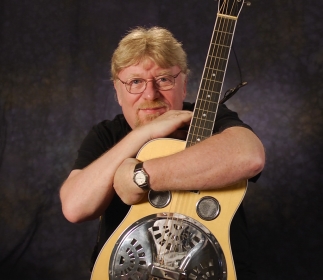

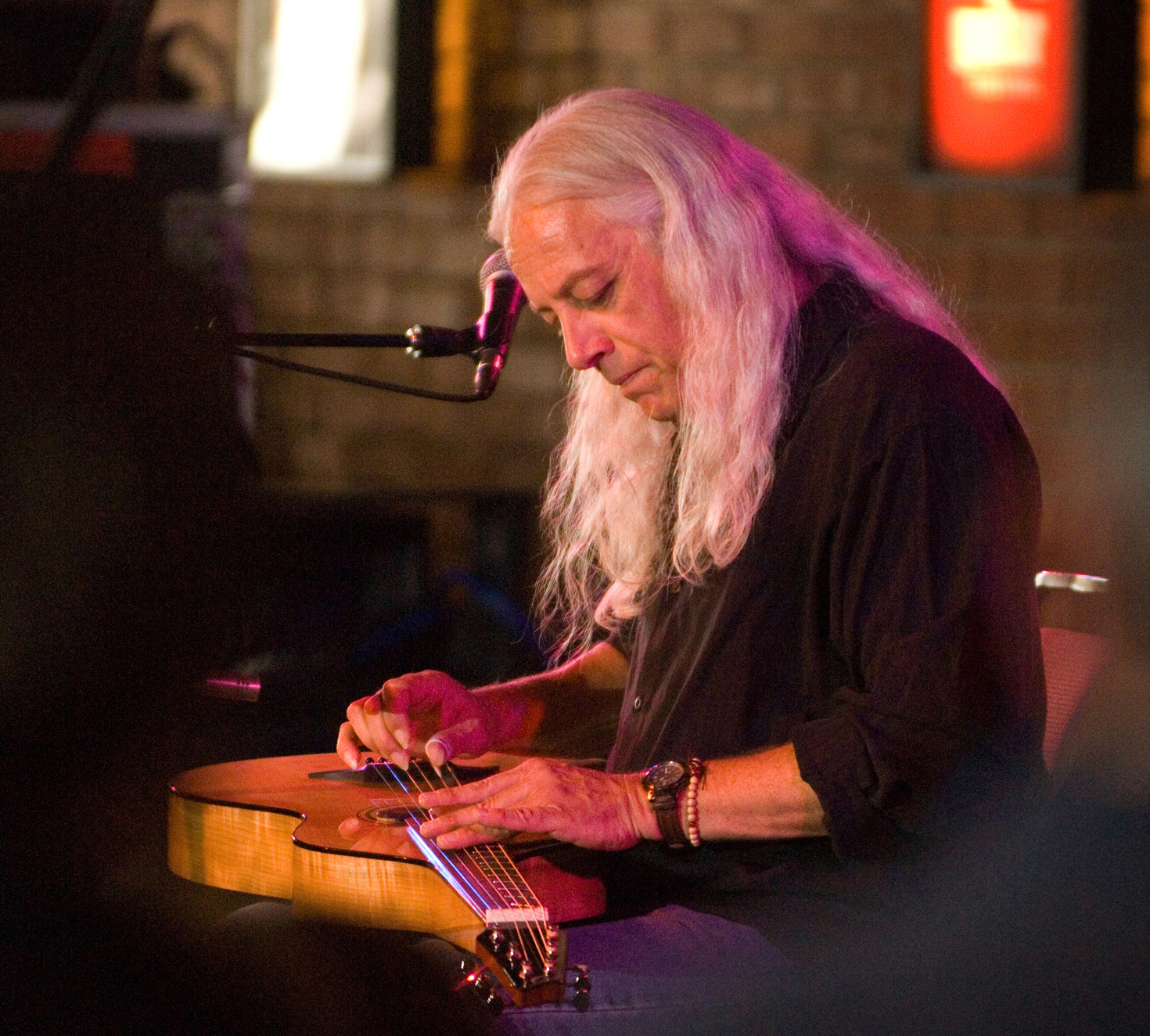

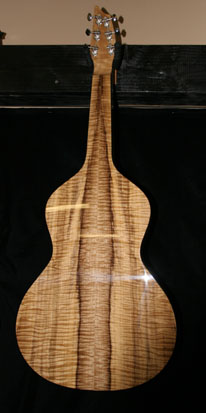


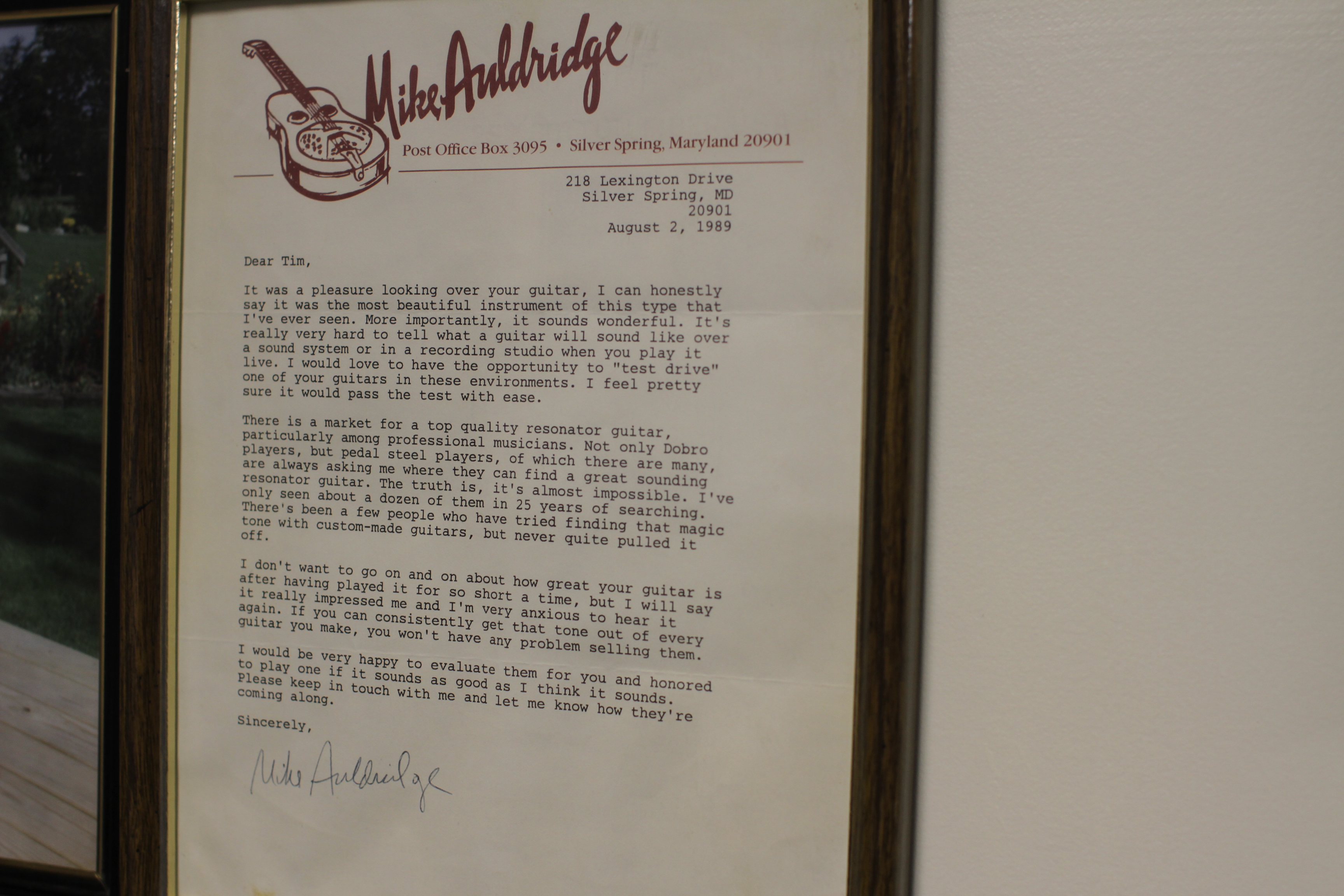


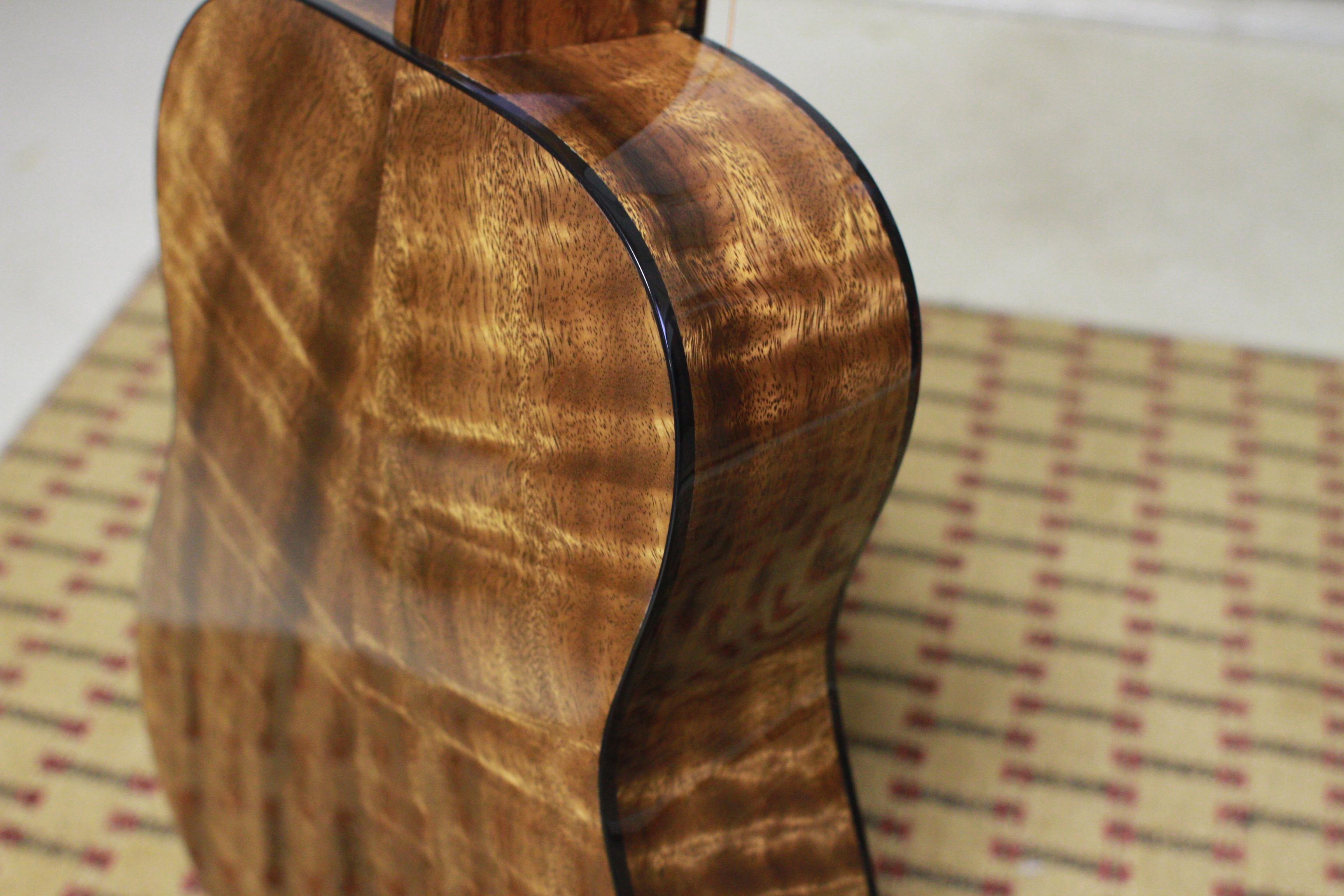


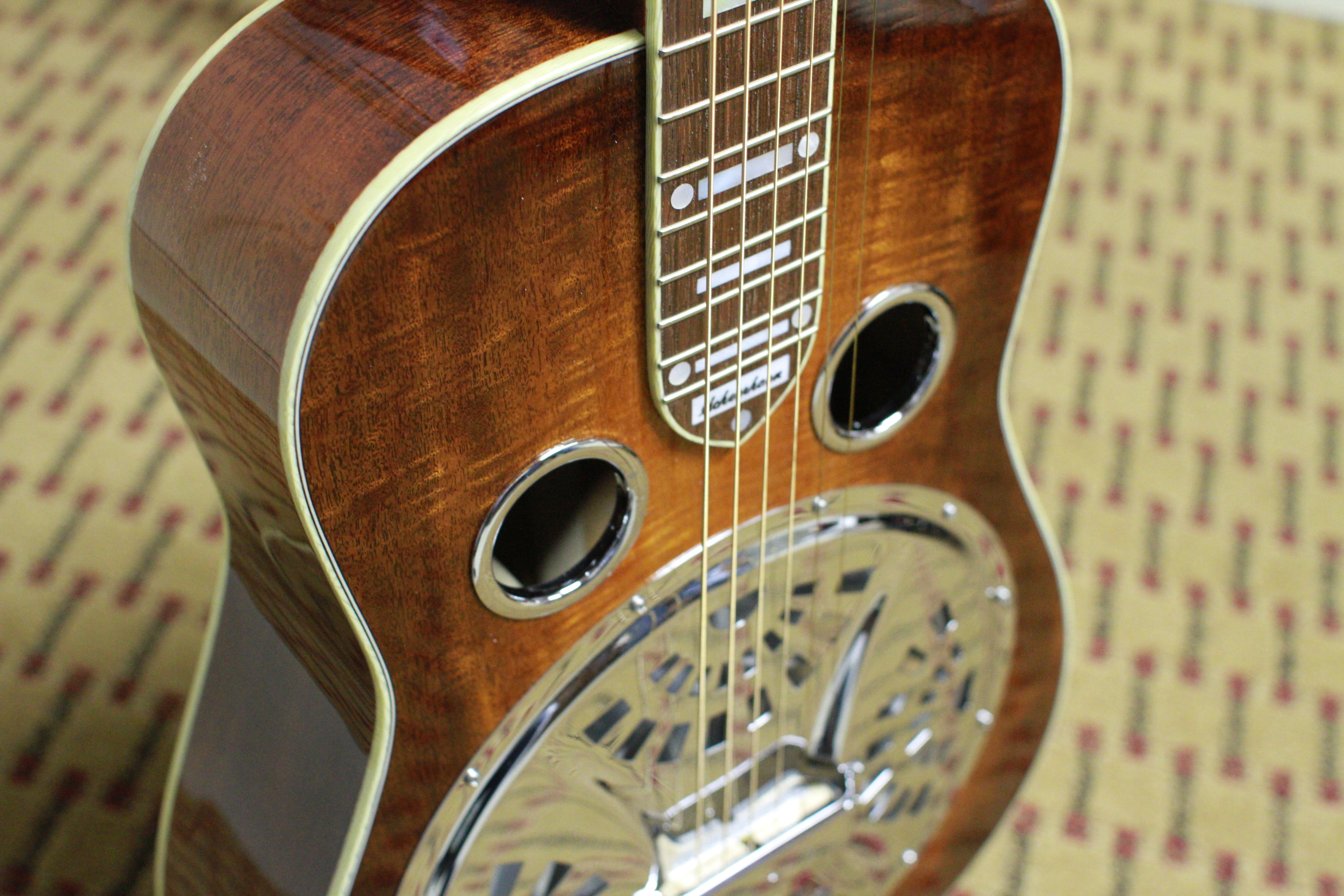


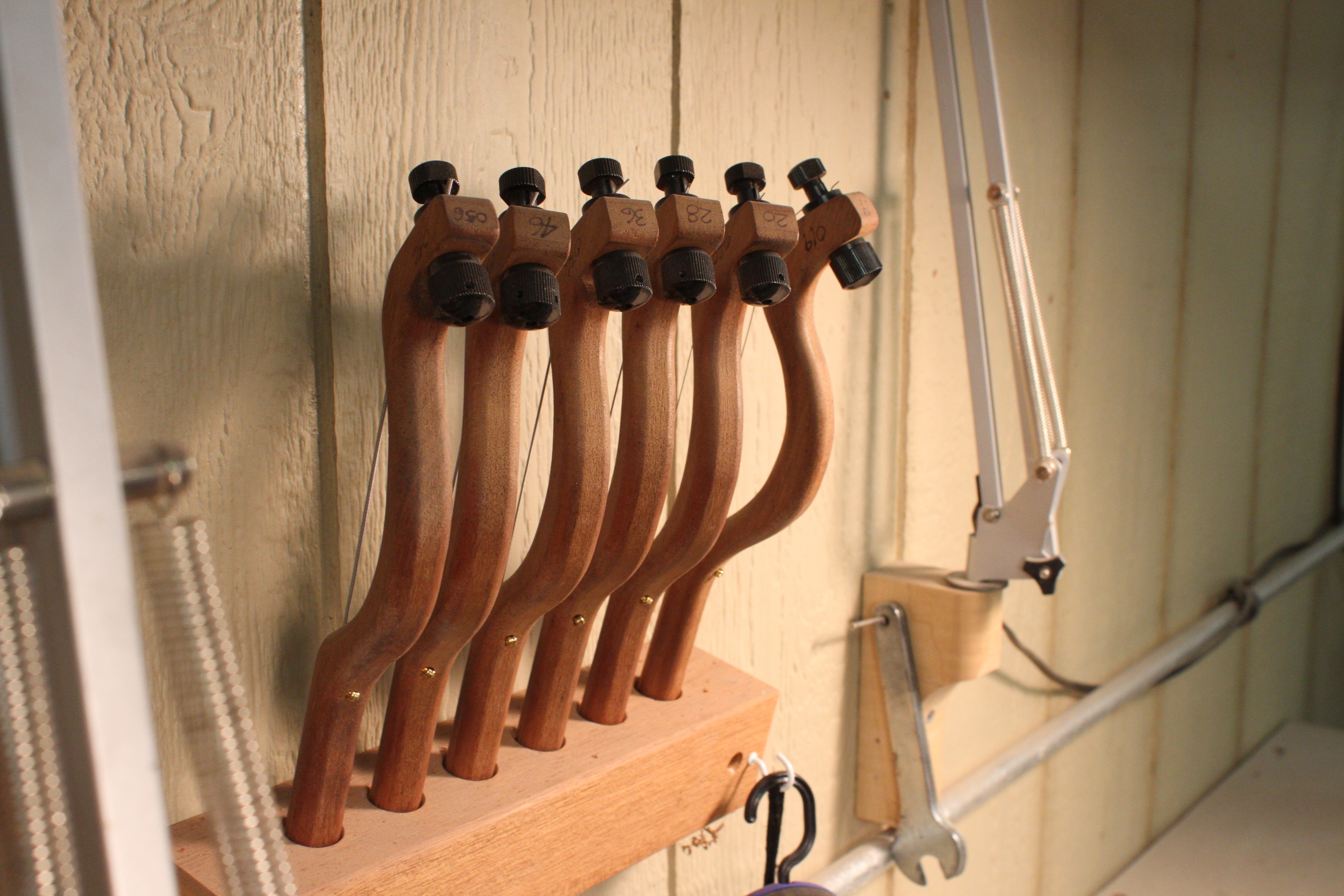


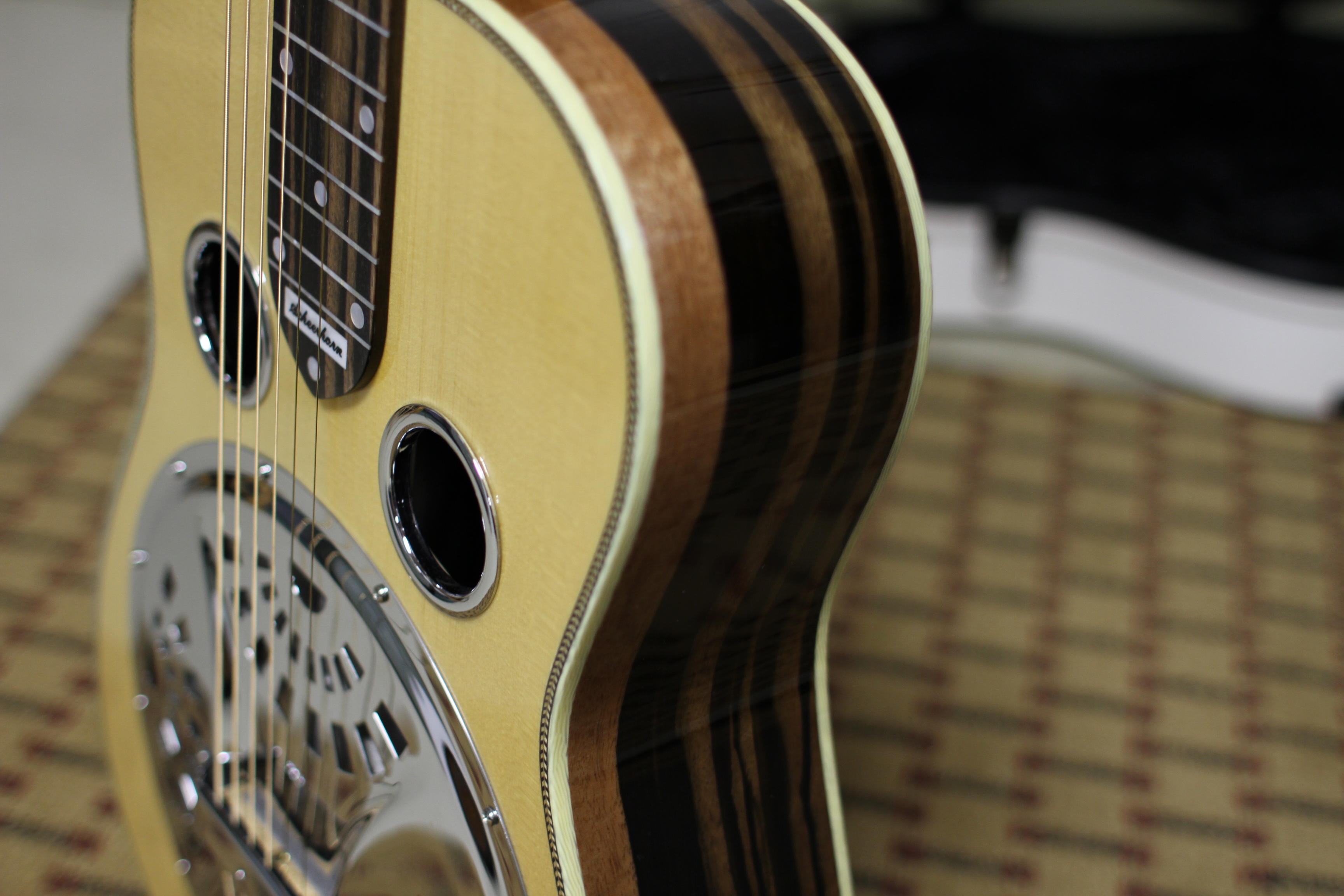









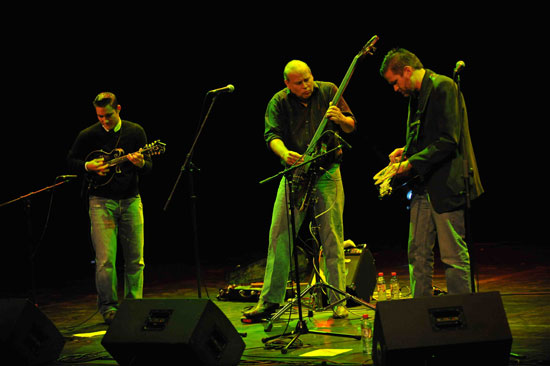
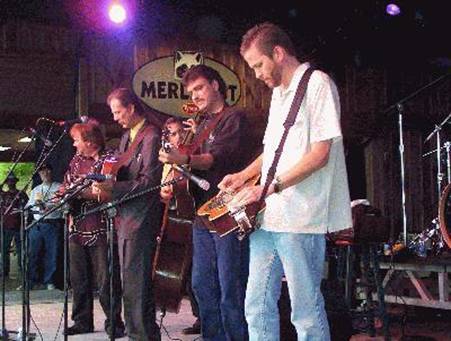


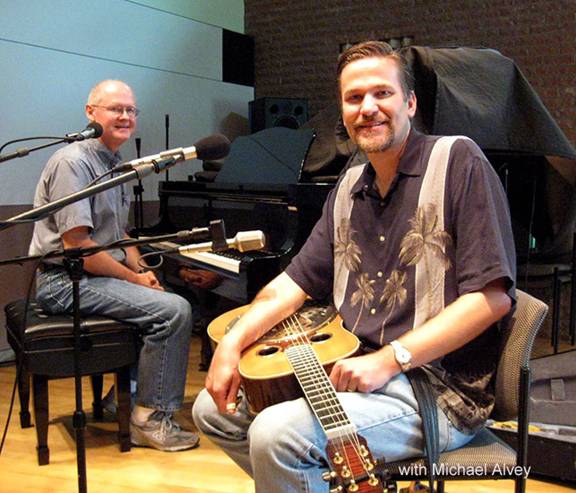
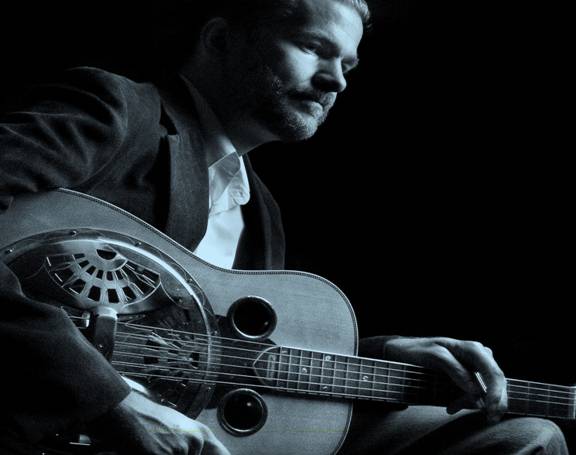
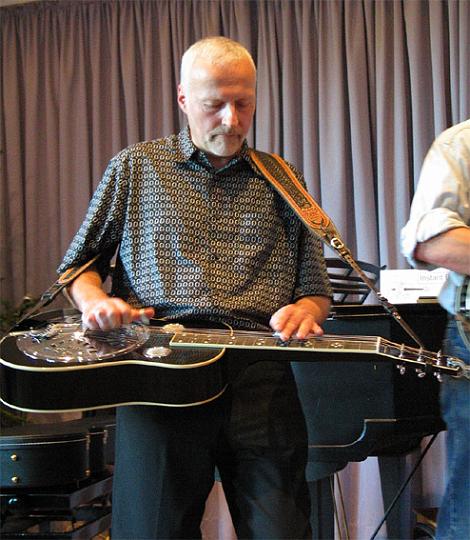


 The Squareneck Journal


