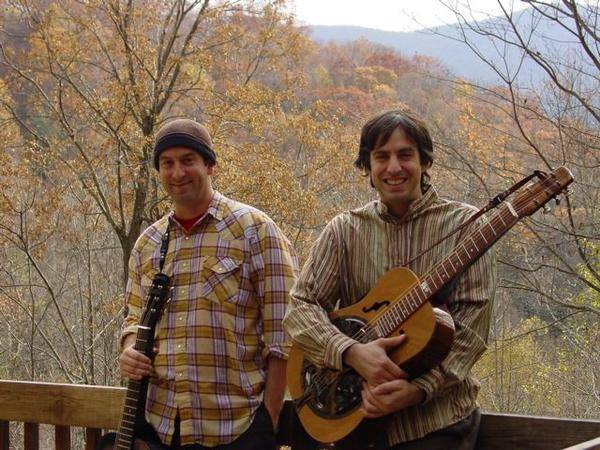
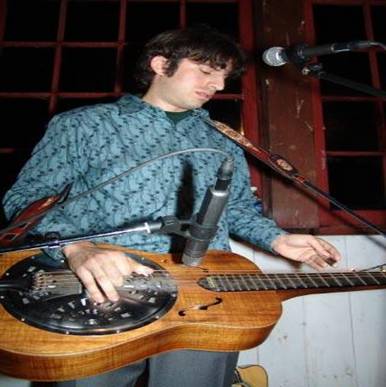
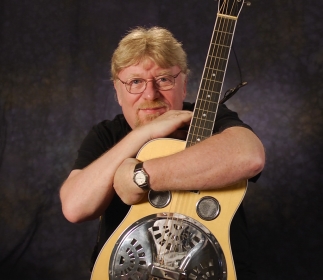
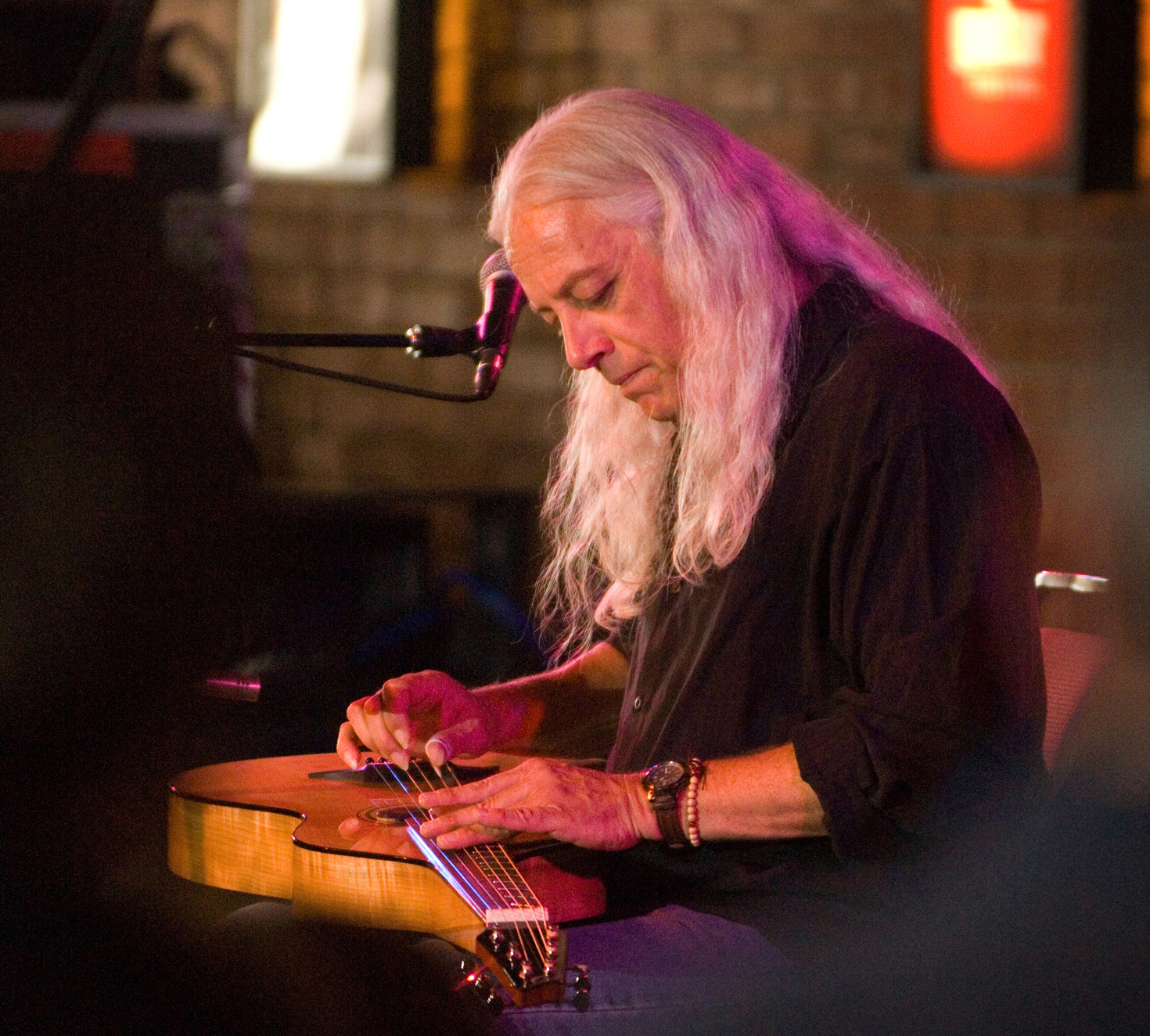
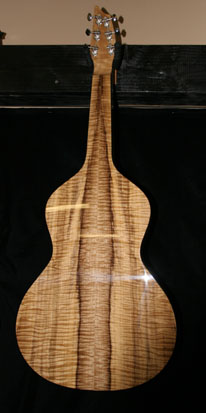
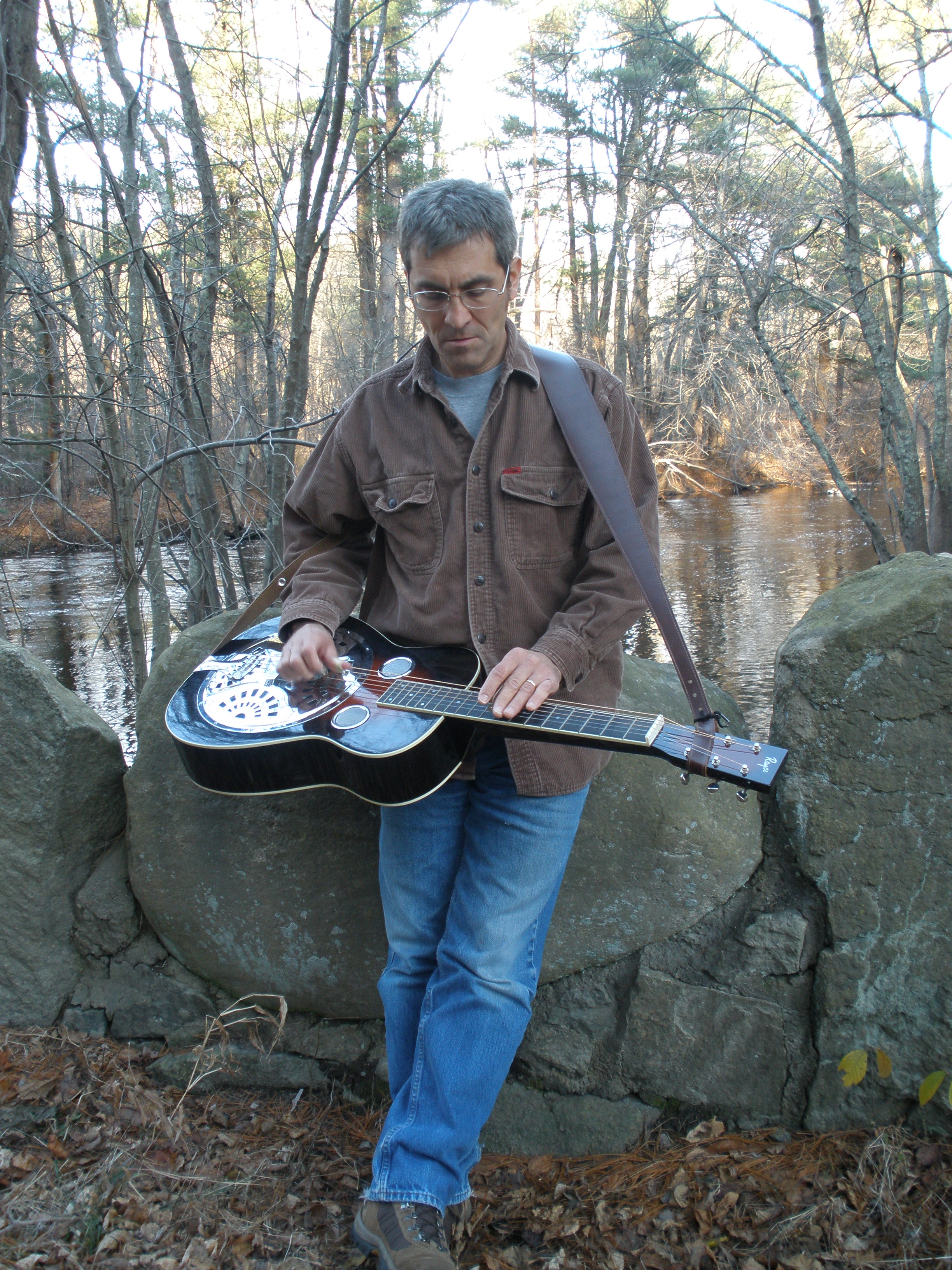
Martin Gross

Originally published at http://www.robanderlik.com in 2009

PICT0156


SJ: I assume you grew up in Germany, correct? Where/when did you first hear or see a dobro? How did you get interested in playing one in the first place?

MG: This is absolutely correct. I grew up in Southern Germany. When I consciously listened to a dobro for the first time is hard to tell. In the seventies when I started playing the guitar and was listening to records by Eric Clapton, the Allman Brothers or various Blues artists, the sound of this instrument always amazed me – that was a long time before I even knew its name. Only after I came across a record by the Allman Brothers whose cover showed a dobro did I realize what one looked like. I studied that picture closely and soon decided that I would one day possess such an incredible instrument. In the year 1978 I achieved my goal. On a trip through the USA I bought my first dobro in New Orleans. It was a metal body dobro which at that time cost $ 400 – and was identical with the one on the cover of the Allman Brothers record. I felt perfectly happy then. At that time I had no idea that there were also squareneck dobros and naturally I had never heard of Bluegrass music. Such was the situation in Germany when I grew up.

But this changed two weeks later when my journey led me to San Francisco. At the turning point of a cable car I happened to see a Bluegrass band and one of the boys played a dobro lap style. This took me by surprise and made me feel really excited. That technique of playing, that sound and that kind of Bluegrass music in general filled me with enthusiasm. After a long conversation with that musician I had found out that those instruments were produced in Huntington Beach. I knew where Huntington Beach was because I had passed it two days earlier. If only I had had that information at the time!!! Nevertheless, I decided to change my plans and travelled right back to Huntington Beach in order to visit the dobro factory. The manager, Ron Lazar, was incredibly nice, showed me around and informed me about the whole range of dobro manufacturing. Apart from that he gave me the address of a German dealer selling dobros close to Munich. When I returned home, it didn’t take long until I possessed my first squareneck dobro.

SJ: Where do you trace your musical heritage from on the dobro? Who were your heroes when you were learning to play?

MG: It was definitely Mike Auldridge. At that time there were no records, manuals or workshops whatsoever for people wanting to learn this instrument. Not to mention teachers. Luckily the dealer in Munich not only sold the dobro to me but also a Stevens steel bar and two Auldridge records. That was all I had to start with. In the following time I continually listened to the sound of those two records and tried to imitate the tunes as well as I could. Today I am really happy about the fact that it was Mike Auldridge who has had a formative influence on me at this early stage. Mike plays incredibly clean and has an excellent sound. As time went by I tried to find musicians in the region with mutual interests and found quite a few in Stuttgart. They were representatives of all kinds of styles like Irish Folk, Blues and there were even Bluegrass musicians, who made me acquainted with Stacy Phillips’ manual ‘The Dobro Book’. This really helped me a lot to learn more about playing techniques. Through those musicians I was able to obtain first-rate recordings and when I listened to Jerry Douglas for the first time it was clear that no other instrument would ever fascinate me as much as the dobro. Mike Auldridge, Stacy Phillips and Jerry Douglas had the greatest influence on me during my early years with this instrument.

SJ: How did you learn to play? Were there any special practice techniques or tools that you found especially helpful to advancing your playing skills?

MG_010

MG: In the first half year I played without fingerpicks. That was easy for me, because on the guitar I was able to play the ragtime finger-picking style. It seemed logical to me to simply transfer this technique onto the dobro. I quickly realized, however, that playing the dobro this way, you don’t have a chance to get heard among the other instruments in a jam, for example. The sound is bad, there is hardly volume and your fingers ache. So, thumbpicks and fingerpicks became essential. This meant a complete change and I felt like an absolute beginner once more. At least I could profit from one ragtime technique: dampening the strings with the fingers of the right hand didn’t cause me any problems. If you don’t have anybody to guide you in learning an instrument you can’t help getting things wrong and later it is extremely difficult to get rid of those wrong habits. For example, after having used the wrong technique for years, I only learned on a later journey to the US how to chop properly. Naturally I had to practise very hard to set things straight. One specific technique which I have studied a great deal is using string pulls. In fact they characterize my personal style and I like using them a lot. I think that this way you show a certain affinity to the pedal steel guitar and this is what I like.

SJ: Can you give us any examples into how you approach the general concept of creativity on the dobro? For example – do you write your own tunes? How do you find something “new” to play in the case where you are playing a familiar tune? Just curious, have you ever transposed any traditional German folk music for the dobro?

MG: I think that the creativity of a musician has, among other things, something to do with being open for all different styles of music. It’s clear that there’s a lot that you don’t like, and you forget that pretty quickly. There’s nothing wrong with that. The things you do like though are automatically stored in your head – at least that’s the way it is with me. It could be a melody, a harmony, a rhythm, a mood produced by a song, or even just a simple lick. It doesn’t matter, but whatever you like, you remember it in some form or another. The more music you listen to, the more these elements accumulate, and as time goes by a basis for your musical preferences develops. Now it does depend on how much imagination, fun, and boldness a musician has, in employing his gathered impressions and putting these elements together, mixing them, experimenting with them in whatever form they may be. In my case it’s not absolutely necessary to have an instrument on hand to do this. I, personally, have my best ideas while driving. I listen to something on the radio and suddenly I have an idea. Then I have to turn off the radio right away and start developing my idea. I can genuinely hear the tones and harmonies I am imagining. If I like what I hear, I don’t forget it in the course of the day, and in the evening when I have my peace and quiet, I sit down and work the chords and melody out on the guitar.

200601_0032

It doesn’t really matter if that song lends itself to the Dobro or not. If so, all the better; if not, then it can be arranged for another instrument. This is how the basis of a song or instrumental number comes into being. Sometimes an idea comes while I’m just playing. I play some song on the Dobro and at a chord change I accidentally play at the wrong fret. It can be that I then say, “Hey, that actually sounds great!” and I’m suddenly hot on the trail of another idea, which I may be able to use. Sometimes, when no one’s listening, I go crazy on the Dobro and make a hellish noise, and play, very honestly, intentionally wrong. I just do this for my own fun. As absurd as this may sound, this is where I get my best songs. Jamming with other musicians is also very inspirational. It spontaneously produces an unbelievable potential for ideas. It’s just a shame that you can’t hold on to your idea and develop it further because the jam keeps on going. By the end you’ve forgotten everything. I always hope that at least the inspiration has been stored somewhere in my memory. It’s difficult to explain how creativity and composing really work. It certainly has something to do with inspiration, which in my case can take on the most diverse forms. What I know for certain is that I cannot just do it at will. I could never say that tomorrow afternoon between three and six pm I’m going to write a song. In answer to the last part of the question, I have to say that I recorded a German lullaby, composed by Johannes Brahms (1833 – 1897). It’s called „Guten Abend Gute Nacht“ (trans. Good Evening Good Night) and can be heard as a video clip on my home page. I’ve also arranged a folk song called “Das Loch in der Banane”(trans. Hole in the Banana) from the German guitarist Klaus Weiland and put it to music on “Heart of Steel”.

SJ: Tell us about the band you play with: what kinds of ensembles do you play with? Do you do any “solo” Dobro gigs?

MG: No, I don`t do any solo Dobro gigs. But there are two bands that I ́ve been playing with, for many years now. The musicians got together because Bluegrass Music was their common interest. We do about 25 gigs a year. Unfortunately we don`t have the time to practice together a lot but we have a big repertoire of songs and instrumentals that we can lay back on. The Phoenix-Stringband and was founded in 1991. These guys had been picking together for quite a while and needed a bass player. So I started playing bass in this band. It was in 1998 when we decided to include the dobro in our repertoire for an entire set. We do the dobro set without the banjo so another member has got the chance to play the bass. The Phoenix-Stringband plays different kind of styles like Swing, Jazz, Bluegrass, Folk and even does arrangements of Pop and Rock songs in order to present a variety show to the audience. It was in 1997, when I joined the second band. The Four Potatoes is a strictly Old Time Music band where I also play the bass. Even if historically the Dobro is too young for this style of music, we use it for a couple of songs.

SJ: Your musical interests seem to range well beyond bluegrass, as evidenced on your stellar solo c.d. – The Heart of Steel. How did Heart of Steel come together? Are these the same musicians you play with on a regular basis? Where can people purchase your c.d.?

martin gross

MG: If a musician makes music for a long period of time and focus interest to a special kind of instrument, there naturally comes the wish some day to show what he learned. I think this is an honest and natural need of every musician and has nothing to do with an image complex.
( Profilierungssucht ) I recorded the Heart of Steel because I had a lot of own composition material, that I wanted to keep for myself – in the first place. To me a CD is a document that shows the level of improvement, at the particular time it was recorded . This is important to me, because I want to control the progress in my development. The Heart of Steel is my first solo CD. Only local musicians were involved in this project. If you are interested in buying a copy, you can order it via PayPal on my home page http://www.martingross.com. (just click on shop in the menu). Betty Wheeler has a contingent of CD ́s in stock, and does the US shipping for me. The videos on your website are fantastic! I thought the quality of the images, the camera angle and of course, your playing is first rate. Are the videos available in a DVD format to folks here in the U.S.? Of course it makes me very happy every time I hear that people are enjoying the Videos on my home page. If you’ve already seen the Videos, you’ve probably noticed that they’re not perfectly synchronized. That’s because there’s two separate steps involved, the first one being the Audio track, and then the Video, which causes a slight delay. If anyone’s interested in a DVD, I’m open for suggestions and feel free to contact me any time. I’ve never really thought about selling any because there’s no Tablature to go along with them. That’s quite the assortment of resonator guitars on your website! It’s just a hunch on my part, but I suspect if I owned 10 guitars I would eventually find one that I liked the best and play it most of the time. Is that true for you?

SJ: Please tell us about the different guitars you own; did you go through any kind of consumer rationalization process before making each purchase?

MG: Yes, I do have an instrument that I favor the most and use it for most of my gigs. I have 5 Dobros and each and every one of them means something special to me. So much so, that I couldn’t even imagine ever actually selling one of them. As mentioned before, my first Dobro, bought in New Orleans in 1978 for $400,- is a round necked Metal Body Guitar. In 1979 I bought my first square neck in Munich. Unfortunately, I don’t have this one anymore. I can’t even remember exactly what model or make it was. I bought my first real quality square neck from Rudy Jones in 1982. I had the opportunity to try out a number of different models at his shop in Waynette Oklahoma and told him exactly what I was looking for. Then he built me a custom Dobro just the way I wanted it, I chose to go with Mahogany. The Reed Guitar came about through a friend of mine. He had it built for himself and shortly before the delivery date heard the news that Bob Reed’s shop had burned down. The Dobro, fortunately, was not damaged in the fire. At any rate, this is the very last Dobro that Bob Reed built. In the winter of 2003 I stumbled across the Sheerhorn on eBay. It was custom made for a person in Calif. in 1991 out of Maple. It’s the first one Tim ever made with F-Holes and has the serial No.26. My latest acquisition is from a Luthier here in Stuttgart named Siegfried Dessl, built to my specifications. The body is made of two different types of mahogany. The top is made out of Tobasco, with F-Holes, and the back and sides are out of Sapele.

SJ: You’ve been playing for awhile now, correct? Are there any techniques or goals that remain elusive for you? What kinds of things motivate you to tackle a new tune or technique?

MG: I got my first square neck in 1979 and that’s when I started to learn how to play. But between 1988 and 1998 barely played at all, as a result of focusing all my time and energy on Studio Recordings and Song Writing. At some point we decided to bring the Dobro back into the Band and that’s when I re-discovered my long lost love for the instrument. There’s so many things I’m interested in doing, and goals I’ve set for myself as a Musician. One of these is to really learn the right way to play my rhythm chops. I also feel I need to work on my timing. I would love to go to a Bluegrass Festival or two in America and attend some of the Workshops and get the opportunity to meet the whole Dobro Family. A second CD is also way up there on my list. The time and energy I spend striving to achieve all my personal goals and making my dreams come true is a constant source of motivation for me, and is a very important factor in my own musical development.

SJ: I was fascinated to see on your website that you had designed your own dobro capo. What inspired you to do that in the first place? How does your capo differ from other dobro capos available in the marketplace?

MG: Where did the motivation for designing my own Capo come from? You know the old saying, “Necessity is the Mother of Invention”. Well, the fact is, I needed a Capo and I just didn’t have one. I tried fooling around with regular Guitar Capos that I’d modified for the Dobro, but wasn’t really satisfied with any of the results, so I decided design one myself. The first few prototypes were very promising and today I’m very happy with the Capo just the way it is. The advantages my Capo over the standard Capos are: The Capo is fairly massive and has a lot of substance, which constitutes in a very strong and solid tone.

  • Fast and easy to put on and take off
  • Always in tune while capoed
  • No Capo movement while playing, because it rests on the neck
  • More freedom for the pinky finger left hand

SJ: Thanks so much for taking the time to share your story with us. Do you have any closing thoughts you would like to share?

MG: My pleasure Rob! I consider it an honor to be included in your Featured Artist series and want to thank you for giving me the opportunity to be a part of it all. I’d also like to thank you for all the work you’ve put into your Homepage, which is a great source of information and motivation for all of us.
Michael Bean

Originally published at http://www.robanderlik.com in 2008

OLYMPUS DIGITAL CAMERA

SJ: There are many things that I admire about your music, but let’s start at the beginning…I am willing to bet that you’ve been a musician for a long time, correct? Where did you grow up; how/when did you get started playing music and when did you start writing your own tunes? Do you write both instrumental and vocal tunes?

MB: First of all, thanks, Rob, for including me in your series; I really enjoy all that your website has to offer. Ok, I grew up in Peabody, Massachusetts, about 20 miles north of Boston, in the 60’s and 70’s. Both of my parents were music teachers and pianists, so you are right about being a musician for a long time. I played cornet and bass clarinet in the school bands and didn’t really enjoy playing until one day when I was twelve, my Dad brought home a bass guitar. I was hooked immediately. I started copying tunes off of records and really developed my ear quickly. A year later Dad brought home an acoustic guitar, so I started in on that. I listened to and learned everything that I heard, and that was a wide variety of music, between my parents and my older sisters and all the great stuff that was on AM radio at the time. I played bass and occasionally guitar in bands throughout my teens until I started playing bass in my Dad’s piano trio when I was seventeen. This is when my musicianship really grew. We played a lot of standards and dance tunes and there were always requests that I never heard before. So, Dad explained to me that rather than looking at a major scale as C D E F G etc, look at it as 1, 2, 3, 4, 5, etc with half steps between 3&4 and 7&1 and all the other intervals as whole steps. This way he could call out to me “Key of C; 1, 6, 2, 5” and I would know he meant C, Am, Dm, G7. It made total sense and it opened up the fingerboard for me.

I’ll skip ahead to the writing: one day when I was around twenty-two, as I was driving somewhere, I singing the ideas that were playing in my head. I thought “Duh, I should make these into a song!” So I ordered a Tascam 244 Portastudio 4-Track recorder and started writing progressive guitar instrumentals and lousy vocal pop tunes that sound like the 80’s era. In the late 80’s/early 90’s, the instrumentals I wrote were very Dixie Dregs and then Joe Satriani influenced. After that I went through my bebop jazz period and wrote jazz/funk/fusion tunes. I am planning on writing vocal tunes again in the future.

SJ: I did a gig one time with a songwriter that I did not know very well (we did not rehearse prior to the gig) Long story short, it was a terribly boring gig! About the 3rd song into the gig it dawned on me – his songs were (more or less) completely driven by lyrics and rhythm, but little/no melody! He kept motioning to me to play solos but there was no melody line demanding the chords he was playing and that made it really tedious to improvise over the changes. O.k. that’s a long sidebar, but I think it’s important to my next question: How do you manage to write such great melody lines in your music? Where do you get your inspiration and ideas from as a writer? Who do you admire in this regard? And…is writing music hard work for you?

MB:  Ah, the melody! My earliest memories of great melodies were listening to the Beatles when I was four years old. Those songs grabbed me and I realized what set them apart were the endless supply of great melodies. I have always been moved by great melodies and chord changes and it’s what I really want to hear in music, most of the time. I love great playing, bluesiness, and funkiness, but the melody, chord changes, counterpoint, and a great arrangement are what can bring me to tears. My Dad was really brilliant in his arrangements; he had a knack for great melodies and counterpoint. Even when he played the simplest melody he would have something great moving around under it—there would always be something interesting going on. He taught Traditional Counterpoint at Berklee College during the early 60’s and played a lot of Bach and Chopin on piano, so his generous use of melody and counterpoint has been my biggest influence.

I see soloing as putting together little melodies. To me, the best soloists are the ones who play over changes and you can hear the chord changes in their playing. First it was Duane Allman and Dicky Betts whose melodic playing captured me. Then Dad and his bass player when I was growing up, a fellow named Dennis Lantry; they always played with a great sense of adventure and that helped form my playing. Then, the big one: Charlie Parker—the master improviser and melody creator. Transcribing and learning his solos really opened up my sense of melody. No matter what instrument I play, whether it’s dobro, mando, guitar, or bass, some Charlie Parker influence shows in my playing. Two of my favorite improvisers now are Bela Fleck and Chris Thile. They always have something musically interesting to say.

SJ: Your melody lines as so good, so distinct, that I can’t tell what instrument they were written on…What is your approach/philosophy of creativity? Do you write music with a specific instrument in your hands? Does it make a difference which instrument you write with?

MB: Each instrument can inspire different ideas for a tune. It may give me a starting point of a song then most of the ideas come about when I am just thinking about the song while driving or mowing the lawn or something. I’ll mull about an idea and then try it on an instrument to see if it works. Then I may try a certain arrangement on guitar because of its wider range, to see if particular notes work together.

SJ: What advice/insights can you share with someone who is interested in writing their own music on the dobro? For example does the tuning have a big effect on how you approach writing/composing music on the dobro? Any other tips?

MB: I don’t necessarily write that much on the dobro, or for the dobro, really—if I do, it may be part of a song or a basic theme of a tune. I mostly use the dobro as a melody line that will stand out in a tune. I love its flexibility of pitch: the sliding, legato sound. I haven’t written a solo dobro tune like Jerry’s “New Day Medley” or “Peador O’Donnell”. I have started songs like that but most of the time I want to hear more lines or harmonies going on. The instrument has its practical limitations: playing with a bar is like playing with only one finger and you can’t really play an open string or lower fret if it’s in the middle of your bar. So it may start out as a solo tune but it ends up with other instruments. I really prefer ensemble playing over solo instruments; I love the interplay, counterpoint, and freedom one has when he doesn’t have to provide his own accompaniment. I love the way instruments blend and make another sound. I enjoy hearing players inspired by the people they play with.

SJ: Apparently you play just about any/every string instrument. Which was your first; how many do you play; do you consider one to be your primary instrument?

MB: I started on bass, then guitar. I learned tenor banjo in 1979 when I was playing some Dixieland tunes in a band. This helped out years later when I started to learn mandolin because they are both tuned in 5ths. I play some 5-string banjo—I’d like to eventually get competent on that because I’ve always been intrigued by the rapid-fire banjo picking. Before I started playing dobro I played some lap steel in the C6 tuning; I really love the Western swing stuff on that. I play some Appalachian dulcimer–that’s a great soothing sound– my wife loves that. Although bass and guitar are my most comfortable instruments, my focus now is on dobro, then mando. I eventually want to play fiddle. That will take a big commitment because beginning fiddle sure isn’t pretty. There’s not enough time for that now.

SJ: What process do you use to record multiple instruments and wind up sounding like a complete band? Which instrument do you record first and how do you layer sounds without sounding like they were overdubbed?

MB: Home recording, for me, is a pretty involved and painstaking process. First, I start with usually a guide acoustic guitar track and a click track. If the main instrument is dobro, I’ll put down a reference melody track with some reference solo tracks to kind of get the idea where it’s going. Then I add the bass, details, and other instruments. It’s a gradual thing where I’ll try different ideas, listen back to it, go out and think about it, lose sleep at bedtime because it’s still playing in my head. It takes a long time to get a tune done because I don’t have other guys around to get input from.

SJ: Let’s get the lowdown on your equipment for all those interested: tell us about your instruments and recording gear. Is there anything that you have learned along the way that you would like to pass on to someone just getting started?

MB: My dobro and mandolin are both built by Stephen Pierce of Lowell, MA, as is the loaner banjo that is on some of my tunes. Steve’s a nice guy who builds great quality yet affordable instruments and his service is fantastic. My recording gear is pretty basic: a condenser mic into a Presonus Bluetube preamp, to FMR Audio RNC compressor, into the LINE IN of the Creative Soundblaster soundcard that came with the PC. The mics are Oktava MK-319 and MC-012, and a Rode NT1. The software is Cakewalk Home Studio 2002. The essential elements to getting a decent sounding recording is the condenser mic and preamp. The condenser is very sensitive and full range and is great for recording acoustic instruments. Dynamic mics like the SM57 won’t pick up the nuances of an acoustic instrument so save those for live performance.

SJ: How did you get interested in playing dobro? Where do you draw your musicial heritage from as a dobro guy?

MB: During the late 90’s I was playing a lot of blues and some jazz but I was still looking for something else. It wasn’t satisfying. One day, an engineer I worked with brought in the CD “Songs From The Mountain” with Tim O’Brien. The natural sounds of the old time music really grabbed me. I started seeking out more of this stuff and decided to pick up a mandolin. I went into a music store to look for a mandolin and there was a Dean squareneck reso on the wall. After playing it there for a while I decided I had to have it. This was January of 2001. I don’t remember what the first songs I learned were but I set out to learn the fingerboard and how I could apply what I knew on guitar to this new instrument. I was aware of Jerry Douglas because of years of reading guitar player magazine so I sought out recordings he was on. After hearing discs such as Strength In Numbers, Bela Fleck’s Drive, and Chris Thile’s Not All Who Wander Are Lost, I found that here is a music that is based on tradition but unlimited in its creativity. I thought “Aha! This is right up my alley!” I recently rerecorded a few of my tunes were written 10-15 years ago when I was playing electric shred/funk/jazz fusion. They seem to sit better, to my ear, with the acoustic instruments than with the electric—replacing the distorted wailing lead guitar with a clean singing dobro is less aggravating to my ears. The thing that I like about the bluegrass scene is that creative, adventurous playing is encouraged. With blues, you are limited by the chord changes and narrow vocabulary and if you take it too far outside, it’s not blues anymore. In blues and jazz, there was a lot of pretentiousness in these communities; in rock, image is a big factor. I’ve found that in bluegrass/newgrass, the audiences are ready for anything as long as you keep most of the traditional instrumentation. In this acoustic music, age and image are not a factor. There are kids playing along side seasoned veterans and old timers. It’s all about the music. I feel like I’ve finally found the music I want to play, on the instruments I want to play. I feel as though I’ve just begun. Plus, since my Dad passed away a few years ago, I feel more responsibility to create adventurous music and continue what he gave to me.

SJ: Are you a gigging musician? Do you play with a band or as a backup musician on dobro, etc?

MB: I gig a fair amount. There are a few bands that I work with regularly and occasionally. One is an acoustic duo based on an electric blues/rock/funk full band called Paws Up that I sometimes play guitar with. With the duo, I bring out the guitar, dobro, and mando. With the electric band, I bring a 50’s Supro lapsteel and dobro in addition to a Strat or Tele. There is a lot of room to stretch out with Paws Up—it’s always fun and adventurous. My brother Christopher plays drums with them so it makes it even more fun. I sometimes play bass with a great cover band called Roundabout—they are primarily a vocal band. I would like to get in a semi-regular bluegrass situation. I have a lot of great New England bluegrass pals that I jam with; they are more traditional, so I always learn from them. There was a time in the late 80’s when I played music fulltime and I had some professional success as a bass player. I became discouraged with the music business and how it was all about packaging and presentation and image—it was all so fake. I went back to school and got a degree in electronics and now work a fulltime job as a manufacturing engineer. I enjoy music much more now that I don’t make my living from it and can be selective as to what I play.

SJ: Do you have a CD available? How can someone preview or purchase your music?

MB: I don’t have a CD available at the moment. I am looking at recording one over the next year—it’ll take me that long to put it together. I have a page at http://songramp.com/beanbass where I upload my tunes for the public to hear. I also upload them occasionally at http://www.reso-nation.org in the sound bites section. Look for “beanbass” as the author.

SJ: Are there any closing comments or insights that you would like to share with our audience?

MB: Yes, learn some basic theory. I think it important to see how the notes are related to each other. For instance, learn the neck and the relationship between strings (in intervals):

G to B = maj 3rd, B to D = min 3rd, D to G = 4th.
Learn the major scale as numbers and steps: half step at 3 & 4 and 7 & 8; all others are whole steps. Do it on one string and then cross over to neighboring strings at random points. This can be transposed to any key.
See how the minor scale is different from the major (minor = flat 3, 6, 7). Always be aware of what scale number you are on; be aware of where your root is in relation to where you are at the moment.
Know that 1-3-5 of the scale make up the root chord of your key; the IV chord is made from the 4-6-1 of your scale and the V chord is made up of 5-7-2 of the scale. See this in all positions up the neck.
I feel that this is the road map to being able to use the whole neck. Learn it to the point where you don’t have to think about it. This is applicable to any instrument. Once you see how it’s put together, the rest is just playing, and that’s when it becomes fun.

Thanks again for having me, Rob. I think this is the golden age of resophonic guitar and I appreciate all you are doing for the reso community.

Ivan Rosenberg

Originally published at http://www.robanderlik.com in 2008

ivan-rosenberg

SJ: How did you get started playing dobro and/or Weissenborn guitar? Who were your hero’s when you were getting started?

IR: I guess I got started like many other dobro pickers—by seeing Jerry Douglas play live. In college I was playing some fingerpicked guitar and getting into flatpicking via Norman Blake and Doc Watson (my Dad got me started on Travis picking—he does all the Chet Atkins and Merle Travis kind of stuff). I went to see a show called Masters of the Steel String Guitar, which had premier guitarist from various styles: Tal Farlow on jazz guitar, Wayne Henderson playing bluegrass, etc. Jerry Douglas was playing dobro in that show. I’d never seen or heard a dobro before, but I owned one within about 12 hours. “Me and My Guitar” by Tony Rice was the first bluegrass tape I bought, largely because I wanted to hear what bluegrass covers of Gordon Lightfoot songs would sound like, and from there, I picked up just about everything I could find with Jerry Douglas on it.

I grew up in the Bay Area in California, so I also got to see Sally Van Meter play a lot with the Good Ol’ Persons. In 1995 I moved to Montana I got a lesson from a great player out there named Jack Mauer. I wound up going to a Rob Ickes one-day workshop around ’96, which really helped me understand the techniques that went into making all those bluegrass dobro sounds I was hearing. Unfortunately, I found out about Rob right after he moved from California to Nashville. But that was about all the instruction I could round up at the time, so mostly I just learned from records. Other players I listened to a lot were Mike Auldridge, Uncle Josh, Henrich Novak, Stacy Phillips, Randy Kohrs, Roger Williams, Junior Barber, Gene Wooten, Tut Taylor, Lubos Novotny, and Phil Leadbetter. When I was in grad school in Sonoma I poached a few ideas from a great player named Gerry Szostak and a couple of years later, about the time when I started recording CDs, I got a couple of lessons from Mike Witcher. Witcher really helped me improve my tone and timing—he got me sounding like I was sliding with a steel bar instead of a sausage link and showed me the importance of slowing down. I also learned some country licks and alternate tunings a couple of years ago from Livingston, Montana-based country/swing slide genius “Dobro” Dick Dillof.

Anyway, while I had a pretty good ear and could deduce a lot of fretboard ideas from listening to CDs, it was probably a 10- or 12-year process to be able to get through a typical bluegrass solo with decent tone and timing. I learned that technique was important way too late in the game. That’s why I really hammer that stuff in at workshops—I hope I can shave 5 or 7 years off someone’s learning curve if I can instill what good technique looks and sounds like as well as the importance of practicing purposefully if your goal is to improve.

http://www.youtube.com/watch?v=tTlSMMhlYdU

SJ: How long were you playing before you started playing in a band? Tell us about the bands you’ve played in. What kind of influence have other musicians that you have played with in bands had on own your own development as a musician?

rosenberg-i

IR: I’ve been playing in bands on and off since around 1995, but didn’t start playing full-time until around 2002. The first band I played with was called “Widow’s Creek”—it was a trio and I played guitar, banjo, and dobro. We only played at Rowdy’s Cabin, a restaurant/casino in Missoula, Montana. Our first gig was only attended by the mandolin player’s girlfriend. Our second gig had a slightly bigger crowd, which included one guy who felt compelled to hurl a few chicken wings at us.

The first actual bluegrass band I played in was called “The Crazy Water String Band,” also in Missoula. We were really fired up on bluegrass and wound up doing a tour of the Czech Republic, where ironically enough we got a great lesson in traditional bluegrass from lots of very talented Czech musicians. Playing with that band I had to figure out what all the instruments do throughout a song—how each instrument trades solos, fills, rhythm chops, etc. Being aware of such things is definitely essential to being a good band member.

Other Montana bands I played with at one time or another include The Mountain Poodles (wish I had a t-shirt from that band), 9 Pound Hammer (runner-up at the 2000 Telluride Band Contest), The Rank Strangers (yes, one of 8 gazillion bands called The Rank Strangers), and Iron Lasso. Iron Lasso specialized in rowdy bluegrass versions of cornball pop-rock songs: “Love Train” by the O’Jays, “Sweet Caroline,” “I Think We’re Alone Now” (based heavily on the Tiffany version of that song), “Feel Like Makin’ Love,” etc. We were also known for hurling pancakes and other food- related projectiles at the crowd. Iron Lasso got the worst review in Bluegrass Unlimited history for the CD “Live in Parkfield,” which we were extremely proud of!

I played and recorded for a couple of years with Chris Stuart & Backcountry (singer/songwriter style bluegrass), and to play with that band I had to get a lot better, especially with timing and intonation. The songs were often really sparsely arranged, so you’d hear it if a note was a cent flat or sharp. I got another lesson with Mike Witcher right before recording the first CSB CD, and instead of trying to learn licks or the fretboard, I just asked him how he practiced. It was really slow—I think he walked me through Big Mon at about 60 beats per minute. It was slow enough to hear everything. When I tried it, I could hear the little pitch problems, the bar rattle, the extra ringing strings, etc., so after that I started practicing slowly with a metronome. Within a couple of months my technique, while far from perfect, was way better—good enough to play in a good band anyway. That band only had 2 soloists, banjo and dobro, so I also had to have a couple of solo variations for every song, and really had to get my chop going since there was no mandolin.

Last year I moved to North Carolina and mostly played with a cool newgrass/Americana band called Steel String Theory, which was in many ways the polar opposite kind of band. The music was usually pretty rowdy and SST doesn’t mind passing the solos around a few times. Sometimes playing the melody didn’t sound quite right after everyone else had taken ripping fast scale- oriented solos, so I spent some time coming up with some multi-purpose jam-it-out licks, and that was a lot of fun.

FeaturedArtist_clip_image011

Now that I’m back in the Northwest, I’m planning on playing or recording some with a couple of Vancouver, BC bands: Slow Drag and The Breakmen. I’ll also be getting a dobro duet CD and show together with Seattle dobroist Mike Grigoni.

SJ: You are very well known as an instructor and have taught numerous
workshops both here in the U.S. and Europe. What have you learned from doing dobro/Weissenborn workshops? Any observations or words of wisdom that you can share with someone who is learning to play?

IR: I think I have a slightly different approach to workshops than most teachers, and that’s because I learned in the same way that many of the students are learning: listening to CDs, trying to copy someone else’s licks, attending workshops, taking a couple of lessons, buying books and videos, and then trying to come up with a unique style out of that background. I have almost no natural ability (that’s just the truth, not me being self-deprecating), and I had to learn everything very purposefully. I made the transition from a decent campground picker to more of a recording artist/band member—the goal of many workshop attendees—and during my learning process I found that some very specific exercises and practice routines allowed me to do that, and it’s fun to share those ideas and help other pickers advance in their skills.

When learning dobro from books or videos there’s a tendency to skip Chapter 1, 2, and 3, and move right to the fancy licks, without ever learning how to practice tone, timing, or intonation. The first few chapters are usually gold! So a lot of my workshop time goes to revisiting the fundamentals. Better technique makes you a better player, instead of the same level player with a few more licks. Besides that, there’s a trick to finding bluegrass melodies easily, which I like to teach as well. If the melody is at the core of your solo, it will be coherent and musical, and everyone can learn how to play the melody in bluegrass or folk music. Being able to play a few great notes well, and at the right time, will make others want to play with you and probably get you in a good band.

I have a blast at workshops—it’s always fun getting to meet all the other people who geek out on dobro music all day, and I’ve wound up with some really good friends by traveling around to teach. I also learn quite a bit from students: I learned how to pick block from the students in my class at the Sore Fingers Week bluegrass workshop in the U.K. They’d learned it from Sally Van Meter when she taught there. Previously I’d only been damping with my bar hand, but now I think pick blocking is totally essential—it’s really cleaned up my playing. I should have been paying the students for that part of the class!

SJ: Tell us about your records. How did they come about, who played and
produced your records? What kind of a learning experience was it to cut your first c.d.?

I had co-producing help from Jim Nunally on Ashes and Coals, which was recorded at Jim’s studio. Otherwise, I self-produced all of my CDs. My inspiration for my first CD was the lack of original dobro music—I was wearing out the same 10 CDs and couldn’t find any more. I found that it’s not as hard as you might think to write tunes. You just have to come up with some chords and a melody line, repeat it, add a B part, and you’re pretty much done. But recording can be a painstaking process—knowing what you really sound like can be an eye-opener.

Anyway, for my first 2 CDs, “The Lost Coast” and “Back to the Pasture.” The producing part was easy. I wanted everyone to mostly play the melody, so I rounded up players who would do that naturally. Back to the Pasture had Jason Mowery on mandolin and fiddle (he’s also an awesome dobro player, and currently the fiddler with “Big and Rich”), Chad Manning on fiddle (from The David Grisman Bluegrass Experience), Eric Uglum on guitar and Marshall Andrews on bass (from Lost Highway), Janet Beazley on banjo (Chris Stuart), and Crazy Pat Conway (Rural Wastewater Engineer supreme) with a guest vocal. “The Lost Coast” had all of those folks with the exception of Crazy Pat, as well as Mason Tuttle on guitar (Iron Lasso/Chris Stuart) and Julie Elkins, John Lowell, Dave Thompson, and Ben Winship (from Kane’s River).

SJ: Your latest c.d. – Ashes and Coals has some really beautiful tunes. I think it’s great! It’s also a valuable addition in the sense that there’s really not much new material written for and recorded on Weissenborn and dobro. How do you go about composing new tunes for Weissenborn guitar and/or dobro?

IR: Hey, thanks—glad you like the CD! That one came about because I wanted to have a totally low- key, mostly-solo dobro CD. I wasn’t familiar with anything quite like that, but I thought a lot of dobro players might like to hear some slower, melodic, more accessible tunes. I wrote most of them by just messing around until I found a nice melody line and then building the tune from there. With solo dobro tunes, a lot of ground has already been covered by Jerry Douglas and Rob Ickes, so I had to do a bit of editing to remove things that were too reminiscent of their tunes. I just got my first “weissenborn” last year—it’s a myrtlewood Hawaiian that Todd Clinesmith built, and those were the first tunes I wrote on the instrument (and the only tunes I know how to play on it). I came up with what might be an original tuning for those tunes. From high to low, it’s DBGDGE, and it’s great for playing out of Em or E modal.

For my other CDs, I wrote most of the bluegrass songs on guitar, and that’s so the melodies weren’t just assemblies of dobro licks I happened to know. I try to have melodies you can sing instead of lick or scale melodies, so usually I just get the guitar out, come up with a chord progression, and try to sing a melody line along with the chords, then get the dobro out and find a key where that melody lines up pretty well on the fretboard. For my next CD, it’s a little different, and that’s largely because there wasn’t room in the car for my guitar when I loaded up to move west from North Carolina. So most of my new tunes were written on clawhammer banjo. I had one or two clawhammer tunes on previous CDs, but have really been getting into it lately. I usually play in C, D, B, or Bb on clawhammer, so quite a few tunes will be in those keys, which I’m hoping will make me stretch out a bit on the dobro. The music will mostly be kind of modern old-time/new acoustic/bluegrass stuff with a band, but with clawhammer and dobro doing most of the solos.

SJ: Tell us about your equipment: what kind of guitars do you play?

IR: I’ve been performing and recording with 3 resonator guitars lately: 2 Clinesmiths and a Rayco. I used the smaller body red maple Clinesmith on Chris Stuart & Backcountry “Mojave River,” “Ashes and Coals,” and Julie Elkins’ new CD “My Feet Won’t Miss This Ground” (which just came out; I think my best dobro playing is on this CD). On the latter 2, I had the action lowered for a mellower sound, which suited those CDs, but I’ve since had the action raised again for general bluegrass playing. My newer, larger body blue Clinesmith maple is the one I used on “Relapse” and on recent CDs by Larry Gangi and Jake Schepps, and it’s the main guitar I’ve been performing with lately. I’ve also been using a walnut Rayco lately—it has a nice, clean, up-front tone that really suits certain types of music and instrumentation. I recently used it for a CD of Swedish bluegrass by Jan Johannson and to score out am upcoming documentary by High Plains Films. I also have the myrtlewood Hawaiian and a few electric guitars, too, including an Asher electro-Hawaiian and a wood Rickenbacher lap steel, but I haven’t used them all that much. As for other gear, I’ve been using Bobby Poff’s straps ever since I found out about them-those have made it much easier for me to play standing up without flubbing licks or getting shoulder and back pain. I have 2 of those, one for each Clinesmith, and one of his banjo straps on the way for the clawhammer. Also, lately I’ve been using another beautiful strap for the Rayco. It was made by Martin Gross, an excellent dobro player who lives in Germany and makes his own dobro accessories. I also use EG Smith or Scheerhorn steels, single-wrap pro-picks, Slick-pick thumb picks, Bradley or Flux capos, bulk phosphor-bronze strings, Peterson virtual strobe and Sabine contact tuners, and some occasional fast fret on the strings to clean them up.

SJ: What does your live rig look like?

I actually don’t have much of a live rig. I usually just use whatever mics are provided at a given gig, or if the sound people aren’t used to acoustic music, I just use my Shure 57. I recently got a Schertler pickup and a Roland acoustic amp, but haven’t had much of a chance to use them yet. I’m always scouring the dobro message boards for any advice!

SJ: Everybody is familiar with Jerry Douglas, Rob Ickes, et.al. Who are some of the dobro/Weissenborn players that you admire who are not everyday household names?

There are a lot of great players who have stayed under the radar a bit, and it’s great that many of them are finally starting to get some recognition. I’ll start off with some dobro pals I’ve gotten to play with a lot over the last year or two. I think Billy Cardine is probably the most interesting player to come along since Rob Ickes. Until you spend some time trying to understand what he’s up to, his playing might seem like it’s “licky” (I’ve heard that comment from people before), but really he’s playing very creative musical ideas, and his technique is awesome. When I moved to North Carolina, he and his wife Mary were nice enough to invite me to be their roommate, and it was a blast, definitely my most enjoyable dobro year. By the way, Bill and I have written a few tunes together (one of which is on Resophonics Anonymous 2: The Relapse), and we’ll be starting on a full-length CD this winter. We’re also doing a workshop in February 2006 and there are still 2 spots open if anyone’s interested.

I’ve also had the chance to play quite a bit with Mike Grigoni, and he has some really interesting ways of getting around the fretboard. We played at the Vancouver Island Music Festival and the British Columbia Bluegrass Workshop last summer doing mostly low-key new acoustic dobro duets, and it went great. Our styles mesh really well, so I think our CD will just be 2 dobros and some occasional vocals. Our only hangup is that we tune our B strings differently: mine are 12 and 9 cents flat to the tuner, and his are dead on with the tuner. I’ll let you know if we figure out how to get around that one…

I also got to play a lot with Todd Livingston last year, and he tears it up! He can do wicked fast stuff on the low strings and also has some wild scale areas figured out.

As for players I don’t get to hang out with as much as I’d like to, Andy Hall is developing a really powerful style, and, along with Billy C, I think he’s the other newer dobro guy to look out for these days. Brad Harper has the fretboard totally dialed in, and has all sorts of interesting licks—I think playing with Melonie Cannon for the last year made him even better than before. Other awesome pickers I get a lot of inspiration from who I haven’t mentioned yet are Doug Cox, Orville Johnson, Todd Clinesmith (you gotta hear him play an 8-string!), Rob Anderlik (um… yeah! When are you finally going to do a solo CD???), Anders Beck, Tab Tabscott, Chris Stockwell, Kathy Barwick, Jim Heffernan, Lou Wamp, Matt Leadbetter, Michael Barton, Lee Hiers, Mark Thibeault, Bob Hamilton, Michael Dunn, Martin Gross, Mike Lundstrom, Ed Gerhard, Steve Dawson, Wolfgang Reimer, Fred Travers, and I’m sure there are more I’m not thinking of just now. But it’s great there are so many dobro pickers around these days, and we’re lucky to be in this weird little non-competitive dobro world where most folks are willing to freely share their ideas. You don’t really find that with banjos or autoharps.

Jimmy Heffernan

Originally posted at http://www.robanderlik.com in 2008


heffernan

SJ: You are very well known these days as one of the most highly respected dobro instructors in the country, but, take us back to the beginning: how did you get started playing music?
JH: I worked as a dishwasher while I was in college and I would listen to the radio to keep my mind occupied. Even though I didn’t like it at first, I kept listening to country music because I liked that the music had fills, rather than just a groove, like in pop music. So I started listening to it and acquired a taste for it. I started going out buying used records in Boston where I lived. I didn’t know anything about who I was listening to but I started buying all these used records for $1.00. I’d buy anything where someone had a cowboy hat or a banjo on the cover so I accumulated a lot of great records and classics but I didn’t know what I was buying. Pretty soon I discovered Flatt & Scruggs with Josh Graves. The funny thing is – I didn’t really like it at first! I thought it was a little whiny! (Laughs)…but you know, like a lot of really cool things, they sometimes take time to grow on you. So, that’s how I got started, listening to the radio and then discovering Flatt and Scruggs.
SJ: You spent a number of years touring with various artists – starting with Raintree, Transatlantic Bluegrass, Larry Sparks, Red Allen, as well as Joe Diffie, Doug Kershaw, Brad Paisley and Mark Cosgrove. If I understand this correctly, you played a variety of different instruments along the way. What have been some of the highlights of those experiences?

JH: Well, there’s a whole book of experiences for each artist you mentioned – some good, some bad, but they all add up to a common experience that you take with you. With Raintree – which was the first band I had – we traveled all over the country playing 5-6 days a week, playing one-nighters for $50 a night at bars and festivals. We’d have to drive all night and you had to learn to sleep on the floor of the van. Things like that seasoned me to some of the difficulties that come with the territory. But Raintree was the first experience I had getting in front of a listening audience. This was a great experience in that it taught me how to put my music out there aggressively in front of an audience who was there to listen, you know? I guess the lesson I learned from that is to put your music out there aggressively and they’ll but it. You know, rather than trying to hide. So the Raintree experience taught me that when you can’t hide, you’re forced to either not play or put something out strongly. When you do that you get better, and you also learn to sell what are doing.

resocasters-session

Larry Sparks was a huge experience in terms of learning about timing. I’d lived up north and played with bluegrass with bands and it was all good; I thought I had it all down. When I got together with Larry for the first time we were leaving at 5 or 6pm to play our first gig. There wasn’t really any rehearsal, we met a couple of hours before the gig we met just to run over a few things… from the first note I felt ‘oh my God, now I get it!’ I heard his records and thought I knew it, all of a sudden when it was right in my face! The timing aspect of it hit me. I’ll never forget it: I remember the room, I remember things that were on the wall; it was an earth shattering moment. I remember thinking these southern guys have this front side of the beat timing that is unbelievable. And that’s really what the music is about. It’s not about how intellectual you could be, how clever you are, it’s about nailing each individual note and having it being like a driver on a locomotive. So that was the Larry Sparks experience. I played with him for two years. Nothing was ever discussed. He never told me what to play. Everybody got it without speaking a word.


I played with Red Allen over the course of six months or so. He had always been one of my favorite singers… Anyway I came home late one night after a country gig in a bar and saw a note next the phone. I picked it up and almost dropped dead when I saw that it was from Red Allen. I guess it speaks to the respect that I had for him. It was an absolute joy to play with him. In between gigs he shared a lot of great stories – from his days playing with the Osbourne Brothers, back in the 50’s and when he used to sub for Lester Flatt in Flatt & Scruggs. And, you know, being such a big fan of the first generation guys, I wouldn’t sell it for all the money in the world. Little things like that shape you. Little things about the way he was. Little things that you take on as your own, that no one can teach you…

After that I started playing with country guys. I had re-located up north and there wasn’t really any bluegrass up here, so I figured I’d better learn to play pedal steel. So I bought a pedal steel and jumped in with really knowing what I was doing. I guess I fooled a bunch of people, playing in country bands in New Jersey because I started getting more and more calls, learning on their nickel, so to speak. So I started playing steel in country bands, which was a great thing. I wasn’t playing in big festivals anymore, but the benefit of playing in bars was I got to learn a new instrument. I did that for awhile and figured that I had got pretty good so I moved to Nashville.

jerseygrass

After I had been there for awhile I was sitting on the front porch of my house when I heard a guy playing guitar next door. I thought that’s cool, maybe I’ll go play with him. Then he started singing and I thought that’s great we’ll have some songs to play together. I listened a little more and I thought ‘wow this guy’s amazing.’ Then I got a little scared, thinking ‘what am I doing in Nashville?’ ‘What right do I have to think that I can make it here when this guy is nobody and sounds completely amazing:’ Well it turns out that my next door neighbor was Joe Diffie!

So, I actually thought ‘gee I wonder what the guy pumping gas sounds like!’ Well not everybody in Nashville is Joe Diffie and this was before he got a record deal. A year or so after Joe got a record deal and started having some big records he replaced his steel player and he called me up to try out. I went down there, beat all those guys out and got it. Then I was on the road. This led to a new era – working 300 days a year, probably 250 days are show days, at least 50 days spent all day on the bus. I spent around 13 years doing that – 7 years with Joe and then I produced for a couple of years in Nashville and then took a job with Brad Paisley. It was the same thing, constantly on the road – 52 weeks a year. We had fun out there but after 13 years I figured it was time to do something else.

I do have to say about Joe and Brad that it was a wonderful experience to play with them in front of crowds that were sometimes 30-40,000 people. It was an unbelievable experience to play with those guys. With Brad, during sound checks we’d jam on old country songs by George Jones or Vern Gosdin, he start singing them and we’d play them. Brad is very improvisational and although there was some choreography he’d change it up. Sometimes in front a crowd of 20,000 people or on T.V. he’d motion to you to solo on a song that you’d never soloed on before. That would keep you on your toes! That was the cool part about it. It never got stale or stiff.
SJ: Presumably the Dobro was not an especially popular instrument when you started playing and I doubt there was much in the way of instructional material. So how did you learn to play?

Gregg-and-Jimmy-Heffernan

JH: There weren’t many dobro’s around back then either. Back then there was just the dobro’s made by OMI and there were very few of those. So if you wanted to buy a dobro and you saw one for sale someplace you basically had to buy that one or you might be waiting a year or more to find another. There were some collectors around the country I guess, but few and far between. Anyway I got started playing by knocking the nut out of a cheap guitar and sticking a threaded bolt underneath, raising the strings up; got a socket wrench, some finger picks and started sliding around. I figured out that it was in G tuning. I think Mike Auldridge had a column in Guitar Player magazine at that time, so there was some information on dobro available and somehow I learned that dobro was in G tuning. So I did this right before there was a picking party next door to where I lived at the time. There were going to be some good players there and I figured they wouldn’t need another guitar player. So somehow I had the nerve to show up and start playing! All I did was run my finger across the strings in little arpeggio’s and slide the bar from chord to chord in the songs and I got such a response! Virtually every one there was going “Wow, that’s incredible! I didn’t know you could do that!” When I got home I thought to myself ‘that’s for me.’ (laughs) So that was the first experience. Then I got more serious after that. The first thing I learned was the dobro solo on a Merle Haggard song – Hobo Bill’s last ride. A great solo and I was pumped up that I could learn it. That kind of energized me to go forward and keep learning things. I got onto all the Oswald and Buck Graves stuff. Back then there was no tablature so I had to learn everything by ear. I would try and slow down a record by taking it from 33 to 16, moving the needle back and forth and try to hear what was going on. Hearing what was going on was the first step in being able to play something. The term back then was “slaving over a hot turntable.” There weren’t a lot of tapes really, cassettes weren’t as big as they became so you were stuck with a turntable.

SJ: I imagine there weren’t very many dobro players at festivals back then…

JH: No, you didn’t see very many and you didn’t see any young ones. There were people like Deacon Brumfield in the Northeast here that you would see sometimes. Roger Williams was the exception being a younger guy and he was playing wonderfully. Stacy Phillips was a big figure in the Northeast. He could do a variety of material and played with some bands in local bars and they’d play some very cool eclectic stuff. But when you sat down with Stacy he knew all the Josh Graves stuff; more mainstream material, he knew it as well as anybody. So I wound up sitting down with Stacy a couple of times and he pointed me in the right direction on several things.

w-mike-auldridge

SJ: How do you trace your own heritage as a player? Who was you hero when you got started? How long was it before you developed your own style and approach?

JH: When I lived in Boston I auditioned as a bass player for a band – I wasn’t really a very good bass player and I tried to fake my way through everything. Anyway I auditioned for a bluegrass band and the audition didn’t go very well; only I didn’t take the hint and didn’t have the sense the leave! (laughs). I guess they didn’t know what to do with me, so we started listening to records when one of the guys said “Hey man have you ever heard this?” and put on the Mike Auldridge dobro record? Well, when he put the needle on the record it was a life changing moment! That just shot through me like lightening! ‘This is what I want to do!’ I knew then that I had to learn to play exactly like that. Of course, you can’t be someone else. You absorb things; you get close on some things and so on; but, other things become your own – whether through lack of discipline or because your ear takes it another way and that’s a good thing, because there already is a Mike Auldridge and even if I had stayed with it and tried to be the best Mike Auldridge I could, he’s always going to be the better Mike Auldridge. And then, you factor in other things – periods of time when I got into Josh Graves, learned to play other instruments and so on to where it all combines and you sound like yourself. I might play a lick that I learned from Auldridge and someone might say “where did you learn that lick” even through they might have all of Mike’s records. Somehow, your own style evolves.
SJ: I’d like to tap into your experience as an instructor to try and get a better understanding of what you see as the necessary elements, the fundamentals needed to become a decent player. Not that I see myself as being even remotely on the same level as you, but as a local dobro teacher in Chicago, most of what I see are guitar players who are interested in dobro as a second instrument. Just about everyone under-estimates the critical importance of developing good right hand technique as perhaps the main stumbling block to developing as a decent player. I guess that’s a long-winded way of asking – what are the common hurdles that beginners face and what’s the best way to get over them?

JH: Rob, you are an incredible resource in the Chicago area. You know the right way to do so many things on the dobro that people should be flocking to your door. You’re absolutely correct about the right hand. I like to say that there are a lot of ways around the barn: there are many folks that can play things with unorthodox technique but get great results so I don’t know if there is an absolute right and wrong technique, however, if we’re talking classically – you want to sound like Rob Ickes or Jerry Douglas or Mike Graves – there are certain things that will hold you back and it’s usually in the right hand. After doing so many workshops I would ask myself why are so many people doing stuff so counterproductively with the right hand (well, some of it is in the left hand, but mostly in the right hand). I came to the conclusion that there is no natural way. So if you started playing on a desert island it would not come to your naturally to understand how the pros play. The dobro is also one of those instruments where it is relatively easy to get some basic sound out of it. Going back to my party story…you know, going to the party and playing. I could get sound pleasing sounds out of the guitar by just sliding around. You can’t do that with the mandolin or the fiddle or the guitar. You have to know the correct technique to get good sounds out of those instruments. Of course the basic up and down picking technique is central to playing guitar or mandolin. Well, that correlates to the dobro in that a lot of folks will use just one finger to play multiple notes. The other common thing is that folks will play the first string with their index finger. They’ll take their thumb and place it on the 3rd string then maybe they’ll play a note on the first string with their index finger. What this does is that it takes your middle finger totally out of action; puts it up there where there’s no string! So one of the big things I try to do is straighten out people’s right hand: bring it back into a tight ergonomic, efficient system for playing. Everybody marvels at the best players, which is all well and good, but there is a “trick” to it: it’s balancing out your right hand. It’s getting all 3 fingers in positions to be able to play notes that are all adjacent to the first note you play. To have them all there centered so that you have plenty of notes at your disposal. That’s how you get that flurry of notes. I hope that makes sense…
SJ: It makes perfect sense. It also leads my mind to the topic of flow: One of the most valuable aspects of my recent lesson with you was becoming aware of how I was over using pick blocking, in effect choking certain notes, and how that was affecting the overall flow of notes. I have had many experiences where I tried to deconstruct say a Jerry Douglas solo, for example and although I might come close to playing the right notes I would find that my sense of flow was not remotely close to what he was doing. I guess I’ve learned the hard way the simply transcribing someone solo does in itself help you to develop good flow as a musician.

JH: Oh no, you can’t. The first thing that happens when you transcribe something and play it note for note is that you are trying to walk in someone’s shoes. And you are more consumed with fitting in those shoes than playing the song. Now Jerry, he’s up there like Gumby, he’s feeling the song. He’s not trying to be anybody; he’s trying to play the song. So, this methodical approach can lead to a situation where you are more consumed by trying to sound like somebody rather than trying to play the song.
SJ: Where do you come down on the topic of technique vs. repertoire? For example, I recently read a thread where someone was commenting that they wanted to learn to play some of the material from Rob Ickes latest record – Three Ring Circle; it was interesting to me because they specifically mentioned that they had no interest in bluegrass, yet it’s quite clear that Rob Ickes cut his teeth as a bluegrass dobro player. What do you see as being the fundamental techniques involved in playing dobro? Is one musical repertoire more demanding than another?

JH: Well, I guess that’s not an especially wide vision. I would tend to believe that the person that took that approach when they would get into playing would start to see the riches of different styles and players out there. As far as technique vs. repertoire: would it be fair to boil that down to should you learn songs or technique?

SJ:  Absolutely, yes… for example is it better to practice scales, hammer-ons and pull-off’s or songs

JH: Here’s the thing that I see out there: a lot of folks want to learn technique, but they are stuck on songs. So they’re stuck in learning tablature and they stick to the tablature like Moses stuck to the ark (laughs). They cling to it and even though they might be playing for 5 or 6 years they don’t play anything other than the tablature. So there’s a pitfall there. When you learn some technique and a dash of music theory it enables you to bring different tools to a given song. You might play Cripple Creek the way you learned it out of a Janet Davis book for example. But if you don’t start trying to learn different techniques which apart from songs you might play the same song that way until you die. So if you gain a few techniques – they might not be from Cripple Creek, they might be from a Rob Ickes record and then you’ll think hey I can twist this technique around a little bit and wedge that into Cripple Creek and all of a sudden you have something that sounds amazing, because it’s fresh to you, you know? So I lean more toward techniques, crucial techniques; I’d say more like 60/40: 60% toward technique, 40% toward songs. I mean you have to learn songs; you have to be able play certain tunes at jam sessions, standards, you know, – that’s all well and good. But I find that too many people spend too much time on that and not enough time learning technique. Let me just mention one example: the triplet is a very common musical technique, but not many players use it in parking lot picking. So if you just learn that one technique, it won’t take you longer than a day to learn it – and then apply it to your repertoire and you’re more interesting to listen to when you can infuse these different rhythmic ideas, say in a fiddle tune (hums straight 8th notes) and now (hums combination of 8th notes and triplets). You’re really not doing anything different, except you spent a day or so learning this musical technique and another couple of days trying to incorporate it.

SJ:  I believe you know this, but when I was just starting out one your 6 part instructional tape series and tablature was invaluable to me. Not only the left hand tab, but especially your insight into the right hand fingering… That was way before the internet, of course. The breadth and depth of your current instructional material is completely amazing…I only wish it would have existed back then! Can you give us an overview of the instructional material you have available? Also, what’s the best place to start?

JH: We’ll I’ve got a total of 4 DVD’s. The first one is “Resonator Guitar From Scratch.” which is designed for someone who is completely new to the instrument. I start out showing all the essential techniques as well as 3 or 4 songs. I have to say that I feel that the difference between my approach and some other stuff out there is that I don’t “dumb- down” my material. Not that I want to put down other material out there but some of the stuff available is overly simplistic and might take a tune like Will the Circle be Unbroken and although it teaches the melody it doesn’t play it a way you would actually play on the dobro. I’ve always felt that it takes as much time to learn a tune the right way vs. a dumbed-down arrangement so why would you want to waste your time learning that way? So I teach arrangements of tunes exactly the way I would play them on stage. I guess my interest in saying this is way back when there was an Earl Scruggs banjo book which had totally accurate transcriptions of how Earl would play his tunes. I also play the banjo and when I sat down with this book, inside of a week I could play Salty Dog the way he played it on a record, you know? So I always thought that was a great way to play, instead of a dumbed-down arrangement learn it the way it’s supposed to be played or the way you’re eventually going to want to play it. So that’s the paradigm I follow on the first DVD.

The second one I put out is One Hundred Licks, because I figured that was something everyone would want, at least I figured that was something that I’d want. That one has sold extremely well – they all have – but that one especially. I teach 100 licks but I spend very little time telling you what to do with them. For example, one lick might fit over a D to G chord change. Now if you think about bluegrass tunes how many of them include a change from a D to a G chord? It’s got to be in the 1000’s! So these are licks that you might hear Josh or Mike Auldridge or Jerry Douglas incorporate into solos. Because there are so many licks I don’t go into detail but I do give the information.

The 3rd DVD is Become a Better Dobro Player Overnight. This is a 2hour DVD of simple techniques that I feel if you put energy into it and approach learning right, meaning taking it slow, taking your time, etc. within an hour or 2 hours you can have a technique down. And then I break down the song Bury Me Beneath The Willow, playing it at first in a dumbed down arrangement, just the basic melody notes like a beginning piano book might teach you to play it. Then I show with each technique how to take that dumbed down arrangement and all of a sudden instead of (hum’s basic melody) it sounds (hum’s same melody with embellishments and triplets). See what I am saying? It’s hard to demonstrate this in writing. So I teach all these techniques which are not in themselves hard to learn and show how to incorporate them into your own arrangements of tunes. This is stuff that I don’t hear folks playing in my workshops or at jam sessions, yet when you listen to any of the records of any good dobro player you’ll hear some of these techniques in their playing. It seems to me that everyone gets overly focused on learning someone’s solo to Blackberry Blossom. So to me it’s more productive, more musical to spend some time learning Blackberry Blossom but learn some of these techniques and then squeeze them into your own repertoire; that’s what the pros do, So that’s Become a better dobro player overnight. It starts out very simple and winds up sounding like something that possibly Jerry Douglas might have played.

SJ: It sounds like a good one to get because it’s geared toward how to conceptually approach an arrangement

JH: Exactly! In the workshops lots of players that can pick out a melody, but in a very simplistic way. At times I see folks playing notes that where they play the note is usually closest to the last note, but that’s not always the best place to play the note. So sometimes they might be playing notes in a fiddle tune in the key of D around the D chord at the 7th fret for example,but those same notes might flow better out of the 2nd fret, because you have that nice big A chord that you can rake. And at the top of that chord you have that nice big melody note. So if you are doing the same thing all the time, it’s very akin to going to see a magician. If you see a magician do the same trick over and over again you are going to get bored. And then secondarily you are going to be able to predict – “oh he’s going to pull a rabbit out the hat.” You’ll be predictable. So just a handful of tricks and all of sudden you become unpredictable and unpredictable translates into becoming a better player.

SJ: You are a big advocate of Band-in-a-Box, correct? What are some of the other ways that a student of the dobro can utilize the power of the computer to speed up the learning process? Any do’s and don’ts you can share with our audience?

JH: Well, the first thing is don’t push the envelope too hard. I’m a big advocate of learning loops. Instead of trying to learn a song or arrangement from beginning to end its better to take the first piece of the arrangement that makes sense, which is usually one of two bars, etc. Anyway, take a section and stop there. Take the section and where you stop you loop it back to the beginning and do that over and over. So, that’s a loop. As far as Band in the Box, say I am learning Bill Cheatum: I’d set it to repeat the first two bars and practice that over and over again as a loop. Secondarily, and this is the beauty of the computer – I’d take the tempo and drop it down until I was able to hear and feel the power of every note I was playing. Remember every note has a place: it’s a word in a sentence. And, you have to learn how the place of each one of those notes, the power of each one of those notes and what its saying. So if you are trying to play too fast you’re not listening. You can’t. It’s hard. Your toes are all curled up; every muscle in your body is tense and so on. So when you slow everything down and you have BB backing you up you’re able to relax because the thing going to go around and around and around, you’ve got forever to sit there and focus on this small section. You can then begin to feel the power of every note. You’ve gone over this thing maybe a hundred times, and you know it, now you can begin to feel to power of each note. The next step is continue the next section of the tune, step by step until you learn the whole thing. The next step after that is to knock up the tempo, maybe two beats, almost imperceptibly, working up very slowly a little bit at a time without tensing up and so on.

Guys that play fast are not playing with every muscle in their body tensed up. There up there like Gumby; they’re like Jell-O, totally relaxed. And even though they’re playing lightening fast they are totally relaxed. So, how can they play so fast? It’s because they have it in their muscle memory and they didn’t push to get it there quickly. They brought it up slowly, over time.

It’s hard, because we all want to burn, you know. We all want to get it really quickly. And it’s very difficult to discipline yourself to do this. After 30 years of playing there are things that I can learn and play very quickly but when I young I really needed a tool like this. I had to play with a metronome and that was no fun. Playing with Band in the Box is fun because there are chords underneath you and you get the feeling of playing with a band. Why would you sit and practice all by yourself only to go out 2 months later to a jam session and discover 2 bars into a song and then discover that your tempo is off halfway through the tune.
SJ: All does not go as planned or as rehearsed in the living room?
JH: Exactly. So the point that I make is why labor like you’re in the dark ages? By the way, that’s the way I learned and it was sometimes painful and sometimes took me years to discover that I was playing something the wrong way. Why not discover this stuff right away? Its mind boggling to think about how much better I might have been if I had learned with this…
SJ: Tell us about your solo c.d. and the Resocasters project.

JH: I cut the solo c.d. around 1981. I think it still holds up today. The recording quality is not perhaps as good as it is today, but I had some good players on the recording and I think it holds up. Over time I guess I felt that I was under-recorded as a dobro player. I had gone on to play a lot steel in Nashville. Anyway, I had always hung out with Mike Auldridge; We’d sit in his basement and jam. At that point we were just hanging out and jamming together and as time went on we got into arranging some tunes for two dobro’s playing in harmony (where it made sense)…So, we tried to pick songs where it made sense to harmonize dobros, leaving out certain sections, etc. In the process of this we decided to make a record. During this time I thought of Hal Rugg, a dear friend of mine who recently passed on. Anyway Hal played an instrument that a lot of folks may not be familiar with called a Ped-a-Bro, which is a ten string pedal steel guitar that has dobro guts. So it’s a hybrid between a pedal steel and a dobro. Really a wonderful sound! Anyway Hal was such a wonderful versatile player; he played with the Osbournes in the 60’s. So I thought it would be a good idea to bring Hal into this, so we did it and Mike flipped out. He’s an absolute pedal steel nut and loved Hal’s playing. It was a wonderful project – great cuts and a great experience as well. It worked out very well; We were all pleased with it. Hal told me toward the end of his life that it was one of the best projects he ever did. Hal was a great friend and mentor; I can’t begin to tell you what an influence he was on me and my playing. It was extremely gratifying.

SJ: It has always seemed to me that playing with other musicians and the experience of developing friendships with other musicians is a big part of developing as a musician.

JH: That’s very true. I’ve had people who are both well known and unknown fill that role for me through all of my playing days. The friendship and association changes you. Your music and your personality are intertwined, so this is so important. Hal was that person for me for many, many years. That’s a great insight Rob.

SJ: I guess I am convinced that the principle of this applies whether you are a parking lot picker or a well-known world class musician.

JH: I see this in my workshops. For example, I know that there are a lot of dobro players in North Carolina that look up to Brad Harper. Jim Liner is someone who a lot of player in Texas look up to, Bozo Schoonover in Oklahoma (brother of reso-luthier Kent Schoonover), same thing.

SJ: What does the future hold for Jimmy Heffernan? Any closing words for our readers?

JH: Well, I am actually working on a new solo c.d. As I mentioned earlier, I cut my first solo c.d. around 1981, which is a long time ago now. I’ve learned a lot since then, and although I really enjoy teaching dobro I am better known as teacher than a player. So I think it’s time to put out a c.d. which reflects who I am as a player today. It should be released around summertime 2007. I am really excited about the project. Joe Diffie came by and sang a song on it. Jim Hurst sings and plays on it. Scott Vestal and the usual cast of characters from the ResoCasters are on it. I’ve written some songs which are on it and I think they’ll hold up. So we’ll see…

As far as closing comments – I’d trade it all for a little bit more, which is actually the title to the new record, It’s a line from the Simpson’s, and anyone who knows me knows that I’m a big Simpson’s fan. I’ve always played music for a living; I’m having the time on my life and I’d trade it all for a little bit more.

David Hamburger

Originally published at http://www.robanderlik.com in 2008

dh with Cindy Cashdollar

SJ: Tell us about your musical chronology: where did you grow up, how did you get started playing music and when did you start playing resonator guitar?

DH: I grew up in Lexington, Massachusetts, which is a suburb a little Northwest of Boston. My father plays piano, and so did my grandfather, so I grew up hearing lots of standards and older pop songs as well as the Bach inventions and Chopin and Beethoven pieces my dad liked to play. My first instrument was the violin, because you could start on a stringed instrument a year earlier than the brass and woodwinds and I was just dying to start playing something; I played violin all the way through high school, but as soon as I got a guitar, it was really all over for the violin. I went to a summer camp in New Hampshire for a couple of years in junior high where there was a lot of old-timey and folk music and I learned a little clawhammer banjo; when I got back from camp and wanted to continue with it, my parents borrowed a guitar from the neighbors instead and signed me up for group lessons with a local teacher who turned out to be Lucille Magliozzi, the sister of the Car Talk guys. So that was my introduction to bluegrass – she taught us flatpicking and fingerpicking, and showed us a few fiddle tunes as well, which was very weird considering that everyone around me was into Kiss and Peter Frampton that year. At exactly the same time, my sister got all these Beatles records for her birthday, and sat me down to check them out, so that was my world: George Harrison and “The Girl I Left Behind Me.” In high school, I found out about B.B. King and John Renbourn, and also, I suppose, Preston Reed and the Allman Brothers, so I was into both fingerstyle guitar and anything having to do with the blues by the time I got to college.


My freshman year at Wesleyan University, I was studying harmony and counterpoint and pretending to understand Thucydides when I met Steadman Hinckley, who was a senior, a Russian major, and the rehearsal hall monitor on the same night I had my classical guitar lessons. He played slide guitar, and used to hang out and practise on an old Guild dreadnaught in between signing people in and out of the building. So he showed me open D tuning and how to play Duane Allman licks over a steady thumb bass, and we would go into the stairwell of this three-story cinderblock building and hammer away at a blues in D for forty-five minutes at a time with all this fabulous natural reverb bouncing off the walls and the ceiling.

When I got out school I moved to New York, and I thought that I wanted to be a jazz guitarist, which is what I’d ended up studying in school, and I had a half a dozen lessons with Emily Remler, who was obsessed with Wes Montgomery but also made some lovely records of her own (Transitions is the one to get, for my money). Slide guitar was just this blowoff thing I did for fun, until a couple of friends took me to see Nancy Griffith at the Bottom Line; I was probably 23 or 24 and there was this guy in her band playing Dobro, pedal steel, fiddle and accordian. I thought, “I have to do that. And I have to do it now.” I went into Matt Umanov Guitars on Bleecker Street the next day and asked if they knew anybody who gave Dobro lessons; someone fished around in a drawer beneath the cash register and pulled out a business card. “Fats Kaplin does, give him a call.”

dh with Joan Baez

So I called the number they gave me and explained that I didn’t actually own a Dobro, but I wanted to learn to play; could I maybe come over for a lesson anyway and just play his and check it out? He said I could, so I went to this apartment building in the Village and went up to the eleventh floor; as I was coming down the hall the door opened and someone stuck their head out, and it was the guy, the same musician I’d seen with Nancy Griffith. I’d had no idea he lived in New York. He gave me about a two-hour lesson that day, showing me how to use the picks and the bar and how the high-G tuning worked. He told me to get some Flatt and Scruggs records with Josh Graves and played me a bunch of other things as well, and taught me his arrangement of “Grey Eagle.” He gave me a set of his fingerpicks, which were already bent into shape, and I went out and got a nut adapter for my acoustic guitar and a copy of Stacy Phillips’ The Dobro Book and started practising my slants and trying to figure out stuff off of records. I had a couple more lessons with Fats and when I’d been playing for a few months I went into the Music Emporium in Cambridge and found a 1930s Regal that had had the neck replaced by John Monteleone, and that was that. It had a really small body and a spruce top and sounded amazing; that was my main guitar for several years, and I still have it. I actually got to take some lessons with Stacy, too; I made him show me the basic Josh Graves open-position stuff and he really helped me understand how hammerons and pulloffs actually work.

SJ: How many instruments do you play? What do you consider to be your main instrument?

DH: I play acoustic and electric guitar, dobro and pedal steel, although I’ve hardly played steel at all since I left New York in 2000. I can also play just enough mandolin to squeak by in the studio, but that doesn’t count. I guess I consider myself a guitar player; I remember a Mike Auldridge interview in which they asked, “why do you keep calling them [meaning his Guersneys and Beards] guitars?” To which he replied, “Because it is a guitar, it’s a steel guitar.” and I suppose I think of it the same way – it’s a kind of guitar, so I’m basically a guitar player. But I do feel like I can express myself the most directly and emotionally when I’m playing some kind of slide instrument, whether it’s bottleneck guitar, lap-style resophonic guitar, pedal steel, or whatever.

SJ: Do you find one technique easier than the other? Do you have a preference for one vs. the other?

DH: I became a real snot about bottleneck guitar when I started playing lap-style: “Why would you even bother? You can’t slant, you can’t do hammerons and pulloffs, and you can’t get a clean sound,” blah, blah, blah. But you can hammeron and pulloff – just check out Ry Cooder – and all that scrape and clang is part of what makes bottleneck slide so excellent. I’ve come back around on slide guitar; I like being able to draw from both sides of the family. When I’m playing lap-style, I’ll steal anything that isn’t nailed down from the slide guitar guys I love – all those early Muddy Waters licks are just sitting there in open G tuning, since that’s what he was using then, and I still use everything I learned from Duane Allman about phrasing and right-hand technique in the closed position. And I’m sure I go for certain things now in open position on the guitar that are totally Dobroistic, if that’s a word.


OLYMPUS DIGITAL CAMERA

SJ: How long were you playing before you started playing in a band? Tell us about the bands you’ve played in. What kind of influence have other musicians that you have played with in bands had on own your own development as a musician?

DH: When I started playing the Dobro I was already playing guitar in Freedy Johnston’s band, so when I’d owned my Regal for about three months and been playing for six, we rehearsed some tunes for an acoustic set and played a gig somewhere in New York. I still remember looking down at my hands somewhere around the third tune and having this flash of, “whoa, what’s this all about?” Then everything went back to normal. I think I even used a crazy halfway-C6 tuning that I must have made up, to get a Western Swing sound on a song called “Truck Stop,” tuning down the top two strings to A and C. I also did my first sessions on Dobro with Freedy, playing on two songs on his first record, The Trouble Tree, in regular high-G tuning. I was probably about 25.

The whole time I was living in New York, I really wanted to play in a bluegrass band, sing harmony and play the Dobro, but it was hard to find a situation like that, so I played with singer-songwriters instead. I played on a lot of Fast Folk records, and toured with Jack Hardy, who’s been running a Monday night songwriter’s meeting on Houston Street in Manhattan since the late Cretaceous period. We went to Italy and I kept having to use my fifty words of Italian to explain about the Dopyera brothers in between large mouthfuls of gnocchi. I also worked with a songwriter named Jeff Tareila. Since it was just the two of us and he really loved the instrument, I got to take a zillion solos and play for as long as I wanted, especially if we wound up on some gig where we realized nobody was listening anyway. Playing with songwriters meant learning to negotiate a lot of different kinds of chord progressions and grooves, which I really liked. At the same time, I was going through a similar process on the pedal steel, which I started two years after the Dobro, and in pretty much the same way – going over to Fats’ place to check out his Emmons single-neck, listening to the records he gave me and learning about technique in a hands-on way.
SJ: One of my friends describes the history of the dobro and coming in two main eras: Josh Graves and Jerry Douglas. Obviously that is an oversimplification, because it leaves out the contributions of so many great players – Oswald, Auldridge, etc, etc, but perhaps there is some truth there. How do you see the history of the instrument and who do you trace your musical lineage to?

OLYMPUS DIGITAL CAMERA

DH: I’ve always seen it in three eras. To me, Josh Graves, Mike Auldridge and Jerry Douglas are like the the Abraham, Isaac and Joseph of the instrument. I may actually be the last Dobro player in captivity to have heard Mike Auldridge before hearing Jerry Douglas. I saw the Seldom Scene in at the Bottom Line in New York – the same place I saw Nancy Griffiths, in fact – just a year or two before I started playing, although for whatever reason it didn’t really have the same shazam! effect on me that Fats did with Nancy. If must have gotten me thinking, though, in some way. I still remember the way it looked as Auldridge played; the effortless way he would tilt the bar in his hand to slide into a note on the high string.

At any rate, that first year I was playing, I basically had a copy of the Seldom Scene’s Act Four and Flatt and Scruggs’ Blue Ridge Cabin Home. The Josh stuff I could kind of pick out just listening, but I had to go measure by measure, writing everything down, to get Auldridge’s solos on “Daddy Was a Railroad Man” and “Tennessee Blues.” I think the first Jerry Douglas I heard was on Ricky Skaggs’ Highways and Heartaches, which I got for twenty-five cents at a used bookstore by the F train in my neighborhood because it had Jerry on two cuts. I learned about playing in the key of D in open position from slowing down stuff of Jerry’s, probably on Tony Rice’s Manzanita – there’s also a bluesy chromatic lick in closed position on one of those songs that I still use some version of.

But I think the combination of starting with Auldridge and Josh, coming from a slide guitar background, and being a guitar player as well, all helped me not necessarily come straight out of Jerry. Besides, I was never all that fast on the guitar to begin with, so I knew those wicked tempos he does just weren’t going to happen. I loved Douglas’ whole lyrical side, and have listened to Skip, Hop and Wobblemore times than I can count, but when I started doing session work in New York I was always really pleased people told me I didn’t sound like Jerry Douglas.
OLYMPUS DIGITAL CAMERA

SJ: On the behalf of the reso-community a BIG thank you for including so many great articles in Acoustic Guitar magazine featuring square-neck resonator guitar and today’s greatest players. How do you see the evolution of our beloved instrument – past, present and future? For example, will there ever be a day when we the general public will see the dobro as being associated with anything beyond roots music – bluegrass, country, swing, folk, etc?

DH: It seems to be already happening, doesn’t it? At least, the family’s getting that kind of respect now: look at Ben Harper, Kelly Joe Phelps, and Robert Randolph. Jerry Douglas has been profiled in the New York Times Magazine. This is always the question in the pedal steel community, too: “Where is our Jimi Hendrix, the guy who’s going to make the instrument a pop-music phenomenon that the kids want to pick up?” I don’t know about associations beyond roots music, but pop music tends to go through waves of rootsiness itself, and this time around it seems to have picked up its share of reso-baggage along the way.

SJ: How did you come to be so well-known as a teacher?

DH: I don’t really know. I started teaching at the National Guitar Workshop early on, which led to writing my first book, Beginning Blues Guitar, and that in turn helped me get involved writing lessons and stories for Guitar Player and Acoustic Guitar. I like explaining things – it’s a family trait, or a family flaw, depending on how much of your time you’ve spent around one of us. I didn’t really set out to be a teacher; it just kind of happened along the way. It was cooler than having a real job.
SJ: In 1998 you published The Dobro Workbook, which includes tablature/c.d. Can you give us an overview of your book/method? Where can our readers purchase a copy?

DH: It’s basically a book on how to build your own vocabulary of bluegrass licks and phrases and put them together into solos. I use fiddle tunes for the examples but everything is meant to be applied to any kind of song, really. I focus on developing the whole hammeron/pulloff approach in open position in the keys of G and D, go on to look at the “melodic style” of playing up the neck while still incorporatingn open strings, and talk along the way about how to deal with the other chords that come up in those keys so that you have some strategies for playing over, say, an E7 in the middle of a tune in G.

It sounds contradictory at first, but the point of the book is to teach you how to practise improvising – what are the things you can learn and get good at that will help you improvise a break on a bluegrass tune? It’s basically a lot of the things I practised after Stacy showed me the basic Josh Graves moves, plus some other things that I should be taking the time to practise more myself. In another month or so you’ll be able to buy it from my web site along with my other instructional stuff and my CDs, but it’s published by Hal Leonard, so you can theoretically find it in stores. I know for sure that it’s available on the Elderly Instruments website.

SJ: Is it necessary to understand music theory to become a good dobro player?

DH: Of course not, but it sure helps if you want to play over anything out of the ordinary, or find your own licks and chord voicings. And if you want to get into lap steel tunings or pedal steel, I can’t imagine flying blind. I’ve known people who do, who loved the instrument and had really good ears, and it just went so much slower than it had to for them.

SJ: What can aspiring dobro players do to speed up the learning process? Why do some people advance so quickly why others are still playing at the same level for years and years?

DH: I think a lot of it has to do with how you practise. I’ve never been one of those hours-on-end practisers; my program those first few years was to spend a half an hour a day actually practising the Dobro. Sometimes I spent more time, and I might work for a similar amount of time on another instrument, but that was my deal with myself. And that half hour was really focused: ten minutes on left hand technique, ten minutes on right hand technique, ten minutes on learning a new song or solo. If you know exactly what it is you’re trying to get done, that short amount of focused time can really mean a lot if you hit it every day, or most days. Plus, it keeps you hungry for more, and you don’t build up any resentment towards practising or the instrument. You look forward to those thirty minutes.

SJ: What are you up to these days, musically speaking? Tell us about the bands and musicians you are playing with. Do you have any upcoming shows or events that you can tell us about?

DH: I’m finally in an honest-to-God bluegrass band, the Grassy Knoll Boys, based here in Austin, Texas. We play on just two area mikes, and I get to sing three-part harmony, do a some lead singing, write and arrange some of the tunes, and play gobs of Dobro. I’m really digging being in a band after all the sideman work I’ve done. Everyone plays and sings great, and I’m particularly proud of our repertoire, which I think is pretty imaginative and still sounds like bluegrass. We’ve starting hitting some festivals, like Grey Fox in upstate New York and the Kerrville Folk Festival here in Texas, and are theoretically making our next record sometime this spring.

I also play some solo gigs from time to time, and appear once in a blue moon with my acoustic blues band Beaumont Lagrange; we have a couple of horn players and I play a lot of National.

SJ: Tell us about your c.d.’s – King of the Brooklyn Delta and Indigo Rose. Do you have any plans to release a new c.d. in the future?

DH: Those are my “pop records,” both recorded with my band at the time and both featuring my singing, writing and guitar playing, though each includes one Dobro instrumental and a fair amount of slide guitar. A few years ago, I released a five-song EP called “Barrelhouse Guitar” that was just guitar and vocals, and I’ve just finished up an all-instrumental solo guitar record called “David Hamburger Plays Blues, Ballads and a Pop Song,” which will be available on my web site soon. If someone wants to hear me play Dobro, the best thing to do is get the Grassy Knoll Boys record (at genuinerecordingsaustintexas.com). I’m also right in the middle of producing Michael Fracasso’s new record here in Austin, and I’m playing some slide guitar and pedal steel on that.

SJ: I hear that Austin, Texas is a great music town…how would you describe the local music scene there? Are most of your gigs local? Do you play outside of Austin quite a bit?

DH: The Grassy Knoll Boys have a weekly gig at Jovita’s in South Austin, and I’m about to start a weekly solo gig at Flipnotics, which is a cool little room I’m really looking forward to playing in. With the blurgrass band, we’re starting to create a regional circuit for ourselves; we get to Houston and San Antonio and Fort Worth every few months, and recently crossed the state line into Oklahoma to play at the Blue Door, which was a blast. Fortunately, after all that time driving, we’re still speaking to one another. It helps if you stop regularly for pop-tarts, preferably blueberry or strawberry. That really takes the edge off, especially between Austin and Dallas, which can be one bleak-ass strip of interstate.

SJ: Who are your favorite musicians to play with? Do you have preference for playing a certain genre of music on the dobro, say with a bluegrass band or swing band, etc.?

DH: Honestly, I like getting to take a flyer on anything left of center, to see if it’s possible – and in some ways, the less preparation the better, as long as it’s not in front of a jillion people, which hasn’t happened yet anyway. Either that, or just straight ahead, “whoa-this-is-fast bluegrass,” for sort of the same reason – that same sense of not knowing whether it can quite be done or not until you do it. Usually both situations make me realize that I need to go home and practise. Just thinking about this makes me think I should go and practise, actually.

SJ: Tell us about your gear: what kind of resonator, Weissenborn’s or lap steels do you own?

DH: Besides the Regal, I have a 1996 Gibson/OMI 27-Deluxe Dobro, a 1939 Gibson EH-150 that I rarely play, a 1930s National Trojan, a relatively new National Reso-Phonic Estralita Deluxe, and a 1970s Emmons “push-pull” single-neck pedal steel.

SJ: What does your live dobro rig consist of? Any comments on getting a good “live” sound on dobro?

DH: The ’96 27-Deluxe is my main instrument for both onstage and in the studio. We use just two area microphones onstage with the Grassy Knoll Boys, Audio-Technica 4033s. It works most of the time. If we play someplace noisy, I have a Macintyre pickup under the coverplate and I just plug into that and go. The main thing I can say about playing on microphones is that it helps to be able to pick just as hard as possible. But it is really fun doing the choreography around the mike.

SJ: Any closing comments or words of wisdom for aspiring players?

DH: I once asked Gatemouth Brown when you should start working on having your own style, and without batting an eye he said, “as soon as you’ve got the basics down.” Now, what it means to have “the basics down” is kind of open ended, and of course one really good way to learn is to figure out how the musicians you love are making the sounds you want to be able to make on the instrument. But how is only half of the equation; the other half is why. You can never own someone else’s why, you have to come up with your own. If you just learn to play like other people, you’ll always only have half the picture. What do you want to play? What do you think it should sound like? What’s yourpersonality, and how is it going to come out on the instrument? Once you start to get a handle on that, you’ll have something all your own, and that’s the bedrock every musician ultimately needs to find.

Billy Cardine

Originally published at http://www.robanderlik.com in 2009

Billy


SJ: When did you start playing dobro? What got you interested in dobro in the first place?

BC: I started in March of 98. There’s a little bit of a sob story leading up to this answer. I spent a lot of time playing while growing up doing recitals, jamming with friends, etc. I never really learned how to practice a lot and at the same time take care of myself physically. It really doesn’t work to play all day and not get any other kind of exercise, so eventually I hurt my wrists. I actually ended up having surgery on both wrists at the same time while on spring break one year. But this was after a several year hiatus of really being able to play and practice. So anyways, that whole period of my life was pretty interesting. That’s when I got into engineering and computers. Somewhere in the middle of that hiatus, I befriended Ronnie Simpkins who was playing bass for the Tony Rice Unit and The Virginia Squires. He invited me to come with him down to Richmond to hear the Squires play. On the way there, while sitting in traffic, he put in the Tony Rice recording Cold on the Shoulder. That was my first time really listening to dobro and Jerry Douglas. Within a day I had my own dobro. It was easier on my hands at the time and though I couldn’t play too much, I messed around with it for a few minutes here and there. In ’98 surgery worked wonders for my hands and I haven’t had any trouble since. I went to Merlefest that year, saw a Mike Auldridge workshop and asked him if he could teach me. I was so thrilled when he agreed to. He only lived 45 minutes from me. And that’s how I got started.

SJ: How did you learn to play dobro so well in such a short amount of time? What were the most valuable learning experiences for you in becoming a dobro player?

BC: Ah, well, thanks. I appreciate the compliment. The music I’ve been able to come up with has been the result of a lot of woodshedding, and carrying over things I had learned on previous instruments. I think it takes a long time to be able to play music freely, but to overcome the physical limitations of a new instrument isn’t nearly as difficult as just initially learning to be musical. I also feel like alot of what I’ve learned on the dobro has been thru small epiphanies brought on by battling what have been my perceived limitations of the instrument. I’m only now starting to embrace those limitations and see them as benefits. Also, thru studying with Debashish, I learned that there aren’t nearly as many boundaries as I once thought, and somehow that’s made everything feel more wide open. I’ve played a lot of different instruments over the years, but the longest stints have been on the instrument I started on, the piano, and the one I’m playing most now, the dobro. The former probably being the instrument allowing the most freedom for playing musical ideas and the latter being one of the least cooperative. It has been challenging to go from being able to play full lush chords with 10 fingers to being lucky to play some semblance of the same extended chord. Or to go from an instrument where any particular melody line can come out fairly instantaneously, and in tune (as much as a temper tuned piano can be in tune) and then to go to an instrument where it could literally take years or be close to impossible to phrase the same melody line. There’s been plenty of times where I’ve felt stifled and wondered “Why am I putting myself thru this”, but then I always come back to it…usually a few minutes later. So I figure having a lot of non-dobro music in my head, and being headstrong about finding a way to get it out on this instrument has helped me evolve my playing to where it is today.

My most valuable experiences…I feel like they come in such strange ways, some big and some small and fleeting. I had a small and unexpected one sitting on my couch by myself a few days ago. For some reason something just clicked and I’ll never see the instrument quite the same again. But more obviously, it’s been learning from my favorite players, both dobro players and otherwise. Mike got me off to a great start, but then I moved out of that area. I’d go down to Nashville to meet with Rob I and Randy K. I spent some time with Roger Williams in West Virginia at the Augusta Heritage Center and Sally Van Meter in my first or second year of playing. And I spent a few years studying with John D’earth from the UVA jazz department. He’s an amazing player and teacher. Also Billy Cooper taught me a lot about playing steel in a short amount of time. Anyone wanting to learn pedal steel should go see him. He’s got a great teaching method.

I went on the road playing dobro with the Larry Keel Experience after having played dobro for 2 years. That was a serious bluegrass crash course for me. I was trading tours with Curtis Burch, and when we’d be trading off on the crossover night we’d usually pick together on stage, so that was always a blast. Curtis is a really great player and knows all sorts of neat pockets around the neck of the instrument. We played the only live version of the tune Suitcase from the GDSessions one night at Green Acres in NC…that was really cool. Also, having Ivan as a roommate has been a really cool experience…he’s the best roommate ever 😉 I think we both taught each other a lot about what each of us needed to learn musically also. Our styles and approaches are complimentary in an almost yin yang sort of way that seems to work out just right. Actually, as I type this paragraph, I’m waiting to drive to the airport to pick him up so we can start recording our duet project.

Most recently, working with The Biscuit Burners has been very enlightening. And studying with Debashish has been essentially the pinnacle of my musical education. The disciple-guru relationship is really an amazing spiritual connection. I wish that sort of education was more prominent in the states.


Burners Live

SJ: How would you describe your style as a dobro player? Can you give us any insight into your tool box of techniques – slants, pulls, right-hand, etc, etc?

BC: When I got into dobro, I knew nothing about the history of the instrument. I only knew Mike and Jerry. I just assumed that was how everybody played (duh). There’s so many good guitar players or piano players or whatever…I just assumed there was thousands of killer dobro players. And as I said before, since I grew up playing piano, I just assumed I was supposed to be able to get all of that music out of the dobro. I didn’t know anything about the stage of development the instrument was currently in. That’s how it started for me and I didn’t learn any differently until I had already gotten a decent grasp on the instrument from a technical perspective. If I’d known better when I started, I may not play the way I do now, for better or worse. Also, trying to find a way to get all this stuff out has made some of the stuff that I do sound successfully sweet and unique, and also some of it can be kind of weird and just sort of unique in the kind of way that a person doesn’t necessarily want to be unique (did that make sense ;-). But it’s a learning process and I’m heading somewhere and am just constantly trying to refine what I think sounds good, being true to myself, and all the while respecting my heroes sounds as their own sounds. Style is probably the most important thing for me. As far as my techniques go…technique is what I really try to learn from my slide heroes. I try to learn how they get around the instrument and then apply those ideas to the music I want to play. I’m just trying to take whatever ideas I can, technically, that will break down the barriers that could hold me back from being able to smoothly play whatever I want.

SJ: What tunings do you use?

BC: Mostly just High bass G, standard bluegrass tuning and DADF#AD. I always figure there’s more music in any one tuning than I’m ever gonna get out of em anyways and it just seems like so much of a pain to retune a bunch during a show, although I see people successfully do it on guitar all the time. But, they don’t have a cone that moves around that throws everything off. I dunno, maybe I’m just lazy 😉 . Every now and again I’ll bring the 4th string up a whole step or the 2nd down a half or whole.

SJ: Why do they call you the king of the 6th and 8th frets?

FeaturedArtist_clip_image023

BC: Ivan taunts me with that as a joke. I’m a digger, and that means a constant search, and sometimes it takes a little while to find ‘the sound’, and along the way, some strange noises might happen. And in G dobro land, the 6th and 8th frets typically embody strange noises (laughing).

I guess it stems from my studying jazz, but also just from the angle I approach music from. I really try to play just my thing. And I’m always searching for a new way to sound. I spend a lot of time woodshedding and sometimes the things I’m working don’t sound in any way traditional. I think it throws some people for a loop cause they are used to hearing the dobro sound differently than what I’m doing. But, really, I’m just trying to find a new way without touching too much of what my heroes have done. But don’t get me wrong, I still love to sit back at a festival and hear anybody, beginner or not, shed on their versions of Fireball Mail or something. I love the instrument and I’m not down on learning from and playing our dobro heroes ideas, but there’s a drive inside me to find a new way, and sometimes in the process that means sounding sort of weird for a while, hopefully just till things get ironed out…hence the 6th and 8th frets comment. I actually don’t play there very often unless I’m in Eflat, F, Em, C, Bb, Db or G. Well, I guess I do get around there from time to time. But, it’s not a goal for me to play weird music. I’ve actually written a lot of very trad sounding tunes in some different genres…Old Timey, Hawaiin, Bluegrass, Pretty dobro Acoustic Thingy’s, and Jazz

SJ: I was fascinated to hear that you had recently traveled to India to study with Debashish Bhattacharya. What did your studies consist of? What did you learn from the experience?

FeaturedArtist_clip_image013

BC: My studies with Debashish began with the Ahiri Institute for Indian Classical Music in NYC. He was a guest teacher there, and I had been listening to his music for a while and jumped on the opportunity to study with him. As things turned out he is not only a great teacher but a really cool guy and we’ve become close friends. This past Nov/Dec was my first trip to India. My wife and I stayed in a small apartment in Calcutta within walking distance to Debashish’s house. Living in the city was really wild. Studying with Debashish was just amazing. He is an unbelievable musician. He was awarded the President of India award when he was 20 for his musicianship! His skills on slide guitar are nothing short of just unbelievable. To give you an idea, and not to insinuate that he plays just for the sake of technique (cause he can play a new melody line one after the other for who knows how long), but just as an example of what this guy can pull off if he wants…if you go up to the 24th fret of a dobro (mine has 24) and play a scale starting on that D note up to where the 36th fret would be…I’m talking way up in the coverplate region…I could say, okay Debashish, play for me 1, b9, b3, 4, 5, b6, #7 and 1, he could blaze thru it all perfectly in tune and with considerably more speed than most people can play hammer ons and pulloffs at the 1st and 2nd frets. It’s really pretty wild. So anyways, he’s teaching me a completely different way to play music on slide guitar than I’m used to. Oftentimes I’m concentrating on a single string and relying on the glissando to work thru the notes. In fact, when someone is really playing Indian Classical music properly, they play thru the notes, rather than use them as targets. Debashish has also been teaching me some ragas, traditional bandishes (tunes) based on those ragas, and how to unfold a presentation of an Indian Classical composition. Maybe most importantly though, he brings a very enlightened spiritual element into his music that I love and respect. For me, he’s like the wise teacher I’d see in a movie that always has a great analogy or parable or story for everything…he’s totally that guy! He helps me to learn to see beyond the technique and the instrument, into what the music is really about, something that I think it can be easy to lose in this fast paced world.

BC: What exactly is a chaturangui and how do you play it? Do you include it in your live performances? How did you get interested in this instrument in the first place?

FeaturedArtist_clip_image019


BC: A Chaturangui is an instrument of Debashish’s creation. It is based on an old style of Veena. It’s kind of like what you’d get if you were to cross a sitar with a dobro. It’s got 22 strings. 6 of them are main melody strings, 4 are called chikari or drone strings which are similar in purpose to the 5th string on a banjo, and the rest are sympathetic. The sympathetic strings, when tuned properly, will ring in the background in accordance with the note being played…there’s some cool physics at work! It is played with similar accessories as a dobro, though the technique is a bit different. I am working on a song for Biscuit Burner record 3 (although it’ll kind of be record 4 cause were just finishing an electric record that came together in a strange serendipitous and unplanned sort of way). The song is going to be a melding of Appalachian style harmonies but with some Indian style inflections. I’m hoping to make it pretty natural sounding, and not too much like a Frankenstein…we’ll see. For me, falling in love with the Chaturangui was just natural. I’ve always really enjoyed, and sought out, music from all over the world, so when I heard this slide guitar from India I was blown away.

SJ: I’ve got to ask this question…what would Bill Monroe think if you included a chaturangui at a performance at a bluegrass festival? Is there a way to incorporate the technique and feel of music made on the chaturangui with the Biscuit Burners or in contemporary acoustic music in general?

BC: Well, it’s hard to say what Bill would think. I suppose he’d either be cool about it or think it has no place in ‘his’ music. I see the important part of tradition, with respect to music, as simply people getting together with others and making music happen. I think that’s the most important thing, more than who is playing what instrument and in what fashion. Of course not everybody might like the resulting sound, but it’s so much more gratifying for someone to follow their own voice than ‘trying’ to be a certain way…trying to write songs that say a certain thing. It seems like this can lead to a loss of individuality. Individuality has made all of our favorite music what it is. I love what we know as ‘traditional’ bluegrass, but the bands that I really love still followed their hearts and their sound no matter what. The list would be long, but one that stands out in my mind right now is The Seldom Scene. (Well, are they considered traditional? )

The Chaturangui is an amazingly expressive instrument. Anything can be played on it and with this big huge bed of sound behind the melody due to all the sympathetic and chikari strings. I think once people open their ears to it, they’ll realize that a folk song, blues song, Hawaiin song, New Acoustic song or whatever else can sound really really cool with one of these things. It allows a slide guitar player to create a sonic space never before possible, and it doesn’t just have to be Indian music any more than a guitar has to play rock and roll..

SJ: Tell us about your band – the Buscuit Burners – how did the band come together? Is fiery mountain music different than bluegrass?

FeaturedArtist_clip_image025

BC: The Biscuit Burners actually started out as an all-ladies band. They were just going to play one show for an all ladies bluegrass and old time show. So many people play music here in Asheville that there was actually like 20 bands of mostly all women. All the gals had a great time playing together, but Shannon and Mary thought they’d like to take it a little farther. So I started helping them out a bit. Then we heard this new hot guitar picker moved to town and we tracked him down right away, and as it turned out he was the perfect guy for the job (Dan Bletz). What we call ‘fiery mountain music’ is different than bluegrass. We pull inspiration from a lot of the aspects of bluegrass, but also from other styles we’ve grown up listening to. We don’t normally play any songs from the traditional repetoire and our songs aren’t structured in the same way as a bluegrass song. We play almost exclusively original material and arrange it in ways influenced by New Acoustic, Pop, Classical, and whatever else. We try every idea we have and don’t ever think about how it fits into any sort of genre.

SJ: Can you comment about your approach to providing rhythmic support on dobro? What techniques – chops, chucks, rolls, etc – do you use with the Burners to provide rhythmic support?

BC: Well, recently our friend Jon Stickley started playing mandolin with us, so that has really changed my role in the band. But previously it was clawhammer banjo, guitar, bass and me. There were certain tunes and certain arrangements that would really allow the song to be completely filled out on it’s own accord, but there were others that we really struggled with to pull together the rhythmic presence that we wanted. Usually it came down to an arrangement decision and if that didn’t work, sometimes it would just flounder around until it dropped off the setlists entirely. The original 4 piece was very challenging for me, especially in a live setting, where the sound reinforcement could potentially be suspect. I would oftentimes feel a lot of pressure to fill in ‘space’ because there wouldn’t be too much of a rhythmic presence. The girls we’re just getting started on their instruments, though Dan was already a great picker. I figure I learned a lot about what to do, and what not to do. When I’m practicing with the band, I’ll set up a microphone and try a bunch of different combinations of any type of rhythmic support I can think of on the dobro, then just pick what seems to complement what everyone else is doing the best. But all that stuff you mentioned is fair game. There’s also a cool technique that Pete Reichwein taught me (thru the email) that uses the 4th finger for a back strum to get a bit more of a rhythm guitar type of sound. That’s really come in handy.

SJ: Tell us about your gear – what guitars do you own?

  • 2001 Koa L-Body Scheerhorn
  • 2005 Brazilian/Cedar Sheerhorn
  • 2002 Electric Scheerhorn
  • Bear Creek Weissenborn style guitar
  • 1927 National Style 2 tri-cone
  • Stelling Red Fox Banjo

SJ: Where did you find the wood for your new Scheerhorn resonator guitar? Why the combination of Brazilian rosewood and cedar?

BC: My buddy Brian Calhoun is part of a two-man team that builds Rockbridge guitars (http://www.rockbridgeguitar.com They are very very fine instruments!) Brian let me pick my favorite piece of Brazilian out of a few dozen sets he had. There were so many beautiful ones that it took me hours to decide. I’m not so sure it sounds any ‘better’ than Indian would sound (Tim Scheerhorn told me there’s a fairly distinct difference in tone, but of course quality is left to the listener). I just love the look of the Brazilian and the sound of rosewood. I love art and painting, etc. and to my eye, the Brazilian is more like a painting than most wood I’ve ever seen.

While down at Tim’s shop, we we’re discussing the top of the guitar and he tapped on a few different types of spruce and then cedar. I was amazed at the differences between them all. I knew the cedar was right for me. Our band (in the right sound environment) has a warmth to it due to Shannons soft voice and Dans rosewood guitar, so I thought the Cedar would be the best fit.

SJ: What does your live rig consist of? Any comments on getting good “live” sound?

BC: Ah, the live rig, it’s like a living entity unto itself, constantly changing. Right now I’m using an AER amp, a Neumann KM-84 mic and a Schertler pickup. I can blend the way I want on the amp and send a XLR DI out the back of the amp to the soundboard. I also have separate control over how much volume comes from the amp in case I need a little or a lot. It’s a nice sounding rig and allows me some crucial control over the mic / pickup blend.

SJ: What have been some of your favorite gigs playing with the Biscuit Burners?

BC: The best was playing with Vassar Clements at the Ryman. We miss Vassar dearly. His musical spirit was an honor to be around and a lesson for every musician. Of course the festivals are always a blast. It’s great crossing paths with all our musician friends and meeting more and more people. The more we travel around, the more great folks we meet, so touring becomes partly like visiting friends. We got a bus recently that makes touring so much nicer for us. We love doing the school programs and turning the kids on to how fun it can be to play music (even more fun than Playstation!). A theatre with a good sound system is hard to beat. I think live shows have the potential to be much cooler than the record, but the sound system has to be right. And our local haunts here in town where we played our first gigs are always really fun.

SJ: Recently I heard someone say (something to the effect…) that there was a new generation of dobro players on the scene and that it was only a matter of time before everyone would start to sound the same. What do you think of that? How do you see the role of the dobro evolving in acoustic music and music in general?

FeaturedArtist_clip_image037

BC: That’s what would happen if everyone was ‘trying’ to sound a certain way, listening to the stifling laws of tradition instead of their own hearts. There’s a space that music is supposed to come from, and if it’s coming from there, it’s not possible for everyone to sound the same. Not like I’m some spiritual guru, but I know enough to know that that statement is totally missing the whole point. Honestly, it makes me sad to read this.

I think people are learning more about what can be done with the instrument. I think it’s a huge challenge to be as musically expressive as a person wants to be with a dobro, and takes more woodshedding to get to the point of open mind and heart musical freedom than pretty much any other instrument. But hopefully, with the direction of our heroes, we can all get a little closer.

1929 Squareneck TriCone Restoration Project with Jedrzej Kubiak

Jed_top_SJ

Jedrzej Kubiak


SJ:
My first introduction to you was through your stellar video – The Soap Bubble Tune – which features you playing a restored 1929 National hollowneck Tricone resonator guitar. I’m curious to learn more about how you acquired the guitar, what condition it was in when you purchased it and the details of the restoration process. Did you do the restoration work yourself, and was it difficult to find parts for the restoration of your guitar? 

JK: I acquired the guitar back in 2013, but it wasn’t a hasty purchase by any means. I had actually started looking for a proper one couple of years earlier. I wanted a project Tricone – a guitar with original, prewar look, integrated all-metal square neck, but still with a lot of things to be done to make it working. I figured since I had the skills to the restoration myself that seemed to be the best move, as most of the reasonably priced prewar Nationals available on the market require major service anyway. So, when I came across that #1626 for under $1000, I knew that one was meant for me. And oh man, how massacred it was… The solderings were splitting all around the body, sides were off at the neck joint area… fretboard in halves, trims off, loose handrest, ripped coverplate nets, twisted cones platform, cones damaged… But there was one major thing positive about that guitar. No one ever tried to repair it before!

national_tricone_parts

The #1626 tricone disassembled and cleaned after years of heavy abuse.

After inspecting the guitar for the first time I decided to convert it into a real hollowneck guitar, as most of the solderings around the neck had to be repaired anyway. For readers who may be not familiar with prewar Nationals I must explain that an original squareneck tricone’s neck is not like a Weissenborn one. It’s fake, looks cool but there is no sound chamber in it. There are wooden blocks wedged inside to support the fretboard, also adding general stability. 
The funny thing was how sometimes coincidence and good luck supports you, when you put heart into what you do: I knew that repairing the body would take a lot of work and sending it to National, to Mike Levis or even to Amistar for soldering would be really expensive and would put the restoration project into question. This was after two extensive restorations of vintage Volkswagen cars so I said to myself “hell, there must be somebody around who will undertake such a tiny job!”. But jewelers said it’s “too big”, copper pipe joiners said it is “too precise”, and I was close to getting a torch and learning to do it on my own when I came across Adam Maziar, who lives 10 minutes walk from my home (!) [laughs], and who is a master builder of ancient armory and weapons replicas. He just had a quick look at the tricone bodyshell and said “sure, no problem”, so I had the bodywork finished within a month. Apart from restoring the original joints, Adam soldered an extra sheet of steel over the neck. A piece that allowed to resign from the inner woodblocks without losing the neck’s stability.

tricone_hollow_neck-1

Neck after repairs with extra piece of metal on top, instead of wooden blocks inside.


In the meantime I undertook the fretboard restoration – not difficult but still time consuming. I must say it’s easy to talk about it after it’s all over and the guitar sings like a bird… But these were not easy decisions… how to reinforce the original body joints, how to convert it to hollowneck without losing originality. I wouldn’t have run through that all so easily if it hadn’t been for the priceless help of some of the world’s biggest authorities: Michael Messer, Mike Lewis (of Fine Resophonic) and Jason Workman (of National Reso-Phonic). They provided me with tips about original National soldering methods and details of modern hollow neck replicas.  To be honest I’m still curious how this particular guitar would sound if I’d left the neck filled with wood, as original. But anyway, I love it as it is now, with all of that “air” coming out with even gentlest touch.

Finding parts was not difficult, but I can’t imagine processing it all on my own here, in Poland for ex 20 years ago. Without the internet I’d spend months calling and writing in search of proper cones, bridge casting etc. But anyway, I must say I spent long hours searching for optimal, best sounding T-bridge. I experimented with scalloped bridges, bridge taken out of another prewar tricone etc… Finally, after Mike Lewis’s suggestions, Czech-made Amistar bridge did the job. Sounds and looks closest to the original one.

SJ:

Are vintage national squareneck Tricone guitars rare? Can you give us an overview of the market for those instruments and whether there are certain models which are more valuable and collectible than others etc.?

JK: The squareneck tricone was a sale hit among hawaiian steel players back in 1927, and its popularity lasted until mid 30’s, when electric lap-steels entered the market. The world’s authorities, basing on serial numbers, concluded that several thousand of squareneck tricones had been made up to WW2 outbreak in the USA in 1941. But as squarenecks are not as desirable as roundnecks, you don’t have to wait long until something interesting appears online. You can get a reasonable Style1 (no engraving, plain) prewar tricone for less than $2000 if you are patient. The amazingly engraved styles 3 and 4 are not so common, and, logically, much more expensive. They also usually appear in much better condition. Maybe, somehow, their beauty stopped their former owners from beating them up? [laughs]. There are also the style 35 and style 97 instruments. Not engraved but only artistically sunblasted, which made them cheaper when they were new. Some of them have various enamel colors added over the blastings, and they are very rare. They look absolutely beautiful!

SJ:
How important is the final set up to the sound and playability to a square neck steel body guitar? 

The set-up, I may say, is almost the heart of an instrument. A good setup will explore the guitar’s weakness (and will let you know that there is sadly nothing more you can do about it) and, opposite, will also reveal it’s beauty, will let it sing with it’s full voice. 
Let me say that there is a very important issue about the set-up in resonator guitars. Something that all reso-players, (especially those who don’t service instruments on their own) should be aware of: the better, more perfect setup is, the more susceptible it is for spoiling. Let’s take, for instance, the bridge slots. Properly cut slot is really shallow (only half of the string’s profile sits in it) but it is also prone to wear. I know reso-players who, having their instrument set-up properly first time ever, had to adjust the right-hand technique again to avoid plucking strings out of the slots! Another example, the cone system: Properly installed, it makes no buzz and projects with full tone and harmonics even with fair strings angle. We all know the tricone is a “bad boy” here, and sometimes it takes several attempts to assemble it successfully. And after that, even a slight impact, or a casual unfamiliar player who “just wanted to touch” or even a sudden temperature change may ruin it all. So in practise, you can keep the “fair enough” set-up for years, having fun with your guitar without really caring too much. But beholding the set-up “absolute perfect” will require your exceptional attention, care, and periodic inspections of the instrument. 
You were asking about the set-up’s impact on playability of a squareneck guitar. Certainly, as all the strings action and fretting is no such issue here, the setup nuances won’t have as big influence on manual playability as it would have on the sound of the instrument.
But there is one squareneck guitar set-up issue that is very often ignored, and frankly, I’m surprised how little attention it’s paid to it. This is the strings compensation problem, especially the scale revision between the two neighboring wound and unwound strings (usually G and B). The fact that there are no frets under the strings doesn’t mean that the strings are not being shortened (by placing the bar across them) and bent (by pulling the bar down). We cannot change the basics of physics… The compensation must be there, same as in a standard guitar. Sure, we may influence the intonation problem a bit with proper bar positioning. But for multiple notes (especially in higher positions) – scale compensation between unwound/wound strings really helps to obtain good intonation.

SJ:
The video/audio quality on the Soap Bubble Tune is superb! Can you share a little bit about your background as a player? How did you get interested in playing square neck resonator guitar in the first place? Who are your influences and what is the music scene like where you live in Poland?

JK: Thank you for positive words about the video, my pleasure to share it with you. Here in Poland American folk influenced music is still, I may say, unpopular. Poland may be proud of it’s classical music icons like Chopin, Paderewski, or jazz heroes like Komeda. But we never had famous bluegrass, Americana or Hawaiian musicians, there are almost no festivals where American folk could be heard. So I’ll tell you a funny story: In late 1990’s, as a teenager, I was fascinated with the blues. Free, Eric Clapton, Canned Heat etc. Slightly later I discovered slide guitar heroes like Robert Johnson, Bukka White, and a modern one, Catfish Keith… And, one mighty day I was given a copy of Jerry Douglas’s “Under The Wire” LP. That sound and music was absolutely new for me, and I simply mastered Jerry’s “Time Gone By” using open D tuning on upright slide metalbody guitar! Being fully convinced that I had done it properly, I went to meet a man who I had only heard of before, Jacek Wąsowski, respected dobro, banjo and mandolin player. Ooh, how amazed I was when he showed me that the tune was recorded in open G with guitar held on the lap! And that was a breakthrough moment for me. Immediately I wanted to be a REAL dobro player. Shortly after I introduced lap-style guitar to the Polish blues acoustic scene, winning most of native festivals. For the audience, in many cases it was the first time they had seen a lap-style guitar played live. The same year 2000 I was invited to perform at Trnava DobroFest in Slovakia. That was where I met Mike Auldridge, Bob Brozman, Steve Dawson and all the Czech and Slovak dobro masters. For you, who live in the bitrthplace of that culture it’s nothing special. But for me, down there in those days, it was traveling to another universe! From that time onwards, I knew there was no way back for me, and playing music was destined to be a major part of my life.

SJ:
Any closing comments for our readers?

JK: Hmm. Let me think…. Maybe about that first Dobrofest, back in 2000, again. That festival convinced me that the real music ends nowhere and it has no limits. I believe if you feel the music and it lives within you – in fact you don’t play your instrument, you just play your brain. The guitar becomes just a tool to help the music to go out. I think the single word: “imagination” is more important here than all of the “key, tempo, genre, tuning” music terms etc. taken altogether. We may have dozens of Scheerhorns, Loars and Mastertones… But without your imagination – it’s just all a pile of wood and metal.

http://jedrzejkubiak.com

Breaking Bad (habits) – a conversation with Jimmy Heffernan


JimmyHeffernan

Jimmy Heffernan


SJ: I recently read a book called the Power of Habit which claims that 40% of what we do on a daily basis are the results of habits. What’s your perspective on the role of habits as it applies to playing the dobro? Can you share any specific examples?

JH: Habits are everything! What we endeavor to do when learning is to create habits through repetition and by building muscle memory. From there our hands and thoughts come together and create the music. Virtually nothing you’ve ever heard has been the result of a lightning bolt or a result of “on the spot” brilliance. So we need habits or muscle memory to channel our creativity in music. The problem arises from bad habits. The dobro is unique among bluegrass instruments in that you can pick it up and with virtually no technique at all you can make pretty pleasing sounds by just moving the bar along with the chords. Now you can do this with your pick on backwards on your pinky or your thumbpick on your pinky and your metal pick on your thumb. The point is you can do everything wrong on the dobro and still make it work to a certain level. To my knowledge you can’t play a fiddle, banjo, guitar or mandolin unless you tackle the rudimentary techniques. To my experience with many many students this is the main “bad Habit”. Players pick up the Dobro and with no one to guide them or emulate locally and begin to play. They then “Burn In” habits that create a ceiling which is virtually impossible to break through once they try to start emulating what they hear a records.

There are always several ways around the barn and one player to the next will have slight variations on how they accomplish what they set out to play. What is common to all good players is economy of motion and excellent left hand technique. Those would be the habits to “burn in”. I’m constantly looking for new pathways for my hands to travel, create a new “habits”. For me the “habits” that I carry with me as I explore are economy of motion and left hand technique. Anything explorable on the Dobro will flow from that.

SJ: Are there certain habits which are more important than others for someone who is just getting started on the instrument – perhaps right hand position, balancing out the use of the thumb and fingers, damping behind the bar, etc?

JH: They are all important for somebody that’s just getting started. For example, it’s pretty easy to learn to reposition your right hand away from the bridge. That’s not a very difficult change to make but it pays big dividends. For example, you could have the best technique and red hot licks but if you’re picking to close the bridge it’s all for nothing. Next would be learning to base your right hand picking around the thumb. I have seen hundreds and hundreds of students who have taught themselves and not learned to balance out their right hand by basing it around the thumb. The thumb is the strongest finger and if used in conjunction with the index and middle balances for a nice even distribution of the workload. If you think about it like a flatpicker uses a pick on the guitar most of the time the pick is going down and up. There are exceptions to this where after a long note flatpicker will use two down strokes. Well it’s the same on the dobro. The thumb would equate to a downstroke and either the index or the middle would equate to an upstroke. Dividing the workload of the right-hand in this way has a certain balance to it, just like the flow of the right-hand of Tony Rice, Sam Bush etc.. You could even see it in the bowing of a good fiddle player or the driver a locomotive wheel.

If you’re starting out or even been at it a while and can get a grip on those two things you will find yourself way ahead. Everything else of course going to need attention eventually and with practice most will get there. Welding these two techniques into your playing will go a long way, helping to smooth out your playing.

SJ: How do you help someone “unlearn” a bad habit?

JH: Basic answer is just to stop doing it. But I think the real answer is a little deeper. First thing in my mind is to demonstrate and have student totally understand how detrimental somebody’s habits can be to their playing. To undo anything as ingrained as a bad habit or any habit for that matter requires a lot of discipline. You need to totally remove it from your muscle memory and default way of going about things. That takes a lot of practice undoing. When we play music or improvise you’re traveling down well-worn pathways with our hands and heads. It took a lot of work to get those habits into our playing. Rooting out bad habits may be even more work so I am a big believer in dramatically demonstrating the upside to correcting a bad habit.

A bad habit will definitely show up in your playing and usually can be heard very easily. I’m very big on recommending my students record themselves and critically listen back. Hard to do but necessary, you want to be able to hear what other people are listening to when they hear you. I prefer to correct that before I leave the house. That being said mistakes happen everytime you play and the sooner you get used to that the happier you will be.

SJ: What about the habit of relying on tablature vs. training yourself to play something by ear? It seems to me that requesting tabs for different songs has become the default on the Reso Forums. And while I understand the attraction to tabs there’s a tendency for those who rely on them to neglect ear training which is one of the basic building blocks in becoming a good musician.

JH: As you know Rob I learned to play when there really wasn’t any tab out there. I had to use my ears, picking up the the needle on the record over and over. Slaving over a hot turntable.:)
So my answer about tab maybe a little bit skewed. I learned by critical listening and looking back I believe is the best way to learn. Having said that I am in the tab business. I do realize that most folks will not have the amount of time to invest as I did and do. Learning music has consumed my whole life and I wouldn’t change it for anything. For those out there that don’t have your whole life to invest there is tab and video’s. I do believe that with all the modern learning aids today a good percentage of one’s time should be invested in developing the ear. I have told many many many students that the ear is a muscle. The more you use it the stronger it gets and that is really is true in my experience. Even after 40 years of using my ears I hear and more layers to music and Dobro every day. It’s a very beautiful thing and I wouldn’t want anybody to miss out on the experience. I imagine everybody reading this is going to be a Dobro player, so folks do yourself a favor and pick something simple out and really listen to it. Do it a hundred times and email me in the morning.:)

SJ: What causes players to have difficulty improvising, even over the simplest chord changes? How does one break out of the “I can’t improvise” habit?

JH: From what I have experienced the difficulties arise from players not really knowing the scales or trying to play them in a difficult position. That brings up Catch-22 situation, if a player is not successful trying to use scales they tend not to practice them in yet tons of practice is the only way they can use them. Improvisation and creativity are acquired skills. You have to crash and burn 100 times for every successful attempt. Again in my experience for some reason players are afraid to make mistakes in music. If you think about anything you know how to do well you made a ton of mistakes learning it. Why would music or dobro playing be any different?
So I think the problem is twofold. You would need to know where the notes are on the fretboard without question, second nature. Then attempt to use them without fear, make mistakes and learn from them being prepared to accept new mistakes as you venture forward. In my workshops I always feature A lot of time on scales. I then grab a guitar and play rhythm while they play around in the scales. It never fails, they light up with a big grin as if to say ‘ I didn’t know I could do that”. And there you have it, learn the scales and put yourself out there. It only works if you do it, no shortcuts.

SJ: What causes players to get stuck in ruts when it comes to playing solos and how do you help someone break out of their comfort zone?

JH: For me breaking out of a rut involves learning small new bits. I find if I learned a very small lick or technique I’ll work it into something I already know it makes everything I know sound different. I love that . I get for tired of sounding like myself I think everybody does. A new lick, Position, rhythmic phrase or grouping of notes does the trick for me. And believe me it can be very small. I have a very small pocket of notes that I learned last night listening to Rob Ickes, I’m doing a concert tonight and I will be using it on every song. Goodbye rut!!!!!

SJ: It seems to me that a good portion on the instructional materials available approach the learning process from a “monkey see monkey do” teaching method. Yet, I know from experience that each student may learn in their own way and at their own pace. Can you share any observations from your teaching experiences about what constitutes effective learning and practice habits on the part of the student? Is there a difference between working hard and working smart when learning to play the dobro?

JH: There’s a huge difference between working hard and working smart. Just because you’re working hard on something doesn’t necessarily mean you’re working hard on the right things. I always encourage students to pick out things they know they’re going to need when they play in the immediate future. That’s one example of working smart. It’s hard work and very time-consuming to learn any instrument your resolve and patience will be tested. We all have that in limited quantities of each so for me it was always a matter of achieving real progress before my resolve gives out. I think it’s very smart to reach for things to learn that you will need to know the next couple times you play with the people you play with. If you have to take a solo on “Love Please Come Home” for example look for ways to creatively state the melody and make it sound good for the Dobro.It doesn’t have to be hot or hard. Check out options for soloing over the 7 flat chord which is common to many songs and occurs in “Love Come Home”. Look for ways to play over the 5 to 1 chord change which is also in that song and every song you’ll ever play. Check out rolls again which you can use to solo on this song and….almost every song you’ll ever play at a jam. To me that’s way smarter than learning some little known instrumental that is sure to be a jam buster.

As for effective learning and practice habits, I find from my experience that critical listening again comes up. When a student plays me something I know that they are not hearing it the way I hear it. So why not? The answer is I have had years and years of developing my ear to where I can hear things on a very very deep level. One easy way to start that journey for students is to learn to listen to yourself as you are practicing. Too many players practice licks over and over again and are not listening intensely as they practice. The more you tune out the world and zone in on your playing, the more you will hear every day.
When I am practicing I will jump out of my skin if somebody walks in the room and says hi. I am not aware that anybody entered the room. I wasn’t born like that I developed the focus I need a little bit at a time by really listening.
That focus will help you hear things on records and in other dobro players playing that you never dreamed where there. You’ll find that you can learn faster and sound better at the same time. At least that’s the way it’s worked for me and I’m still working on it.

Practice slowly and make sure each note has a place not just something you lump together to get to the next lick. Practice below your top range so you can put things in your muscle memory relaxed. The way you put it in your muscle memory is the way it will come out. Put it in tense and jerky it will always come out tense and jerky. Guaranteed. Listen to your tone. Record yourself OFTEN and listen to it OFTEN. Your favorite players have done exactly that.

Jimmy Heffernan is a highly respected Nashville session player, sideman, and producer. He’s also a versatile multi-instrumentalist and a truly gifted dobro teacher. Visit Jimmy on the web at JimmyHeffernan.com 


A conversation with GRAMMY Award winning guitarist Ed Gerhard


10511224_796405083702924_52876774085257874_n

SJ: Thanks for taking the time to talk with us. Who or what inspired you to start playing in the first place?

EG: I always had a musical ear as a kid. When I was about ten years old I saw Segovia on television. That was the first time I’d ever heard the guitar played as a solo instrument and it floored me. It wasn’t until four years later I convinced my Dad to get me a guitar. I started with an interest toward classical music but I couldn’t find any good classical guitar instructors near me so I did what everyone does, went down to the local music store and sat with a nerdy guy and played those horrible things, the songs you never hear outside of the backroom of a music store (laughs). I took about three lessons there. Quit those lessons, got a couple of books. I never did learn too much from those books, just a few chords. A college kid had moved across the street from me in Pennsylvania where I grew up. He was a guitar player, so whenever he was home from college I’d take a lesson or two with him. So I made it a point to digest as much as I could in one sitting. I would learn pretty much an entire tune in one lesson. Not all the details, but I could get from the beginning to the end and figure out the rest by myself later on.

SJ: Sounds like you are largely self-taught then?

EG: Pretty much. This college friend of mine was a guy named Bill Morrissey, if that rings a bell with anyone. I would take a few lessons from him when he was home, but in the meantime I had to figure out some way to learn tunes so I applied myself. I always had a pretty good ear so that always served me well. It allowed me to not only figure out what was going on in a piece of music, but to memorize it. That’s one of the big things that I see now in a lot of players that are learning how to play – they don’t memorize stuff. It only exists on a page for them. They don’t have it in their head. But that was a natural thing for me. I ate it all up.

SJ: I see that you offer occasional workshops and I’m curious if you have any general thoughts about the learning process? It seems to me when you watch a great musician play you see the results, but you don’t see all that went into producing those results, which might be years or decades of dedication and practice, overcoming obstacles, paying your dues, etc. What are your thoughts about teaching yourself to play?


EdGerhardlap14


EG: I think that some people are more philosophically or motivationally inclined toward one way of learning as opposed to another. For me it was a natural thing to never say die or take no for an answer. I just kept working until I figured it out. But that takes a lot of time. People don’t seem to have a lot of time or be willing to make a lot of time, so they will often use aids like tablature or instructional videos which are great way to learn, but in order to really play the music has got to be inside you. You’re not trying to claw your way in from the outside. So my workshops are a little different than what folks might expect. I’m not sitting in a room telling everyone to play the same thing. What I like to do is to work with each player, listen to what they are already playing and use that as a starting point. What I try to do is to help them listen more deeply to the effects that they are having on the instrument. People will often ask me how to learn to play with more emotion or more dynamics. Unless you can really hear how your own technique is creating those effects on the guitar you’re going to miss those things. So you have to think, feel and do. That’s what I try to help folks do in my workshops.

SJ: When I listen to your music I find myself taken with the beauty of your arrangements. You play with great finesse and communicate with your audience at a deep level, all without words. What is your perspective on instrumental vs. vocal music and how does that influence how you arrange your repertoire for live shows?

EG: I never think about it in terms of instrumental vs vocal music. When I’m arranging something I am aware of what the song is about and I try to become intensely familiar with that – on my terms – not necessarily what the author intended and try to figure out what that means for me. For example I have an arrangement of Strawberry Fields Forever that I’ve been playing lately and it’s not one of those arrangements where I’m trying to duplicate everything that was done on the original recording. Sometimes those types of arrangements have almost a novelty effect. What I try to do is figure out what the song is actually about. Now this is not a tune that I play on Weissenborn, but the tune is not just a psychedelic romp with strange noises, that’s what the record is, but what the song is is not always represented on the recording in a way that everyone can understand. When you look at the lyrics – “no one I think is in my tree” – what does Lennon mean by that? If you know about John Lennon, you know that he was abandoned by his Dad, his Dad left his family. When he was four years old he went to live with his grandmother and his aunt. He saw his mother regularly but he didn’t live with her. He always thought he was a little genius and he felt that he saw and thought and felt things in ways that everyone else seemed to miss and that confused him. But he would go to this park and play and climb trees – he loved to climb trees. There was an orphanage nearby and the orphan kids would come out to play and they would come out to the park and he would play with them and he felt that he fit in with them. That’s what the song is about. So when I play that song that’s what I’m trying to get across, not the backward drums and noises. I mean I love that stuff, but I’m trying to take something and figure out what’s personal to me about it. That’s where that connection comes from. A lot of times people will hear things in a way they haven’t heard before. Other times they’ll hear something that should be intensely familiar and they’ll ask what is name of that (laughs)!

SJ: So it’s a search for trying to understand and play out of your own experience vs. duplicating what someone else is doing?

EG: Well, we all start out imitating and trying to make the sounds that we hear that we think are so cool. And that’s a really empowering thing. For some it leads to discovering our own selves as musicians. Other players just want to be amused and just duplicate music and that’s fine. I think that’s where most people are. But you hear people in the world who are taking their influences, internalizing them and what comes out sounds like a whole new thing and that’s kind of the hope for most of us – to be ourselves. Your interests lead you in a certain direction and you follow it.

SJ: Did you start on guitar?

EG: Yes

SJ: What was the transition like moving from guitar to Weissenborn? What inspired you to start playing Weissenborn in the first place?

EG: I always played bottleneck style slide. I’d mess around playing lap slide every now and then. I’d see a Weissenborn here and there and I’d played them, but the bug never bit me until sometime in the 90’s when I was recording a record called Counting the Ways. I wanted some Hawaiian guitar on the record, I loved the sound. I wound up getting a little electric lap steel to experiment with. I thought to myself this is a new thing. It’s still a guitar but totally different. So I recorded a tune with Bob Brozman playing on it. He played some Weissenborn on it. I was recording inSanta Cruz, California and Martin Simpson was out there at the time so I had him play on a track and Bob Brozman play on a track. Martin was opening a show for David Lindley at the Great American Music Hall and he invited me to come to the show. So I met Lindley and hung out. At that time he was traveling with his vintage Weissenborns and they just sounded magnificent and I said to myself “it’s time.” To hear the Weissenborn is one thing. It’s a beautiful compelling sound. But when you sit down and make that sound yourself, I mean, once you’re hooked, you’re hooked for life.

SJ: That’s so great! I think it’s difficult for someone to completely appreciate the difference between listening to someone else play a Weissenborn guitar and getting those sounds out of the instrument yourself. It’s one thing to play a Weissenborn acoustically, they sound great, but you put a good pickup in one and play in a great sounding room in front of an appreciative audience the amount of sound and the depth of the sound is nothing short of amazing!

EG: Yeah, generally I don’t like magnetic pickups in six string guitars, but in a Weissenborn it’s like they’re made for each other. You’ve got the acoustic Weissenborn guitar on one side, the electric lap steel on the other side and squarely in the middle sits the plugged in Weissenborn and it’s totally its own thing. One of the great experiences I had was playing a trade show in Germany. It was in this big industrial park in an arena sized room with an arena sized P.A. system with really great sound. I plugged in the Weissenborn in this gigantic rock and roll system and whenever I would play it was like sitting on a volcano. There was really high volume with enormous clear bass and you could see in the very back of the room there was a little hallway where people were passing from one hall to another. Whenever I would play the Weissenborn everyone would stop to listen.

SJ: So when you are doing a live show you play regular guitar and Weissenborn guitar. I’m curious to know what kind of response you get from the Weissenborn. What kind of comments do you get? Do they even know what the instrument is?

EG: Every now and then I’ll explain what it is but people are generally either informed or disinterested. Occasionally someone will approach me after a show a say what’s that laptop guitar you were playing? It sounds quite of twangy! But people seem to really like the sound of the Weissenborn. In some ways the Weissenborn has made my life miserable. The Weissenborn is so lush and full sounding and then I’d go to pick up the six string again, and plug it in and it sounded like two armadillos getting it on in a dumpster (laughs)! It’s made me work a lot harder on my six string rig and getting the best sound I can get out of it. So now I feel that I can go back and forth without completely losing that roundness and depth.

SJ: How did you develop the repertoire of tunes you play on the Weissenborn?

EG: The only tune that I play that I’ve heard other people play is “How Can a Poor Man Stand Such Times and Live.” I remember hearing that on an old Ry Cooder record and really liked the melody so I worked up a version in just about every tuning I was using – open G, open D, dropped D. I worked up different versions of the tune just because I liked playing it. So when I got the Weissenborn I decided to work it up and then found out that David Lindley had already beat me to it. But he’s accompanying himself singing where my version is a solo version with chords, melody and bass. As far as how I get ideas, I don’t know. Usually something just bubbles up. I don’t noodle around on the Weissenborn as much as I should. A lot of times you discover things – a lick, a chord progression or a rhythm which can lead to writing new tunes.

SJ: What tunings do you use?

EG: Open D is the one I use all the time. I tune it down a whole step so it’s actually open C. I used to tune down to B but sometimes P.A. systems can’t handle that low note, you know.

SJ: Do you play without picks?

EG: I use a thumbpick. Sometimes you want that extra bite on a downstroke.

SJ: How do go about getting the best sound out your Weissenborn for live performances? What kind of pickup, preamps do you use? Do you use any spatial effects?

EG: I use a Fishman Neo-D Humbucker, it’s a passive magnetic pickup which I run either through a Fishman Pro Platinum EQ D.I. which I’ve had for a million years or sometimes I’ll use an Aguilar Tube Direct Box which are no longer made, but mainly its right here (points to his hands), that’s where I get the sound. You have to hear what the instrument is capable of, learn what it’s capable of to connect what you’re feeling or thinking with the actual sound that’s being made. Only then can you really modify that sound and find an emotionally complete way to play; that all becomes part of your sound.

SJ: I’ve found that playing squareneck dobro vs Weissenborn guitar requires a different approach. It’s not just a matter of D vs G tuning (DADF#AD vs GBDGBD) but the differences in string tensions and the way that the guitars respond to your touch. Getting good tone out a Weissenborn guitar seems to be more about finesse than anything else.

EG: When I was tuning with the open D tuning way down to B I was using a standard set of medium gauge strings. The strings felt very mushy. Playing with the right amount of string tension and finesse the tone that you got from it was like nothing else. It wasn’t like a big fat heavy string at high tension tuned to the same pitch. Because that string was looser it tends to swing more and I think it excites the magnet better. But when it’s tuned that low you have to back off with your touch. That really taught me about a lot about how important the right hand is. That’s your voice right there (points to his right hand)

SJ: I took a lesson with dobro player Randy Kohrs one time and he told me that 80% of tone is in the right hand.

EG: I believe that. Obviously you want an instrument to be capable of it, but if the sound system is bad, or your guitar is not sounding good you work harder to produce what you want and that’s what the right hand is for. But the right hand is only in service of what’s in here (points to his heart), you know what I mean? The hand is not going to do it by itself!

SJ: That’s such a great insight. I love that! Can you give us an overview of your different Weissenborn guitars?

EG: I’ve got a pretty good stash of different Weissenborns. I’ve got 3 of the original style 1’s. The best one is a monster, as light as a feather, you’ve played a bunch of Weissenborn’s so you know what I’m talking about. I have a style 2 that’s really nice, then I have some modern reproductions of Weissenborns. Jayson Bowerman, when he was working at Breedlove made me a really great guitar which I like which is made out of myrtlewood. I also have a Weissenborn made by Bill Hardin at Bear Creek which is an amazing guitar. It’s a strange combination of woods for a Weissenborn, its German spruce and Honduran rosewood. It’s a fairly heavy guitar. It’s a style 4. Bill Hardin makes a hell of a nice Weissenborn guitar. And it’s a monster. It’s got this low end on it that – you almost think that the strings are very dull and the notes are going to die away but they hang in there with all this presence. The treble is really fat on that guitar. Bear Creek is a really fantastic guitar. Jayson Bowerman, when he was working at Breedlove developed this Weissenborn with me which was based on my vintage style 2. Now he’s on his own building guitars. I haven’t played any of his Weissenborns but I’m sure they’re really good. Jayson has the magic touch.

IM001478

with Jason Bowerman

LapSteeleCC

Breedlove Weissenborn

SJ: What’s with the frets below the 6th string on the Breedlove Weissenborn?

EG: I’ll do stuff like play at the 7th fret and use my little finger to press down the string at the 4th fret, for example.

SJ: So you’re pressing down behind the bar?

EG: Yes. So you can get a bit more of a moving bass line. I discovered this when I got a really bad reproduction of a Weissenborn guitar from a guy in California. It was badly warped and set up way too low at the nut. So one day I was messing around, trying to see if I could get any notes out of that guitar and I made that discovery. So when Breedlove asked me to design a Weissenborn guitar with them I decided that I wanted that to be a feature of that guitar. It drove Jayson completely nuts. I think he hated me for a long time. It was really difficult to do that. At one point we had a slanted saddle and we angled the frets. The way its done now – and we have this patented – each fret is inlaid in a small piece of ebony and glued on to the fret board. So as the guitar changes, if the intonation starts going bad you can pop of the fret and relocate it. It’s a pretty cool system.

SJ: When you play live do you use any kind of spatial effects?

EG: I’ll try to figure out what kind of reverb the sound person has. I often travel with my own reverb which is a Lexicon LXP-1. I don’t know what I’m going to do when that thing dies, it’s just a great sounding ‘verb. Once in awhile if I’m using my own sound system I’ll bring the LXP-1 or a Lexicon PCM 90 which I will pull out of my studio.

SJ: I used to own one and remember it well.

EG: They’re great sounding reverbs.

SJ: What has being a musician and playing professionally taught you about connecting with an audience through instrumental music? There are very few musicians who play at your level but there are a lot of us who love instrumental music that the Weissenborn is capable of and aspire to connect with our audience – no matter how small – through instrumental music.

EG: It took me years and years to get completely comfortable playing in front of an audience. I always loved playing guitar in front of an audience, but it took a long time to get to that place where there was a sense of community. What I came to realize is that it’s already there before you even arrive, and an audience is never more curious, never more into what you are doing, than the moment you walk out on stage. Before you ever play a note that’s when the audience is most vulnerable and all you can do is screw it up from that point on. But I try to recognize that. My thought is that when the audience is at their most vulnerable, most curious, give them something right up front: give them the impression you want them to leave with. If you want to play something that shows that you are a good player with excellent tone than play something that demonstrates that. That connection is pretty much already there so I’m never uncomfortable on stage or I should say I never get nervous. Sometimes there are external situations – sound or lights – that are beyond my control which can impact a live performance. One of the things about playing Weissenborn is that you need to be able to see the guitar to play it. Making that connection, it’s a hard thing to describe without sounding like Deepak Chopra. It’s a very evasive thing. A lot of times you may be thinking you are making a really strong connection with a tune and you get a lukewarm reception. Sometimes that lukewarm reception can be misread as well. Sometimes you think it’s lukewarm and actually the audience is so blown away they can’t even clap.

SJ: As a fellow musician I love vocal music and have hundreds of CD’s by my favorite vocal artists. At the same time my favorite musicians tend to be instrumentalists. I’m still trying to get my head around how and why instrumental music can be so powerful, so evocative without the listener not necessarily understanding what the music is about. It’s something that I feel at a much deeper level than I can articulate through the written or spoken word.

EG: Absolutely! When I’m playing a tune, like I referenced earlier, Strawberry Fields, all that stuff I was talking about – there’s a lot of information that goes into this arrangement. A lot of choices and a lot of work go into presenting things in the light of how I think and feel about them. An audience is not going to get all that information, but they will get a sense that it’s there. You can tell when you hear two different people playing the same tune; you can tell who has the information and who doesn’t have the information. There’s a sense of ownership and authority. That’s one of the things that an audience will understand and notice. Are you confident or are you wasting their time; you know what I mean? You do hear a lot of that stuff. Sometimes it’s fun to hear; sometimes the stuff that tries so hard to get your attention winds up driving you away. It’s nice to be drawn into music sometimes. So I try to leave room for that. Everybody’s got their own way of connecting with an audience, instrumental or otherwise. I don’t ever think “there’s no vocals here so I’ve got to do something to get their attention.” It’s not always necessary to pander to your audience – it’s not always necessary to give them something snappy up front. Instead, give them something interesting and an audience will sit and listen to it, unless they’re a bunch of dilettantes and we’ve all played in those types of situations.

SJ: The perils of playing on the road. Any closing comments or words of wisdom for aspiring musicians and/or Weissenborn players?

EG: Geez, I’m kind of a hack at the Weissenborn, it’s not my main instrument. I do love playing them though. I would say with anything that you love, spend as much time as possible with it. You will find things about music and about life, about any kind of art that you would have never understood if you hadn’t put in that extra time. And I’m not talking about discipline, per se, as meaning doing something you don’t want to do or forcing yourself to practice. For me playing music has always been more of a devotion. I have no problems sitting here for 9-10 hours playing guitar, all day or all night. Sometimes I don’t want to play at all. Sometimes I might go a couple of days without playing. I have to touch the guitar everyday but I don’t have to play it. That’s really where it comes from. We’re often taught to develop our weaknesses, and sure you want to be able to get around a do a certain number of things. But, figure out what your strength is and develop that. That’s how you develop your own style.

http://www.virtuerecords.com/index.html

http://www.virtuerecords.com/virtue/edgerhardcatalog.html

FILMS THAT FEATURE ED’S MUSIC:

Mark Twain; Ken Burns
Le Vie Di Sempre (Ivano Ponzini; Italy)
The National Parks: America’s Best Idea; Ken Burns

COMPILATIONS:

Windham Hill Guitar Sampler (over 300,000 copies sold) Donna Lombarda

(Featured in Acoustic Guitar Magazine’s Essential CDs of 2010)

Henry Mancini; Pink Guitar (GRAMMY® Winner) Guitar Fingerstyle, Narada Records
Masters of Acoustic Guitar, Narada Records
DVDS:

Fingerstyle Guitar Summit
(Ed Gerhard, Martin Simpson & Adrian Legg)

All Star Guitar Night; Nashville (multi artist)
Solo Guitar Performance (Japan Only)
My Love My Guitar; The Best of Acoustic Guitar (Korea Only)

BOOKS:

Songs & Pieces for Guitar
Ed Gerhard; The Guitar Songbook Warner Bros/Alfred Fingerstyle Guitar Masterpieces Stringletter Press Portraits of Christmas Mel Bay
Guitar Music Virtue Records Publishing/Mel Bay
Windham Hill Guitar Sampler Songbook Lap Steel Guitar Centerstream Publishing
Hal Leonard
Virtue Records Publishing
“Gerhard’s two instrumental sets provided ample demonstration of why critics have been so unstinting in their praise. An original musical voice, he has some- thing to say; and he says it with a rarely-heard clarity.”

Freddy Holm

originally published at www.robanderlik.com in 2010

m

SJ: Even though we’ve never met in person I feel as though I know you through your music. Tell me a little bit about your background, musical or otherwise: where did you grow up, what is your musical chronology, how/when did the dobro enter the scene?

Fredriksten_fortress_Norway_seen_from_Halden_harbor
FH: I grew up in a small town in Norway called Halden. I live there still:-) A beautiful place on the border to Sweden, way down south. Population is approx 30000 and there’s a big fortress on top of a hill, looking over the town. I started to play a little bit organ when I was 6 years old, but I didn’t start playing for real until I picked up the guitar at the age of 16. I started playing professionally when I was 18 and it’s been my occupation ever since. I’m mainly selftaught, but I went to Musicians Institute of Technology in Los Angeles for 12 months, to learn theory. I sang and played guitars in various bands up to 2006 when I picked up the dobro. I also started playing banjo, mandolin at that time, but my heart was with the dobro.

SJ: What led to your interest in the dobro in the first place? It’s still a relatively obscure instrument here in the states and I am willing to bet it’s even rarer to find someone playing the dobro in Norway. Listening to your music and your videos I get the impression that you came to the instrument with a highly develop ear and learned to play by expressing what you hear inside your head vs. copping licks off of records or watching others.

l_ba956480c51cb9558bbc46fc80a14b83

FH: It’s the most expressive instrument I know of. ( after the human voice, of course )
I’m selftaught on the dobro too, but I went to Resosummit in ’08 to learn a few tricks from the masters. I never played or almost even heard bluegrass until ’06. Bluegrass isn’t that well known in Norway. So my approach to the dobro is to play music I’ve listened to and grew up to, and that’s pop/rock. For an example, I have arranged several Beatles tunes on the dobro.

08-LHIMG_6173-Omni

SJ: Watching the video clip above just reinforces for me the value of being able to play what’s in your head and the discipline and patience required to translate that onto your instrument. It seems as though non-musicians sometimes assume great musicians are born with this innate talent and don’t have to do much work to get their chops together.

FH: Being a singer also, helps you to play any instrument I think. You have to learn melodies in your head, not just your fingers.

SJ: Where do you draw your inspiration from when writing new tunes or arranging other’s music? Who or what is your muse?

FH: My inspiration is just playing and getting better. I believe in hard work and practice. I’m not that kinda guy who sits around and waits for inspiration. I think writing music is like a muscle. You need to do it all the time to keep it in shape. Of course, some days are thougher than others, but I do get a kick of playing everyday. And I get really cranky if I don’t play.. Maybe it’s an addiction! I just recently picked up the fiddle, which is a really tough instrument to master. I’m fully aware that I will not ever master it, or any instrument, but it’s a good thing to learn different instruments. Because you can incorporate different techniques into your own style at a given instrument.

SJ: The quality of your recordings is awesome! Please tell us about your recording gear but also about the process that you’ve gone through in learning how to get good results in the studio.

FH: Thanks! My interest for recording began when I started playing and I believe it’s been a really important part of my musical development. I bought my first Fostex 4 track cassette-recorder when I was 17 and went on from there. I’m now using Cubase 6 recording software and have collected microphones for a while. On the dobro I love to use the Neumann KM 184, AKG 414 and Audio Technica 4033. I’ve also discovered that good preamps are a must. I have a Vintage Design DMP ( Neve clone ) and a Chandler Germanium that I like to use on the dobro. But the two most important things you need is a good musician and a good instrument.

SJ: Perfect segway! Please tell us about your instruments: what process did you go through in choosing your instruments and what advice do you have for someone who is either just getting started with the dobro or ready to upgrade from a starter instrument to a pro-quality instrument.
What does your live rig consist of? Can you share any advice for getting good sound for live performances?

guitar

FH: I have one Beard Maple E, and one Beard Vintage R model. My first dobro was a crappy Bean Blossom, and I tried the Beard Vintage R model in a shop, and was sold on it right away. Then when I visited Nashville first time in ’07, I tried the E model at Gruhns. Of course I had to have that one too. hehe I feel that I have two very good dobros that represent two different sounds. E Model is more “modern”, and the Vintage R sounds more old school. I found out fast that a good instrument makes you want to play and practice more..

SJ: Speaking of live performances, I heard that you joined Tim O’Brien on some gigs last year: how did that come about? I’d also be interested to hear more about the music scene in your area and what kind of gigs you do on a regular basis.

FH: Yeah I played with Tim for three gigs here in Norway.He’s such a great songwriter and musician. I first met Tim at a recording session in Nashville. And he told me that he always wanted to come to Norway and play. So when I got home I picked up the phone and called a couple of places. And we had fun for a week. I played the dobro, guitar and mandolin on those gigs.

SJ: Thanks so much for taking the time to visit with us! What kind of advice do you have for someone who is just getting started on the dobro and/or the music business? Any words of wisdom?

FH: Give it your very best and don’t quit! Be curious on different styles of music and willing to learn. Although the dobro is known as a bluegrass instrument, it doesn’t have to be limited to just that. Thanks so much for having me!